How to Create a Backyard Play Area Kids Will Love This Summer(On Any Budget)
Introduction
Summer is almost here, and if you have kids at home, you already know what that means — long days, restless energy, and the constant chorus of “I’m bored.” The good news? You don’t need a massive yard or a big budget to give your children a space they’ll actually want to spend time in. A well-thought-out backyard play area can be as simple or as elaborate as you want, and it doesn’t have to cost a fortune.
Whether you’re working with a sprawling lawn or a compact patio, this guide will walk you through everything you need to create a safe, fun, and beautiful outdoor play zone your kids will love — and one that still looks good from your kitchen window.
Why a Dedicated Outdoor Play Space Matters
There’s something genuinely different about outdoor play. Kids who spend unstructured time outside tend to sleep better, focus more, and burn through energy in the best possible way. A designated backyard play area gives them a space that feels like theirs — a little world they can come back to every day.
And for you? It means fewer screens, more sunshine, and the kind of summer memories that stick around long after the season ends.
Step 1: Plan Your Space First
Before you buy a single thing, walk your yard and ask yourself a few questions: How much space do I actually have? Which area gets the most shade during the hottest part of the day? Where can I see the kids from inside the house?
Safety and visibility should come first. The play area should be visible from your main indoor gathering spot — whether that’s the kitchen, living room, or back door. Avoid placing it directly under large overhanging trees that could drop branches, and keep it away from slopes or uneven ground where falls are more likely.
Sketch It Out
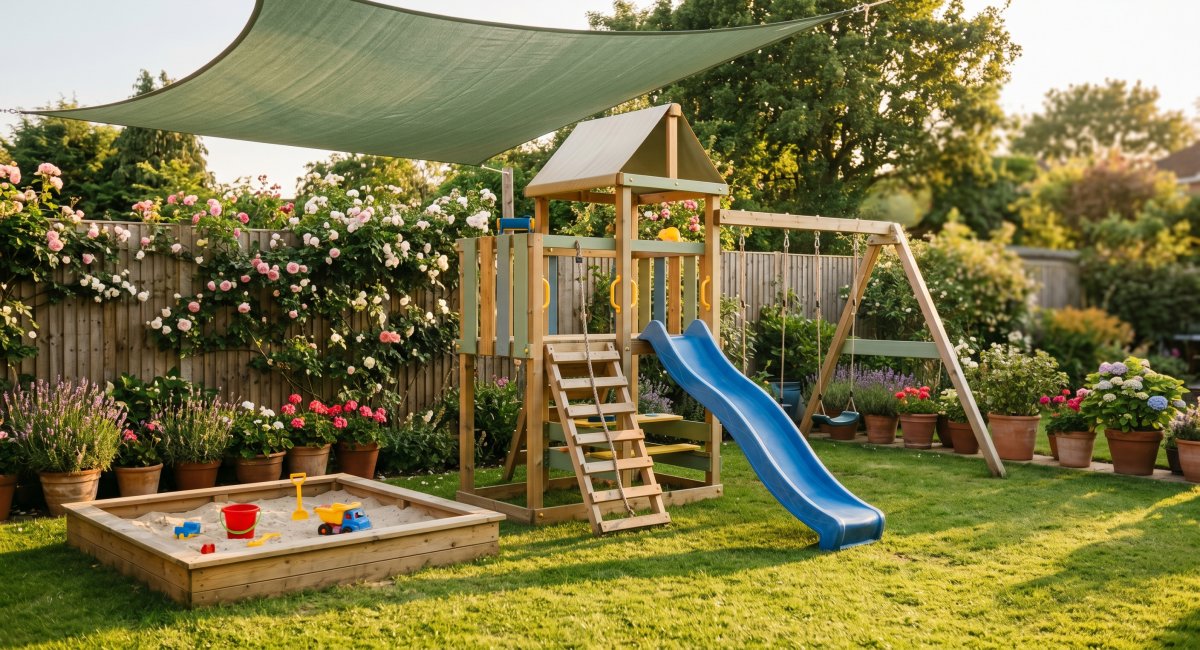
You don’t need to be an artist. A rough sketch on paper works just fine. Divide your space into zones — one for active play (swinging, climbing, running), one for quieter activities (sandpit, water table, drawing), and if you have room, a shaded rest area where adults can sit and supervise comfortably.
🛒 Affiliate Product NoteA UV-rated shade sail or freestanding outdoor umbrella is one of the best early investments for a play area. Both are widely available on Amazon, Home Depot, and Wayfair — link to options in a range of sizes and colors to suit different yards and budgets.
Step 2: Choose the Right Surface
The surface under and around your play equipment matters more than most people realize. It affects both safety and how much maintenance you’ll be doing all summer long.
- Natural grass: Great for open play, but gets muddy and worn quickly under a swing set.
- Rubber mulch: Best option under equipment — cushions falls, drains well, insect-resistant. Available in bags or bulk on Amazon and Home Depot.
- Artificial turf: Low-maintenance, stays green, soft enough for tumbles. Shop on Amazon or specialist outdoor retailers — look for child-safe, UV-stabilized options.
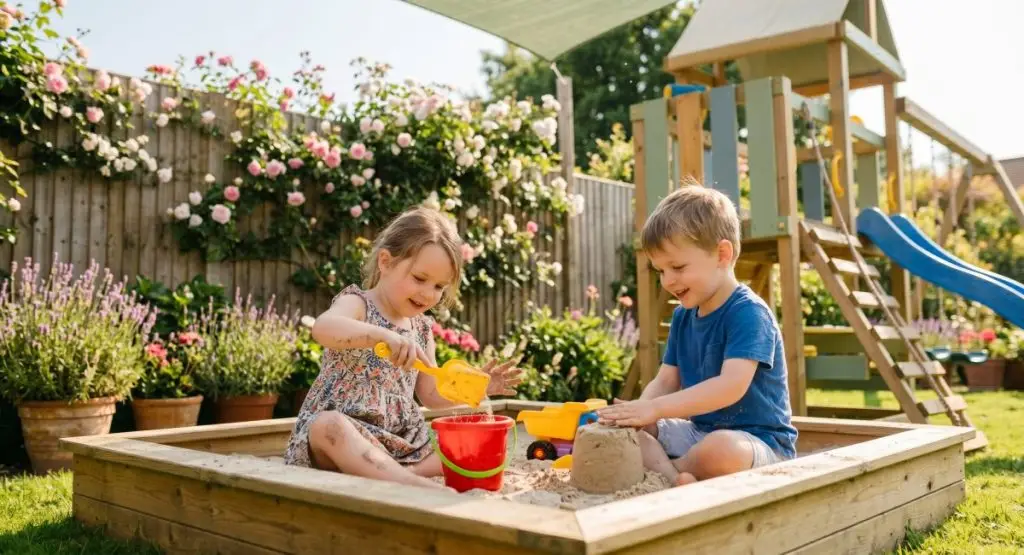
- Play sand: Perfect for sandpits. Easy to contain with wooden or stone borders. Available at Amazon, Lowe’s, and garden centers.
- Pea gravel: Budget-friendly and drains well, but not suitable for very young children.
Step 3: Pick Your Play Equipment
The key is to choose equipment that matches your children’s ages and your actual yard size. A giant playset that dominates your yard and gets outgrown in two summers isn’t worth it.
For Younger Kids (Ages 2–5)
- Small slide and climbing structure — starter sets available on Amazon and Target from around $80
- Water table — hours of fun, many options under $40 on Amazon
- Sandbox with cover — keeps debris out; shop Amazon and Walmart for wooden and plastic options
- Ride-on toys and push bikes if space allows
For Older Kids (Ages 6–12)
- Full swing set with slide and monkey bars — wide selection on Amazon, Wayfair, and Costco
- Trampoline with safety enclosure — available on Amazon with free delivery in many sizes
- Balance beams or stepping stones — great value sets on Amazon
- Outdoor basketball hoop or soccer net — available on Amazon and major sports retailers
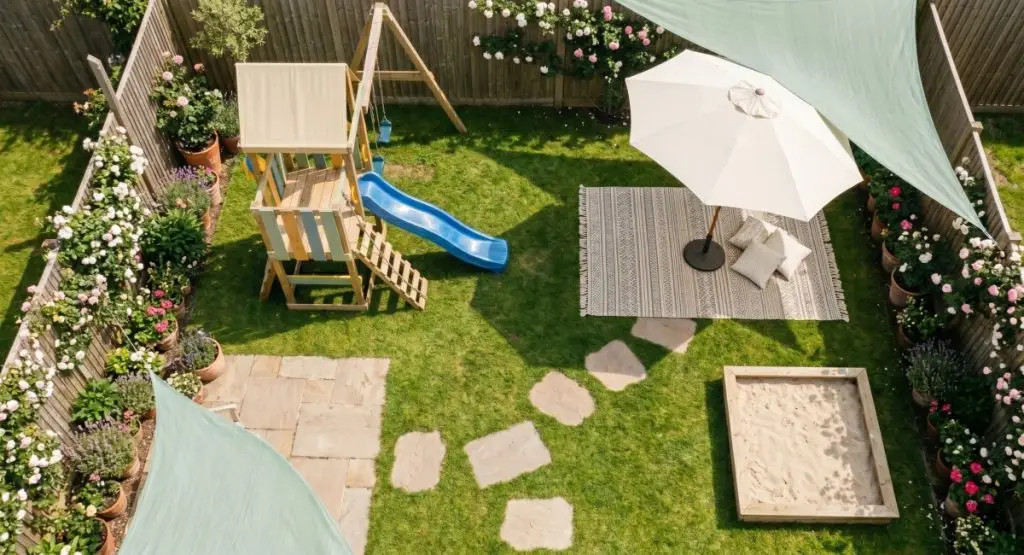
Step 4: Create Shade — Your Kids Will Thank You
Summer heat is real, and a play area without shade is an area kids abandon by 11am. Getting this right is one of the best investments you can make for a genuinely usable summer space.
- Shade sails: Affordable, stylish, UV-rated. Available on Amazon in triangle and rectangle shapes — one of the best-value outdoor additions you can make, typically $25–$80.
- Pergola or canopy: A slightly larger investment that doubles as adult seating. Shop Wayfair, Amazon, and Costco for freestanding canopy options.
- Umbrella: Most budget-friendly — a large tilting market umbrella from Amazon or IKEA works well for smaller play zones.
- Natural shade: If you have a tree with good afternoon shade, position the quieter play zone underneath it.
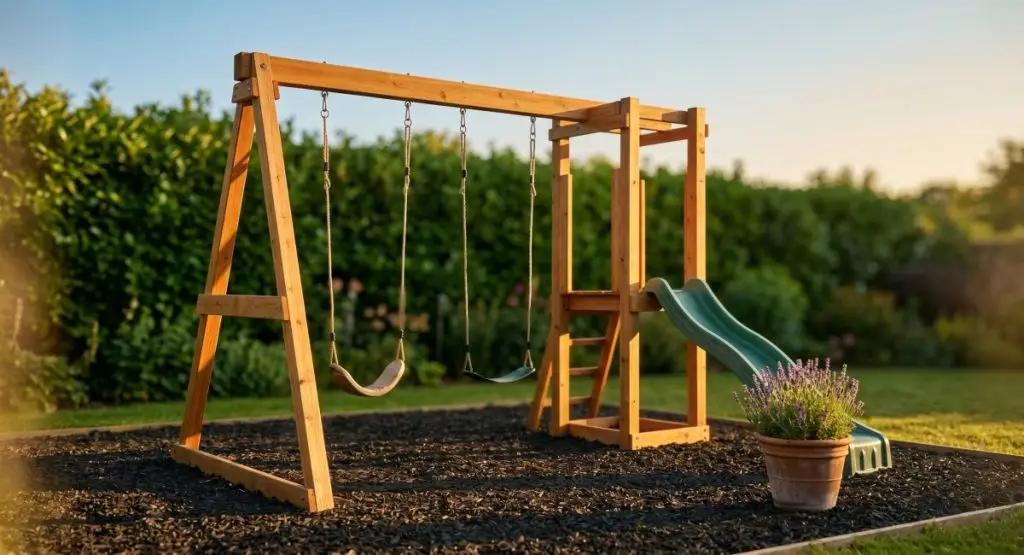
Step 5: The Little Details That Make It Special
- Outdoor chalkboard wall: Chalkboard paint from Amazon or any hardware store — apply to a wood board and attach to the fence. Under $20 to make.
- Stepping stones: Affordable concrete stepping stones from Amazon, Home Depot, or local garden centers.
- Sensory garden corner: Plant herbs and textured plants like lamb’s ear along the border. Kids love touching and smelling them.
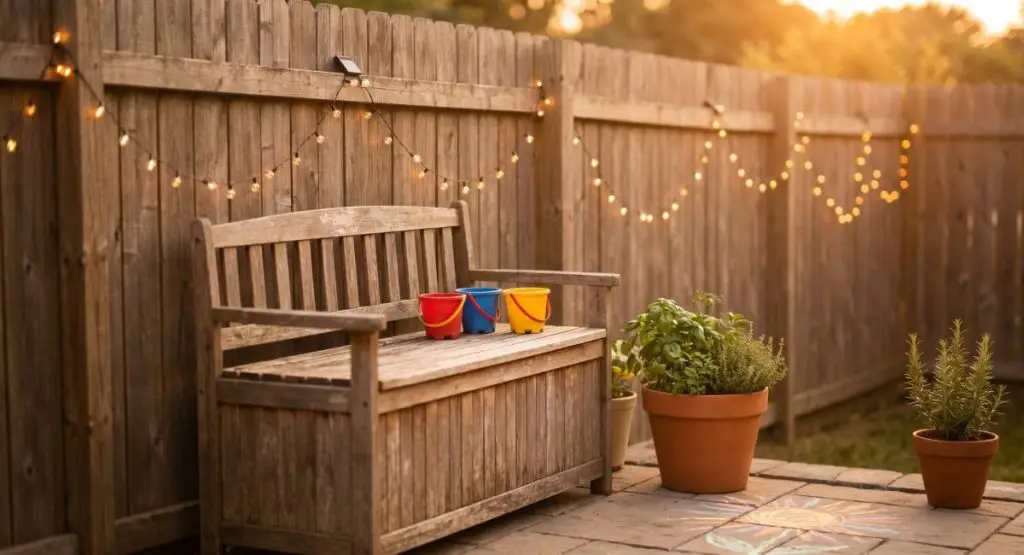
- Storage bench: Weatherproof storage benches on Amazon, Wayfair, or IKEA — doubles as adult seating.
- Solar fairy lights: Great value solar-powered string light sets on Amazon — no wiring needed, clip to any fence or pergola.
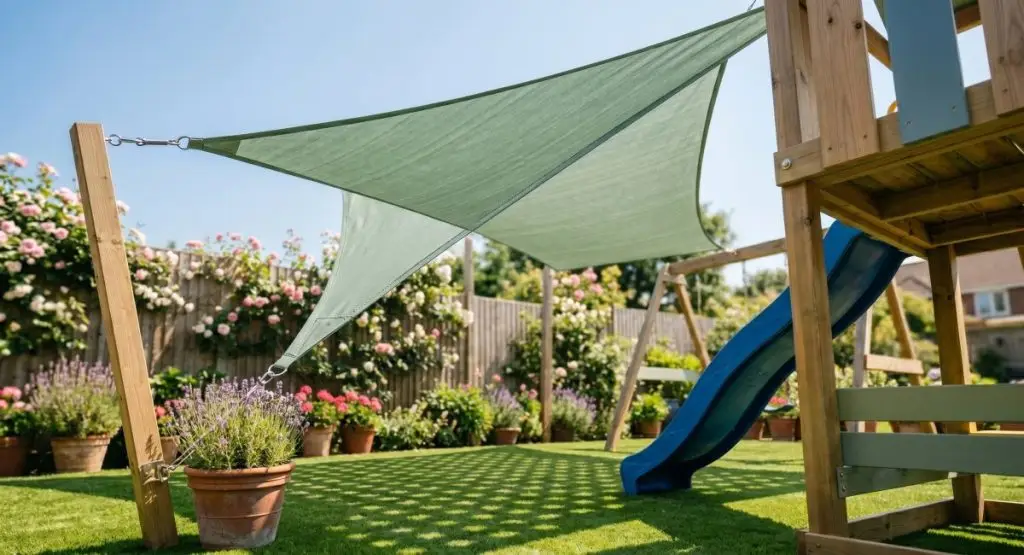
Budget Breakdown: What to Expect
| Budget Level | Range | What You Get |
|---|---|---|
| Budget | $100–$300 | Sandbox, shade umbrella, water table, outdoor rug, chalkboard wall |
| Mid-Range | $300–$800 | Basic swing set, rubber mulch, shade sail, storage bench, stepping stones |
| Full Setup | $800–$2,000+ | Quality climbing frame, artificial turf, pergola, sensory garden, fairy lights |
All items above are available on Amazon, Wayfair, Home Depot, or Lowe’s . Start with what matters most to your kids and build up over the season.
Keeping It Safe All Summer
- Check all equipment bolts and connections — tighten anything that feels loose
- Make sure there are no sharp edges or splinters on wooden structures
- Confirm the surface under play equipment is at least 6 inches deep if using rubber mulch
- Keep the sandbox covered when not in use to prevent animals from using it
- Apply sunscreen on kids before outdoor play and always provide a shaded rest spot
Final Thoughts
Creating a backyard play area doesn’t have to be overwhelming or expensive. Start with a clear plan, choose surfaces and equipment that fit your space and your kids’ ages, and add shade as a non-negotiable. The rest — the details, the lights, the little sensory corners — can come together over the summer as you see what your children gravitate toward.
The best play area is the one your kids actually use. And with a bit of thought and planning, yours will be the yard they don’t want to leave.
FAQ
Question: What is the safest surface for a backyard play area?
Answer: Rubber mulch is widely considered the safest surface under play equipment — it cushions falls, drains well, and doesn’t compact over time. For the wider play zone, artificial turf is excellent — soft, clean, and zero maintenance.
Question: How much space do I need for a backyard play area?
Answer: A functional play zone can fit in as little as 10×10 feet — enough for a sandbox, water table, and shaded seating. A swing set typically needs at least a 15×15 foot footprint including fall-zone clearance. The key is dividing the space into zones so every square foot has a purpose.
Question: What play equipment is best for toddlers?
Answer: For toddlers (ages 1–3), focus on a sandbox, water table, and soft surfaces like artificial turf or rubber mulch. Avoid equipment with high platforms or openings large enough for a small head to get stuck. Small slide and climbing sets designed for ages 2–5 are the safest starting point.
Question: How do I keep a sandbox clean and safe?
Answer: Always use a fitted cover when the sandbox isn’t in use to prevent animals from using it. Choose play sand specifically designed for children (not builder’s sand). Adding a small amount of cinnamon can help deter insects. Replace the sand every 1–2 years.
Question: Is artificial turf worth it for a kids’ play area?
Answer: For most families, yes. Artificial turf eliminates muddy patches, stays green, requires zero mowing, and is soft enough to cushion minor tumbles. While the upfront cost is higher, long-term maintenance savings make it worthwhile—especially in high-traffic areas.
Question: How can I add shade to a play area cheaply?
Answer: A large tilting market umbrella is one of the most affordable options and can be repositioned throughout the day. A UV-rated triangle shade sail is another cost-effective upgrade. Both are easy to install and significantly improve comfort in hot weather.