What Is a Garden Trellis and How to Use It: 12 Beautiful Ideas for Privacy, Shade, Vegetables & More
If You Have a Garden, You Need a Trellis — Here’s Why
I’ll be honest — before I added a trellis to my garden, I never quite understood the fuss. It seemed like something reserved for grand country estates with climbing roses and decades of patient gardening behind them. Then I put up one simple wooden panel in the corner of my backyard, trained a jasmine vine up it, and by the following spring, I completely understood.
A trellis changed the entire mood of that corner. What used to be a dull patch of fence became this living, fragrant wall that I genuinely looked forward to sitting beside with my morning coffee. And the more I experimented, the more I realized how many problems a trellis can quietly solve — from blocking an ugly view to giving my tomatoes the support they actually need to thrive.
If you are new to the idea of trellises, it can feel a little overwhelming at first — so many shapes, materials, and uses. But once you understand the basics, it becomes one of the most satisfying and versatile things you can add to any outdoor space, big or small. In this post, I will walk you through exactly what a garden trellis is, why it matters, and 12 genuinely useful and beautiful ways to use one.
What Is a Garden Trellis?
A garden trellis is a flat or three-dimensional structure — usually made from wood, metal, bamboo, or rope — designed to support climbing plants as they grow upward. At its most basic, it is a frame with a grid, lattice, or series of wires that gives vines, flowers, and vegetables something to cling to as they reach for light.
But calling a trellis just a plant support is a bit like calling a bookshelf just a wood plank. In practice, a trellis functions as a privacy wall, a shade provider, a garden divider, a vertical growing system, a decorative focal point, and sometimes all of these at once. That versatility is exactly what makes it so useful — and so popular on Pinterest right now.
Trellises come in many forms, from a simple flat panel leaning against a fence to an elegant arched tunnel you walk through. The structure itself is often beautiful even before a single plant touches it.
Why a Trellis Matters More Than You Might Think
Understanding what a trellis can do for your garden helps you make smarter decisions about your outdoor space. Here are the three core reasons it is worth your attention:
It gives your garden vertical dimension.Most gardens grow outward, along the ground. A trellis introduces height — and height creates drama, layers, and a sense of lushness that flat planting simply cannot achieve.
It solves practical problems beautifully.Need privacy from a neighbor? Shade over a hot patio? A way to grow more food in a small space? A trellis handles all of these — without the permanence or cost of a major construction project.
It transforms ordinary plants into garden features.A jasmine on a trellis is no longer just a plant — it becomes a fragrant living wall. Climbing roses become a romantic focal point. Bean plants become a vertical food garden. The structure elevates everything it touches.
Main Types of Garden Trellises
Before choosing a trellis, it helps to know which style best fits your space and what you want to grow:
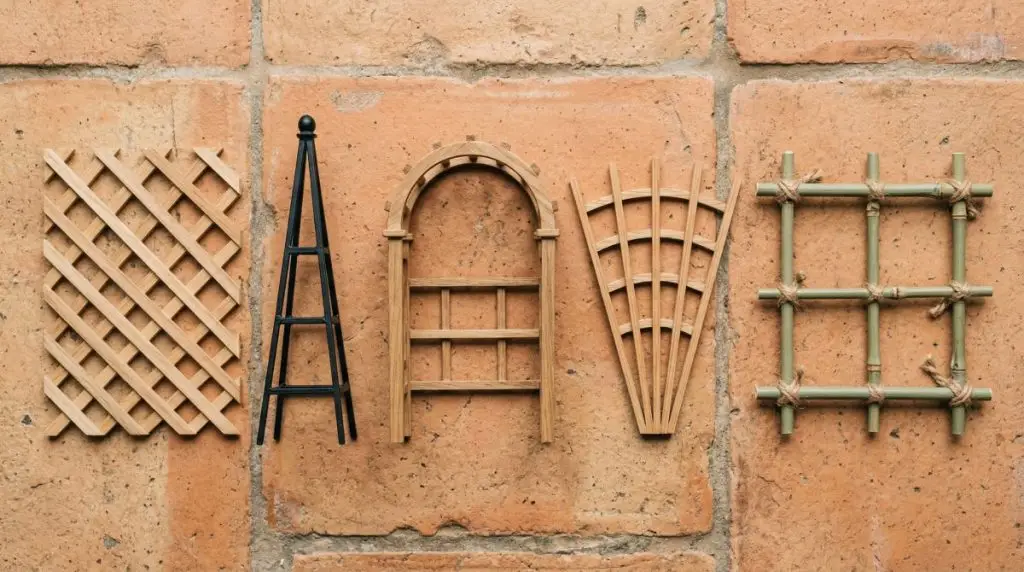
Flat Panel Trellis
The most common type — a flat frame with a grid or lattice pattern. Excellent for mounting against walls, fences, or as a freestanding privacy screen. Works beautifully with climbing roses, clematis, and jasmine.
Obelisk Trellis
A tall, tapering tower that stands on its own in a garden bed. Elegant and sculptural — it looks good even before plants start climbing it. Ideal for sweet peas, black-eyed Susan vine, or a single climbing rose.
Arch or Tunnel Trellis
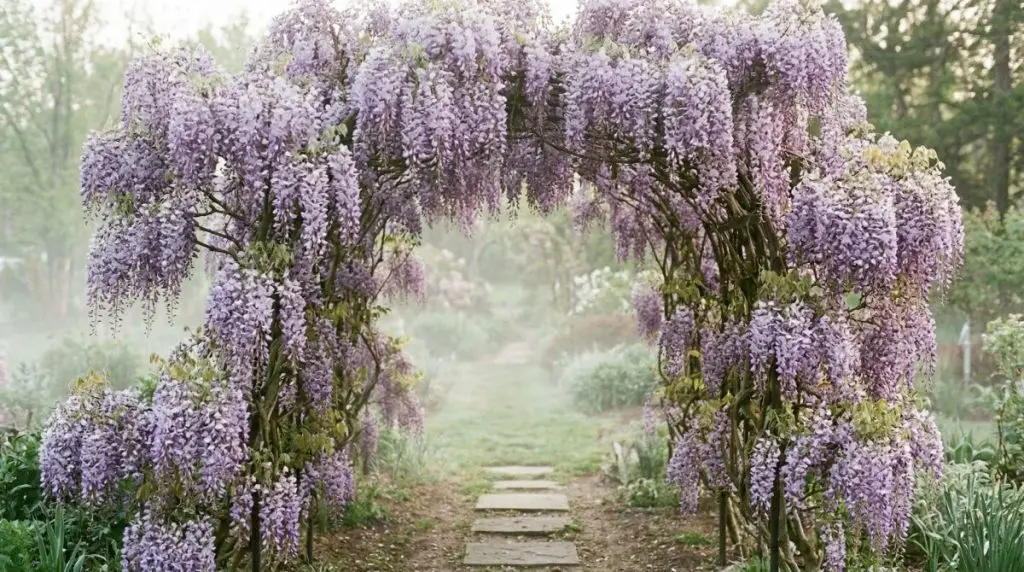
Two curved panels forming an arch over a path or garden entrance. The most dramatic type — absolutely stunning when covered in roses or wisteria, and practical for creating a natural garden gateway.
Fan Trellis
A semi-circular expanding design, often wall-mounted. Perfect for corner spots and for training fruit trees (called espalier) flat against a wall, saving space while keeping the plant productive.
Wire or Rope Trellis
Simple horizontal or vertical wires stretched between posts or screwed into a wall. The most discreet option — nearly invisible once plants cover it. Great for a clean modern look and for heavier climbers like wisteria.
Bamboo and DIY Trellises
Rustic, natural, and completely customizable. You can build a bamboo trellis in an afternoon with poles and twine — perfect for vegetable gardens and temporary setups.
All of the trellis types below can be found on Amazon and at most garden retailers
12 Beautiful Ways to Use a Garden Trellis
This is where things get really fun. Here are twelve genuinely useful and beautiful applications — the ones I keep coming back to myself and the ones I see working again and again in real gardens.
1. Create a Living Privacy Screen
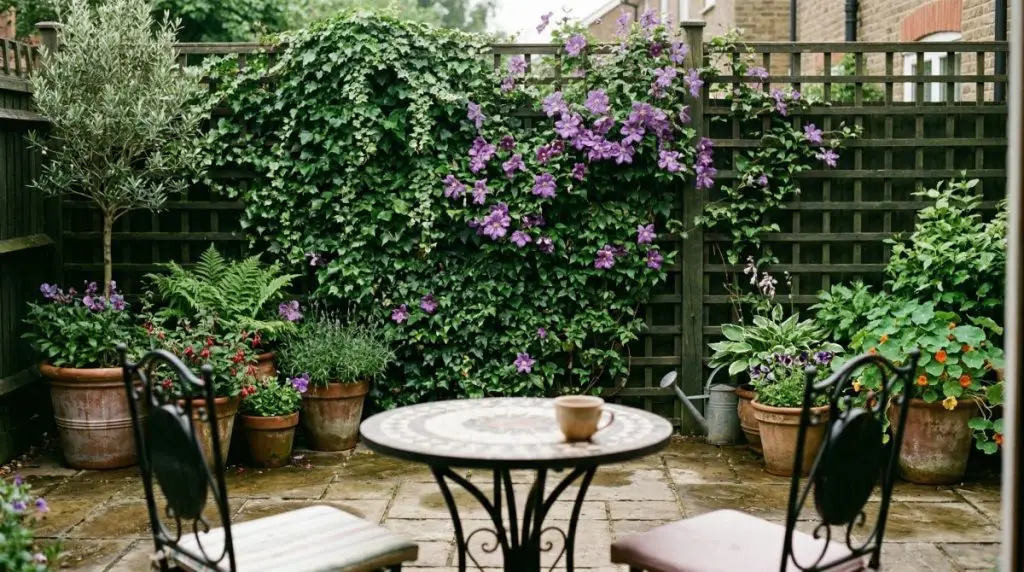
This is probably the most popular reason people add a trellis, and for good reason. A flat trellis panel placed along a fence line or property boundary, once covered in climbing plants, becomes a dense living wall that blocks sightlines far more beautifully than a solid timber fence ever could. Ivy, climbing hydrangea, and evergreen clematis are all excellent choices if you want year-round cover.
The added benefit? Your neighbors see greenery, not a fence. Everyone wins.
2. Grow Vegetables Vertically — Save Space, Harvest More
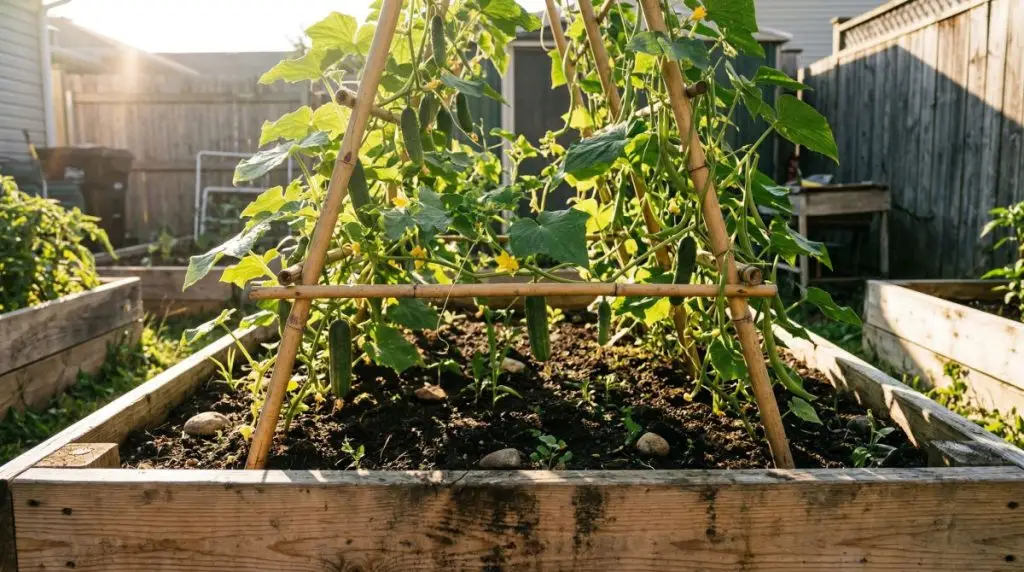
If you have a small garden or a raised bed, a trellis is one of the single most practical things you can add. Cucumbers, pole beans, peas, cherry tomatoes, and squash all love climbing — and when they grow upward instead of sprawling across the ground, you get better air circulation (which means fewer diseases), easier harvesting, and significantly more yield from the same footprint of soil.
I started growing my cucumbers on a simple bamboo trellis a few summers ago and I will never go back to letting them sprawl. The difference in fruit quality alone is remarkable.
For raised bed vegetable trellises, A-frame trellis kits and nylon garden netting are both affordable and widely available on Amazon. Garden netting stretched between two bamboo poles is actually one of the most effective systems for peas and beans — and costs almost nothing compared to a pre-made trellis.
3. Create Natural Shade Over a Patio or Seating Area
A pergola is beautiful, but it’s a significant investment. A trellis with fast-growing vines can give you meaningful shade over a patio, a bench, or a garden dining area — at a fraction of the cost and effort. Position an arch trellis or a series of flat panels over your seating area and train a vigorous climber like wisteria, grapevine, or climbing hydrangea across it. Within two to three seasons, you’ll have a cool green canopy.
The dappled light that comes through a vine-covered trellis on a sunny afternoon is genuinely one of the most pleasant things a garden can offer.
If you’re building out a full backyard retreat, I also have some ideas worth pairing with this — see my post on Backyard Oasis Ideas for Spring: Low-Maintenance, Water-Wise Upgrades That Feel Luxurious for the bigger picture.
4. Add a Flowering Vine Wall for Pure Garden Beauty
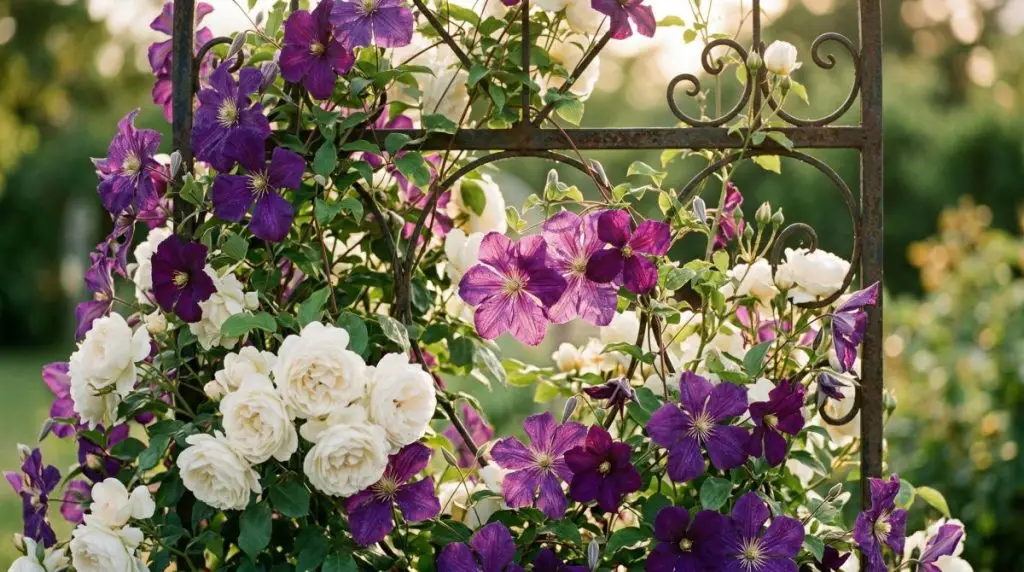
This is the use that gets the most attention on Pinterest — and for good reason. A trellis covered in climbing roses, clematis, bougainvillea, or jasmine becomes a living piece of art. The combination of structure and bloom creates something that changes with the seasons and rewards you every time you step outside.
For continuous color, I like pairing a spring-blooming clematis with a repeat-flowering climbing rose on the same panel — you get waves of color from April right through to October.
5. Mount One Against Your Home’s Exterior Wall
A trellis mounted on the side of your house — covered in climbing roses, jasmine, or star jasmine — is one of the most powerful curb appeal moves you can make. It softens hard architecture, adds color and texture to a plain wall, and creates that storybook cottage effect that makes a house look genuinely loved and cared for.
Practical tip: leave a small gap of a few centimeters between the trellis and the wall for air circulation. This prevents moisture buildup and keeps both the plant and your wall in good health.
6. Use It as a Garden Room Divider
One of the most underused applications: using trellises to divide a large garden into separate ‘rooms’ or zones. A trellis with climbing plants creates a soft, living partition that defines space without blocking light completely. You can use it to separate a vegetable patch from a seating area, create a sense of arrival to a hidden garden corner, or simply add structure and depth to a flat, open garden.
7. Build a DIY Trellis on a Weekend
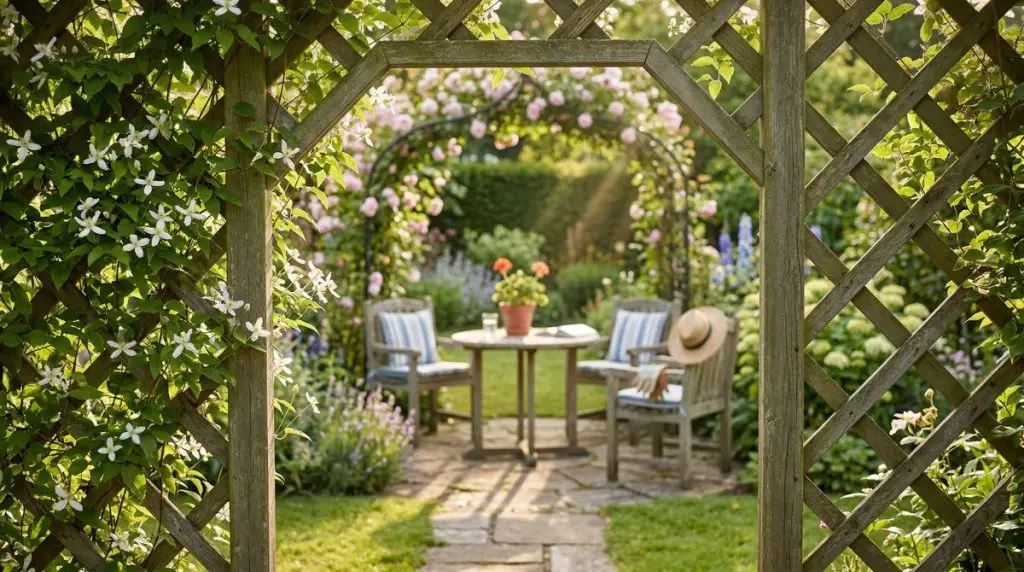
You absolutely do not need to spend a lot of money to get a beautiful trellis. Some of my favorite ones I have seen in real gardens are entirely handmade — bamboo poles tied with natural twine, branches cut from the garden wired together, or basic lumber assembled in an afternoon. The rustic, handmade quality of a DIY trellis often adds to a garden’s charm rather than detracting from it.
The key measurements to keep in mind: most climbing plants need about 10–15cm of spacing between their support wires or slats. Much tighter and air can’t circulate; much looser and smaller stems can’t find something to grab.
For a quick and inexpensive DIY trellis, all you really need is a pack of garden bamboo canes (available in bulk on Amazon for very little), some natural jute twine or garden wire, and about an hour. If you want something a little more polished, pre-cut wooden dowels and corner connector clips make a surprisingly professional-looking grid trellis with minimal effort — search ‘DIY trellis kit’ or ‘garden grid frame’ on Amazon or at your local hardware store.
8. Grow a Fragrant Garden Archway
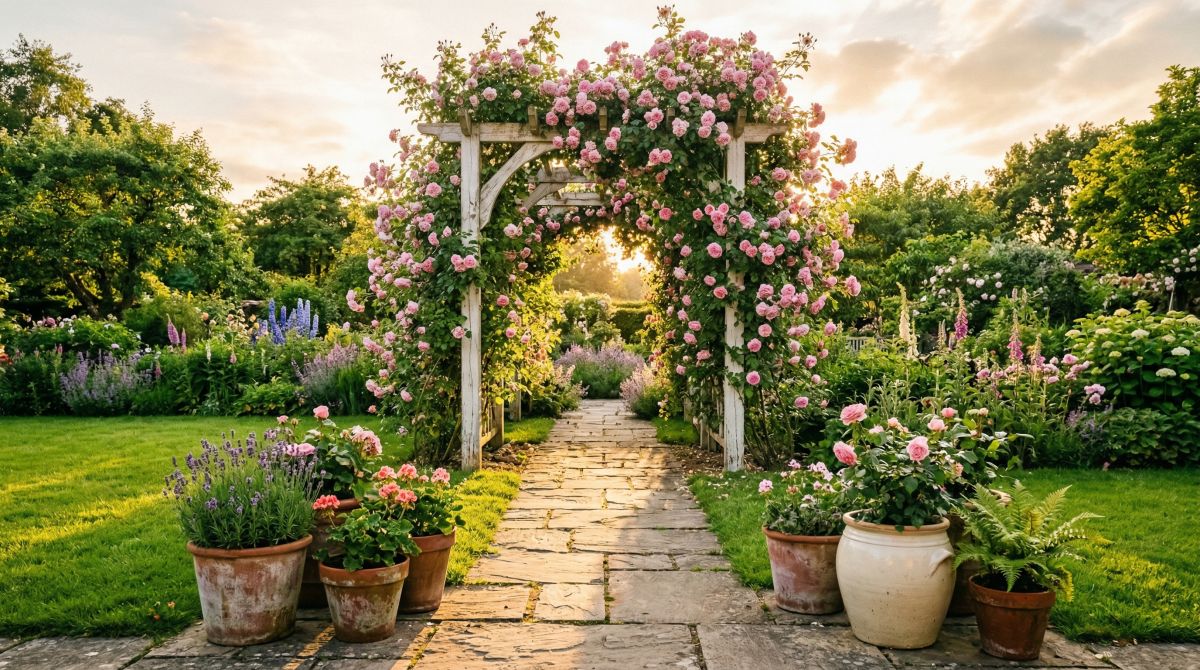
An arch trellis covered in wisteria, climbing roses, or honeysuckle is one of the most romantic garden features you can create. Position it over a path or a garden gate, and you step through a living tunnel of fragrance every time you enter that part of the garden. Even a simple metal arch from a garden centre becomes something quite special once plants begin to fill it.
9. Use an Obelisk Trellis as a Garden Focal Point
An obelisk trellis is a vertical tower — usually 1.5 to 2 meters tall — that stands on its own in a garden bed. What makes it special is that it acts as both a plant support and a piece of garden sculpture. Even before climbers reach the top, a well-chosen obelisk adds instant height and elegance to a flat planting scheme. Paint one in a bold sage green or terracotta tone and it becomes a true focal point.
10. Create a Small Garden or Balcony Green Wall
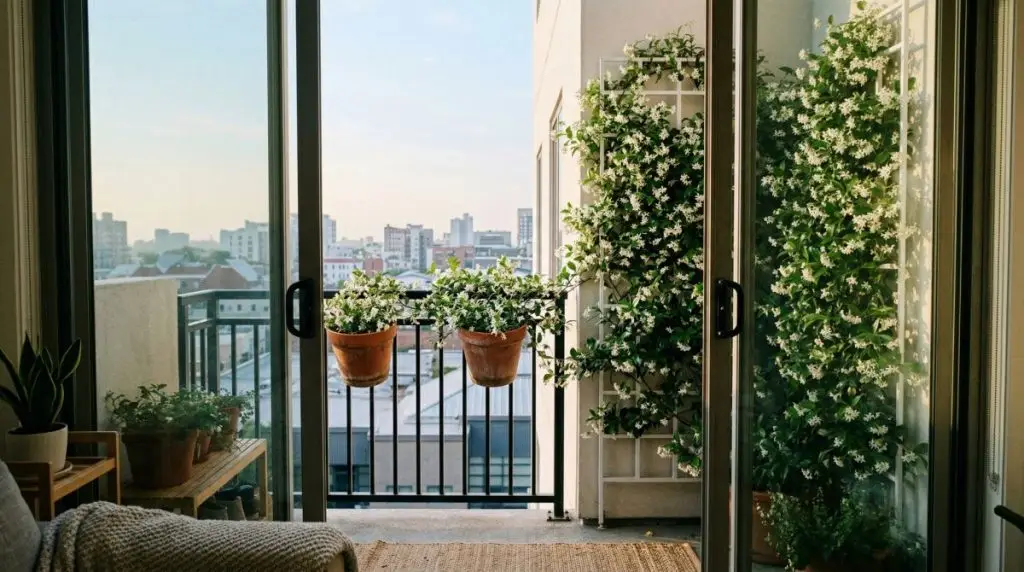
If your outdoor space is a small patio, a narrow side return, or even a balcony, a slim wall-mounted trellis can still completely transform it. Mount a compact lattice panel, add a few climbing plants in pots at the base, and within a season you have a lush green wall that makes even the smallest space feel like a garden. Jasmine, passion flower, and climbing nasturtiums all work well in containers.
11. Espalier Fruit Trees Against a Sunny Wall
This is a slightly more advanced use, but such a rewarding one. Espalier is the practice of training a fruit tree flat against a wall or fence — and a fan trellis or a series of horizontal wires makes it possible. A south-facing wall reflects heat and helps fruit ripen earlier. Apple, pear, and peach trees all work beautifully espaliered. The result is both beautiful and surprisingly productive for the space it takes up.
Pairing espaliered fruit with a Mediterranean-style garden design creates a really cohesive and productive outdoor space — I cover that fully in my post on How to Style a Mediterranean Garden Step by Step: Sun, Stone, and Scent at Home.
12. Enjoy Your Trellis All Year Round — It’s Not Just for Summer
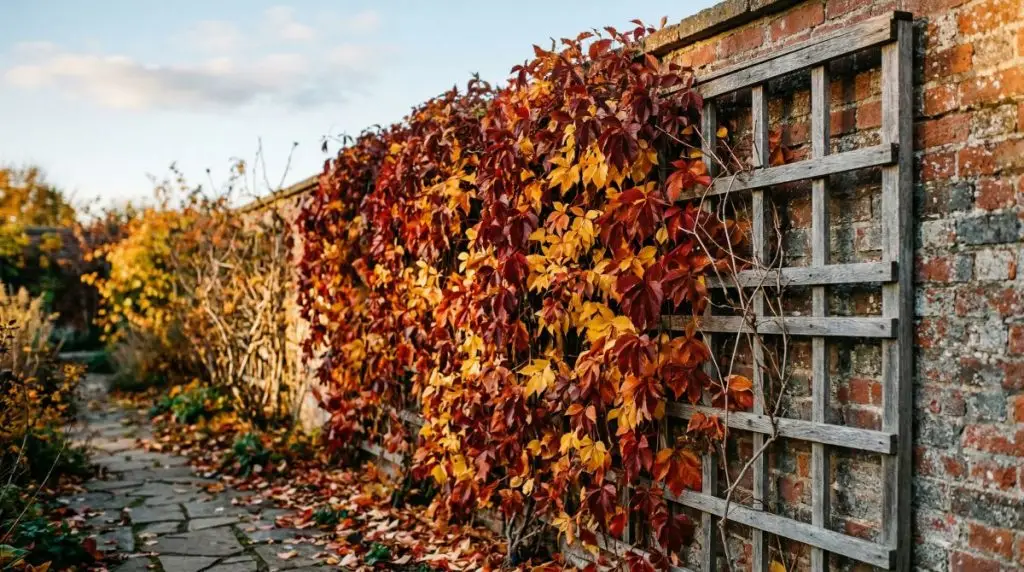
One of the things I love most about having a trellis in my garden is that it never really ‘goes away.’ In spring, the first fresh green shoots appear and you watch the plant wake up. Summer brings full bloom and maximum privacy. In autumn, clematis and Virginia creeper put on a spectacular show of color before the leaves fall. And even in winter, the bare structure of a well-made trellis adds form and skeleton to a garden that might otherwise look quite empty.
Choose a trellis that looks good on its own — in terms of material, shape, and finish — and it becomes a permanent garden feature rather than a seasonal prop.
Common Mistakes to Avoid With a Garden Trellis
Choosing the wrong material for your climate.Untreated wood rots quickly in wet climates. If you live somewhere with heavy rainfall, go for pressure-treated timber, powder-coated metal, or bamboo (which has natural moisture resistance). In hot dry climates, metal can get extremely hot and damage tender stems — consider wood or rope instead.
Mounting it too flush against the wall.A trellis pressed flat against a wall leaves no room for stems to wind around the supports and no air circulation behind the plant — which creates damp conditions that encourage disease. Always mount with a 5–8cm gap behind.
Planting too many climbers too fast.I have done this. The result is a tangled, overcrowded mess where plants compete rather than collaborate. Choose one or two climbers for a single trellis panel and let them establish properly before adding more.
Forgetting to secure the trellis properly.A trellis covered in mature climbers is surprisingly heavy — and catching a lot of wind. Anchor it well from the start, either into the ground with posts or into a wall with proper fixings. A trellis that falls in a storm can damage the plants and be genuinely dangerous.
When Is a Trellis the Right Choice?
A trellis is most useful when you want to add something to your garden that works on multiple levels at once — practical function AND visual beauty. It’s particularly the right choice when:
- You want privacy or screening without the permanence or expense of a wall or solid fence
- You have a small garden or raised bed and need to grow more food in less horizontal space
- You have a plain wall, fence, or side of a building that needs softening or decorating
- You want to create shade over a seating area without building a full pergola
- You want to add height, structure, and focal points to a flat garden
- You love flowering climbing plants but have nothing for them to grow on
It may not be the right first step if you have no outdoor space at all, or if you’re gardening in a very exposed, windy location where anything freestanding needs very careful anchoring. But even in those cases, a wall-mounted trellis sheltered behind a building corner can work beautifully.
Final Thoughts — Start Small, and Let It Grow
If there is one thing I want you to take away from this, it is that a trellis is not a complicated commitment. You can start with one simple panel, one climbing plant, and one corner of your garden — and from there, let it evolve at whatever pace suits you.
Some of the most beautiful trellis gardens I have ever seen started exactly that way. One panel becomes two. One rose becomes a whole flowering wall. A simple bamboo frame in a raised bed becomes a productive vertical vegetable garden. It happens gradually, naturally, and honestly, that gradual transformation is half the joy of gardening.
What I love most about trellises is that they reward patience. You plant, you train, you wait — and the garden does the rest. By the time your climbers have filled in and your trellis has become part of the fabric of your outdoor space, you will wonder how you ever did without one.
Frequently Asked Questions
Is a garden trellis good for beginners?
Yes — especially when you start with a simple flat panel and an easy-to-grow climber like clematis or climbing beans. You don’t need any special skills to install one, and most climbing plants are surprisingly forgiving.
What is the biggest benefit of a garden trellis?
It depends on your garden, but for most people the biggest benefit is the combination of privacy and beauty — a living wall that blocks unwanted views while adding color, fragrance, and texture to the space.
Do I need special tools or skills to install a trellis?
Not usually. A freestanding trellis simply needs anchoring in the ground with posts. A wall-mounted one requires a drill, wall plugs, and screws — a straightforward DIY job for most people. For very large or heavy trellises, it is worth asking a handyperson to help with the mounting.
Which plants grow fastest on a trellis?
For speed, climbing beans and nasturtiums are the champions — they can cover a trellis in a single season. For flowering climbers, clematis and sweet peas are fast-establishing and give wonderful results in their first year.
How do I choose the right trellis material?
Match the material to your garden’s style and your climate. Painted wood suits cottage and traditional gardens; powder-coated metal works beautifully in modern and contemporary spaces; bamboo and rope feel right in natural or Mediterranean-style gardens. In wet climates, avoid untreated softwood — it won’t last more than a season or two.