How to Style a Mediterranean Garden Step by Step: Sun, Stone, and Scent at Home
Introduction
I’ll be honest with you — when I first decided to create a Mediterranean garden, I had no real plan. I just had a feeling I was chasing. Something warm and a little wild. Sun-bleached stone underfoot, the smell of lavender drifting through the air, terracotta pots that look like they’ve been sitting in the same spot for decades. The kind of outdoor space that makes you want to slow down the moment you step into it.
What surprised me was how naturally that aesthetic fit where I live. We already have the sun, the dry air, the sandy soil, and the long hot summers that Mediterranean gardens are literally built around. In a lot of ways, people in our climate are starting with an advantage that gardeners in cooler, wetter places have to fake. The plants that define this style — lavender, rosemary, olive trees, bougainvillea — don’t just survive here. They thrive.
This guide is everything I learned through trial, error, and a few overwatered herb plants I’d rather not talk about. Whether you’re working with a full backyard, a walled courtyard, or just a sunny corner of your outdoor space, these steps will help you put something genuinely beautiful together.
Why a Mediterranean Garden Works So Well in a Hot, Dry Climate
Before we get into the how, let me explain why this style makes so much sense for those of us who deal with long, intense summers and very little rain.
Mediterranean gardens were born from necessity. They evolved in climates where the sun is relentless from May through September, rainfall is sparse and unpredictable, and the soil is lean, sandy, and alkaline. The plants, the materials, and the design principles of this style are all built around those exact conditions — which means if that sounds like your climate, you’re not fighting your environment to achieve this look. You’re working with it.
Most traditional garden styles require constant watering, rich soil amendments, and careful shade management to survive intense heat. A Mediterranean garden doesn’t. The plants expect the heat. They want the lean soil. They actually look better with a certain amount of neglect — and that is a genuinely wonderful quality in a garden.
Beyond the practical side, there’s a sensory richness to this style that’s hard to match. Lavender, jasmine, rosemary, and lemon verbena filling the air on a warm evening. The crunch of gravel underfoot. The rough warmth of aged terracotta catching afternoon light. It engages every sense — and in a hot climate, it performs at its absolute best.
What You’ll Need Before You Start
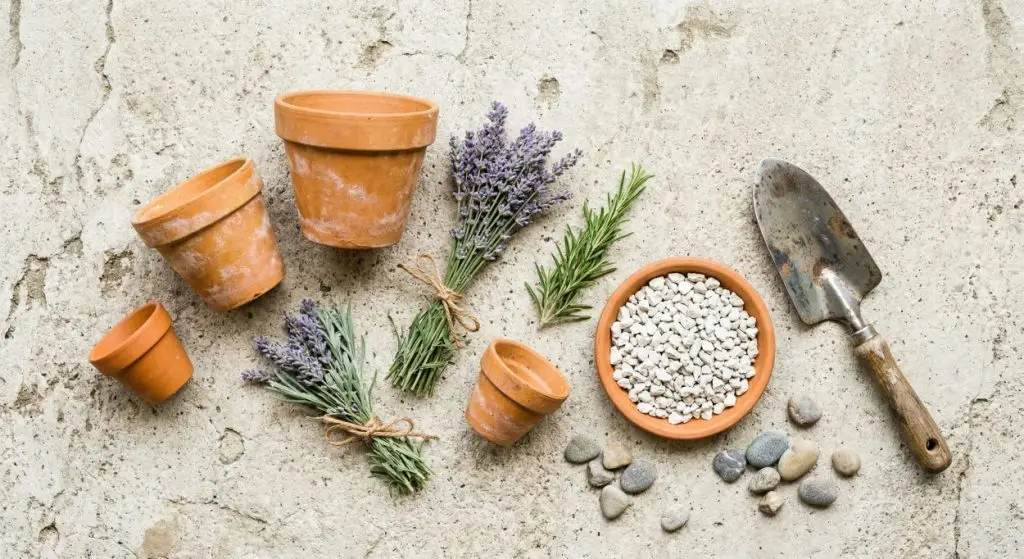
Getting the right materials together before you start saves a lot of frustration. Here’s what I worked with, and what I’d suggest gathering before you begin:
Containers and structure:
- Terracotta pots in varying sizes — unglazed, thick-walled, the more worn and weathered the better. Thick walls insulate roots from temperature swings, which matters a lot when days are very hot and nights are cooler. Available from Amazon and home garden retailers.
- Limestone or sandstone flagstones for pathways and terrace areas
- Crushed white limestone gravel or decorative stone for ground coverage — widely available at garden centers and on Amazon.
Plants — all heat and drought tolerant:
- Lavender (Lavandula stoechas handles intense heat particularly well)
- Rosemary — practically indestructible in a hot, dry climate
- Thyme, sage, and oregano
- An olive tree — in a large container or planted directly in the ground
- Bougainvillea for a dramatic climbing accent on walls or fences
- Jasmine for evening scent — blooms beautifully in heat
- Pelargoniums (commonly called geraniums) for trailing color in pots
Soil and amendments:
- Sandy, fast-draining potting mix — avoid anything labeled “moisture retaining.” Cactus and succulent mixes from garden retailers work perfectly.
- Horticultural grit or coarse perlite to mix into heavier soil — available at garden centers and on Amazon.
- Slow-release fertilizer pellets for container plants — easy to find at any garden retailer or online.
Styling accents:
- Hand-painted ceramic tiles or small decorative urns — beautiful options available on Amazon, Etsy, and home decor retailers.
- Moroccan-style iron lanterns for evening light — widely available on Amazon and at home goods stores.
- Outdoor cushions in natural tones — oatmeal, rust, dusty terracotta, faded linen. Check Amazon, IKEA, and outdoor living retailers.
You don’t need everything at once. I started with three terracotta pots, a lavender plant, a rosemary, and a bag of gravel — and built from there over several months.
Step 1: Choose Your Space and Understand Your Sun
Start by spending a couple of mornings and afternoons just watching your outdoor space. This matters more than anything else — because where the sun falls, and when, determines everything from plant selection to pot placement to where you eventually put your seating.
In a hot climate, you’re not usually short of sun. The real question is intensity. Midday sun between around 11am and 3pm can be harsh enough to scorch even heat-loving lavender if it’s newly planted and hasn’t established its roots yet. I look for a spot that gets full sun in the morning — roughly from 7am to 11am — and some partial shade or wall-reflected light during the afternoon peak. East-facing walls and spaces often work beautifully for this reason.
A few things I check before committing to a spot: where does water pool after rain? Avoid those areas completely for Mediterranean planting — these plants will rot before the puddle dries. Is there a wall nearby? Whitewashed or pale stone walls reflect both light and warmth, acting like a natural radiator that keeps the microclimate just a little warmer at night. And is there wind exposure? Hot dry wind can desiccate plants very quickly. A partial windbreak — a low wall, a trellis, or a row of established rosemary — makes a meaningful difference.
Step 2: Lay the Foundation — Stone, Gravel, and Paths
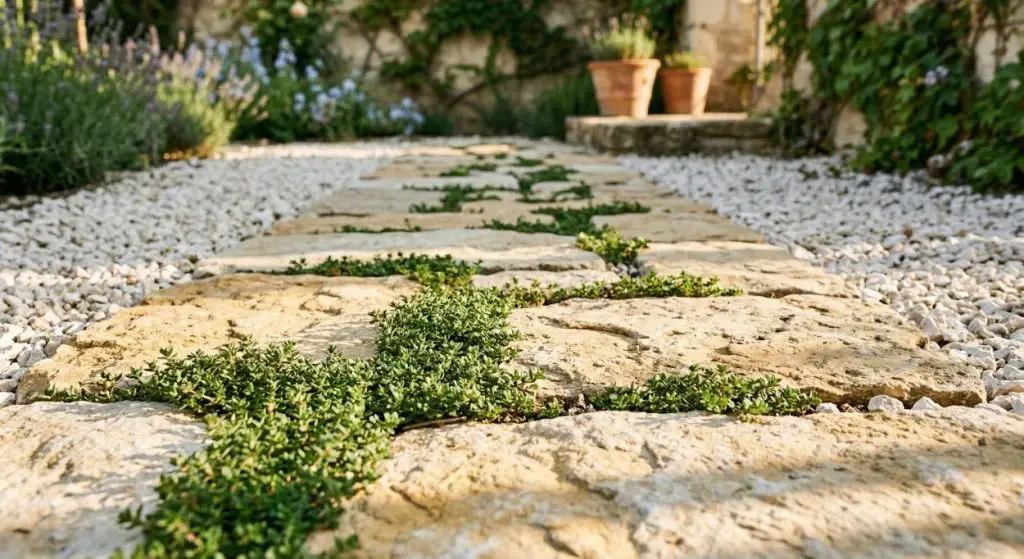
This is the step that creates the biggest visual transformation, and it’s not even about plants. The moment you replace bare soil or patchy grass with flagstones and gravel, the space immediately reads as Mediterranean. It’s instant.
I laid irregular sandstone slabs through the main path area, leaving gaps between the stones. Into those gaps I pressed creeping thyme — in a hot climate it grows at a measured pace but holds its shape beautifully and smells extraordinary when you brush against it or walk across it. Around the pot groupings and open areas, I spread a 3 to 4 inch layer of crushed white limestone gravel.
The gravel does three things that matter in an intense climate: it suppresses weeds, helps moderate the soil moisture around pot bases, and reflects warmth upward around the plants — which mimics the natural stony hillside conditions these herbs actually evolved in. If you’re covering a large area, laying a permeable weed membrane underneath first is well worth the effort. Weed control membranes are widely available at garden centers and on Amazon.
Keep the path layout organic. Winding, slightly irregular, never perfectly straight. Mediterranean paths evolved around trees and natural obstacles — that meandering quality is part of what gives the style its unhurried, ancient feeling. Avoid the mistake of making everything too symmetrical.
Step 3: Choose Your Anchor Plants
Every great Mediterranean garden has at least one plant that is clearly in charge — something tall, structural, and confident enough to anchor everything else around it. Without it, even a well-planted space can feel scattered and flat.
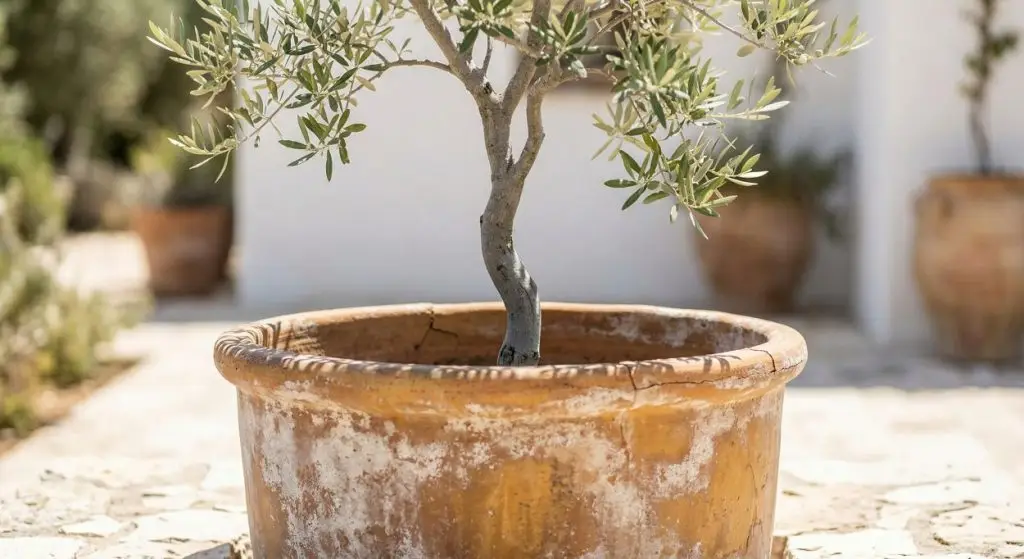
For me, that anchor was an olive tree. I planted mine in the largest terracotta pot I could find and positioned it at the corner where two sections of the garden meet. An olive tree does something almost architectural: it gives the space a sense of age and permanence that no amount of styling can replicate. Even a young tree with a slender trunk reads as timeless. And in a hot, dry climate, an olive tree is genuinely one of the easiest plants you can grow — it was practically made for these conditions.
Just make sure your pot has drainage holes, use sandy or gritty soil, and water deeply but infrequently once established. Large terracotta garden planters suitable for olive trees are available on Amazon and at most large garden retailers.
If an olive tree isn’t the right fit for your space right now, a rosemary trained into a standard form (a single stem with a rounded top), a bay laurel, or a large established lavender like the ‘Grosso’ cultivar can serve the same purpose. The key is height, structure, and something that holds its presence through the whole year — not just when it’s flowering.
Other anchor options that work exceptionally well in intense heat: bougainvillea trained along a wall or over a trellis — it blooms extravagantly with very little water once established — or a large ornamental grass like Pennisetum or Stipa that moves beautifully in the breeze and catches afternoon light in a way that feels almost cinematic.
Step 4: Build Your Planting Layers
Once your anchor plant is in place, build outward and downward in layers. This is what gives a Mediterranean garden its lush, abundant quality — not one type of plant repeated everywhere, but several species at different heights all working together to create depth and movement.
I think about it in three distinct layers:
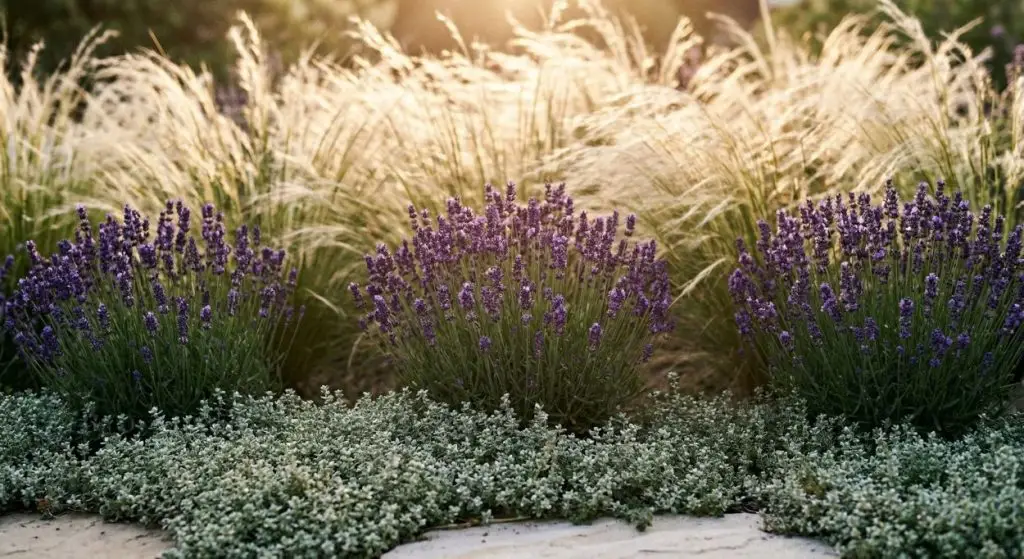
Ground layer:Low-growing plants that hug the edges of paths, fill gaps between flagstones, and spread around the bases of larger pots. In a hot climate I use creeping thyme, low-growing oregano, and compact dwarf lavender. They take time to spread but once established, they are almost entirely self-sustaining.
Mid layer:Full-size lavender bushes, rosemary, sage, and ornamental grasses like Stipa (angel hair grass), which looks breathtaking in afternoon backlighting when the seed heads glow gold. This layer provides the mass, the fragrance, and the visual substance of the garden.
Tall and trailing layer:Anything that reaches upward or spills dramatically downward. Bougainvillea or jasmine climbing a wall or trellis. Pelargoniums trailing over pot edges in bright coral, scarlet, or cerise. Tall fennel or rosemary swaying above everything else.
One rule I follow with groupings: always odd numbers. Three lavender plants, five pots, seven rosemary plugs along a path edge. Even numbers feel static. Odd numbers feel natural, like they grew that way.
A note for anyone gardening in a genuinely hot climate: in the height of summer, your lavender may go semi-dormant and look a little tired. This is completely normal — don’t overwater trying to revive it. Let it rest. It will push vigorous new growth once the worst heat eases. Bougainvillea and pelargoniums, on the other hand, hit their absolute peak in summer heat. Let them carry the color during those months.
Step 5: Style Your Terracotta Pots and Containers
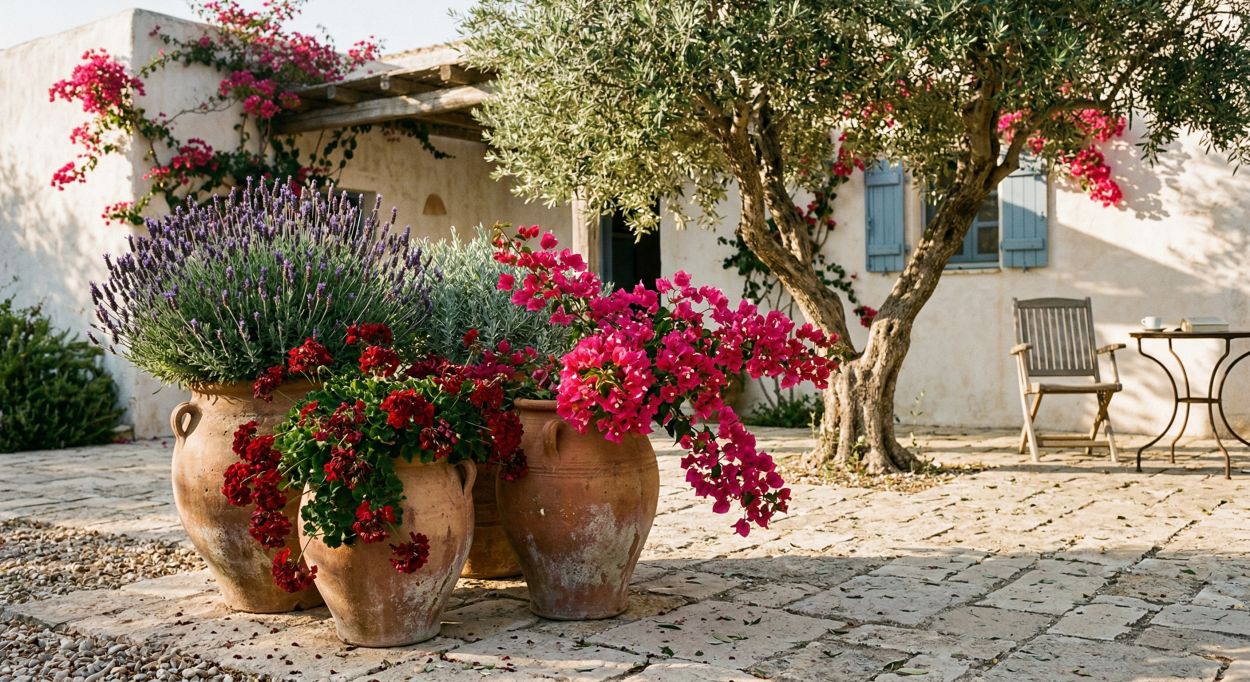
If the plants are the soul of a Mediterranean garden, the terracotta pots are its personality. This is the step where I’d encourage you to be intentional rather than just functional.
Look for unglazed terracotta with thick walls and a wide rim — the kind that ages into a beautiful mineral-streaked surface over time. Thin-walled pots crack in intense heat and freeze-thaw cycles, so wall thickness genuinely matters. A wide range of quality terracotta garden planters can be found on Amazon and at home and garden retailers.
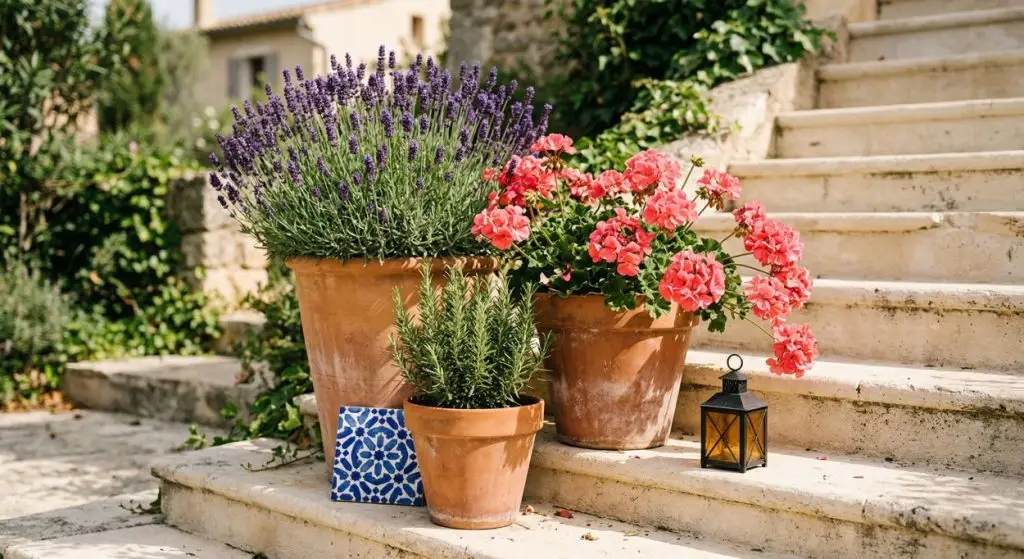
When grouping pots, cluster them rather than spacing them out evenly. A group of three near a doorway — tall, medium, small — immediately creates a vignette that draws the eye. Let the plants in each pot vary: something upright and structural in the tall pot, something mid-height and bushy in the medium, something trailing or spilling over the edge of the smallest.
Small accent details that make a big difference to the finished look:
- A hand-painted ceramic tile with geometric patterning propped against a pot base — decorative ceramic tiles are available on Amazon, Etsy, and at home decor retailers.
- A small iron Moroccan-style lantern at ground level within a pot cluster — widely available on Amazon and at home goods stores.
- Weathered wooden herb labels in the herb pots — simple, rustic, and personal-feeling
If your new terracotta pots look too bright, age them naturally: brush the outside with diluted plain yogurt and leave them outside in partial sun for two to three weeks. The surface will develop a grey-green patina that looks like years of weathering. It really does work. And if you find yourself wanting to carry this same terracotta warmth inside the home, read Terra Cotta & Mediterranean-Inspired Indoor Interiors: Warmth, Texture, and Timeless Style.
Step 6: Create Your Seating Area
A Mediterranean garden without somewhere to sit in it is a missed opportunity. The whole point of this style is an outdoor space you actually live in — not one you admire from a distance.
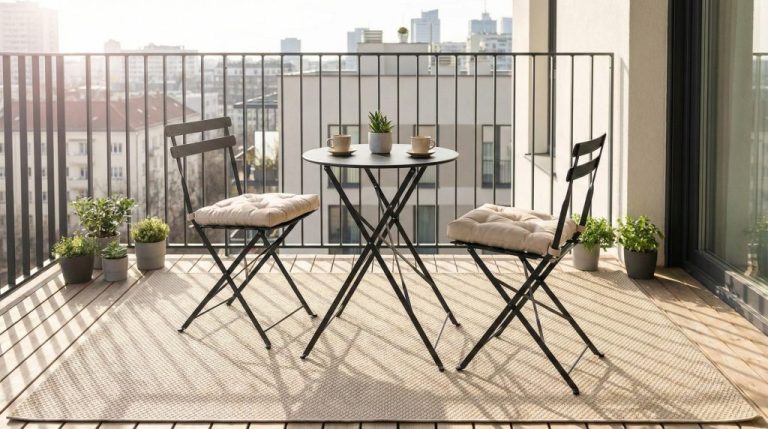
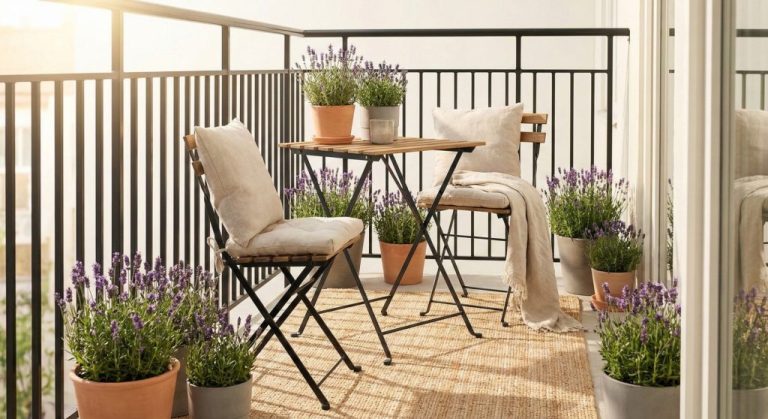
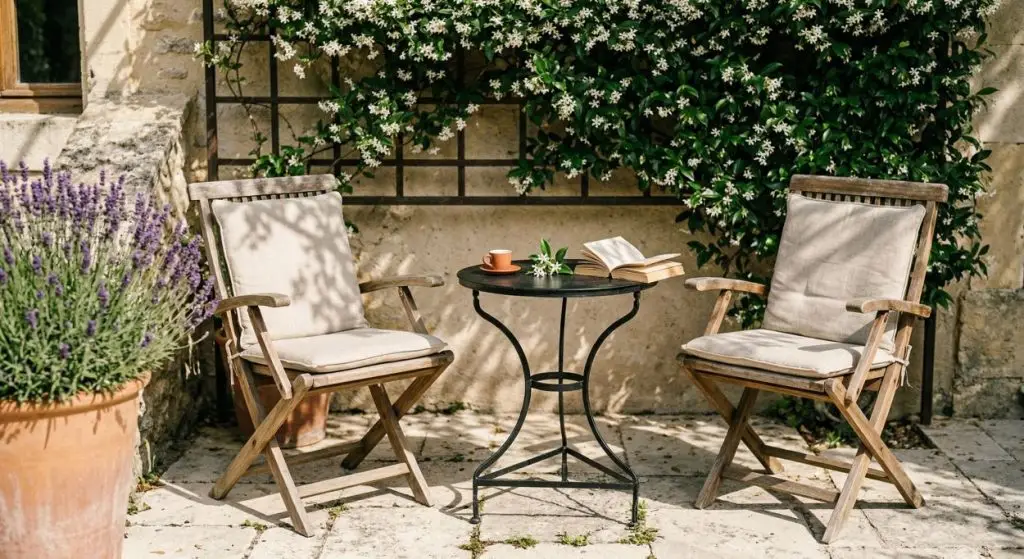
My seating area is simple: two wooden folding chairs with linen cushions and a small iron side table under a jasmine-covered trellis. Folding wooden garden chairs and iron side tables are available from Amazon and outdoor furniture retailers. The jasmine took one full season to cover the trellis properly — now it provides genuine shade in the afternoon and fills the whole corner with scent on warm evenings.
Shade is genuinely important in an intense summer climate. You need overhead cover to actually use outdoor seating during the hottest hours. Options that work beautifully in a Mediterranean aesthetic:
- A simple wooden or iron pergola draped with jasmine or a grapevine — pergola kits and wall-mounted trellis frames are widely available on Amazon and at home improvement retailers.
- A large market umbrella in natural canvas or terracotta-red — available at garden retailers, IKEA, and on Amazon.
- Sun shade sails in warm linen or sand tones strung between wall hooks — easy to find on Amazon and at outdoor living stores.
For cushions and outdoor textiles, look for outdoor-rated fabrics in earthy natural tones — oatmeal, sandy beige, dusty rust, faded terracotta.
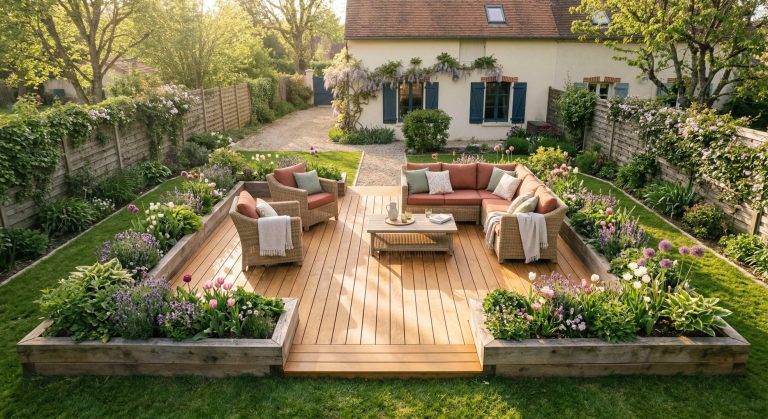
Boho and Mediterranean-style outdoor cushions in these colorways are available on Amazon, Etsy, and at home decor retailers. Avoid bright whites — they show dust quickly in dry climates — and anything that looks plasticky or synthetic. If you want to take the seating area further and give it a proper defined base, read How to Design a Low Deck: Ground-Level Ideas for a Beautiful Spring Backyard.
Step 7: Add Evening Light
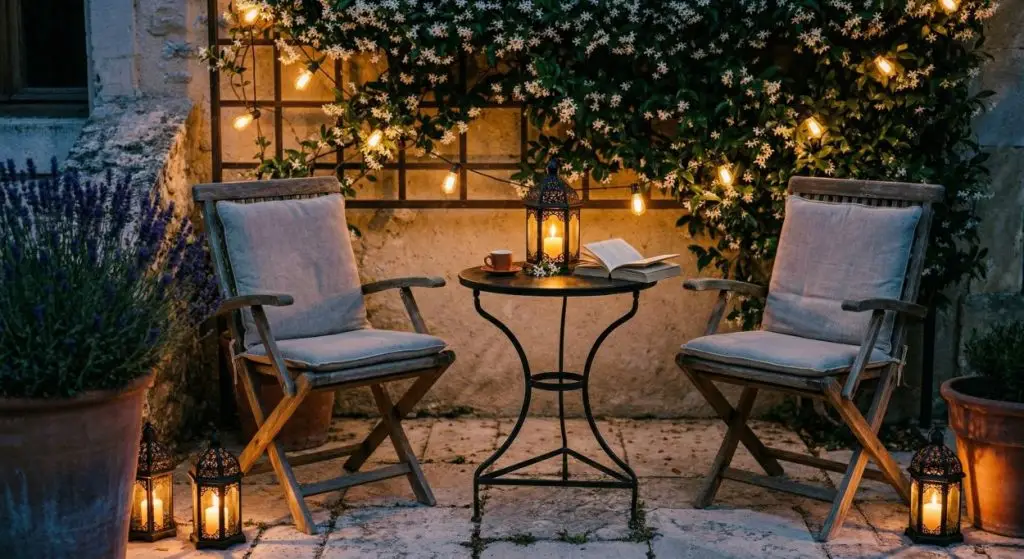
This is the step most people skip, and it’s one of the most transforming. A Mediterranean outdoor space doesn’t shut down at sunset — it shifts. The light changes, the jasmine and lavender scent intensifies in the cooler air, and if you’ve lit the space well, the garden looks entirely different and even more beautiful in the evening hours.
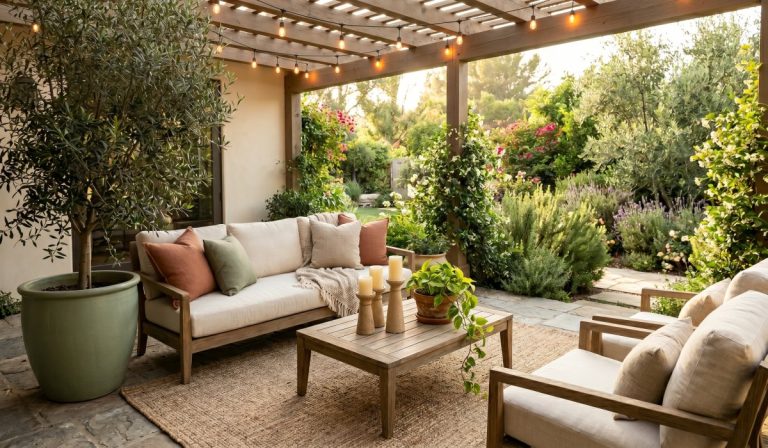
I keep it simple. A few Moroccan-style iron lanterns at ground level among the pot clusters, with tealights inside. Sets of outdoor iron lanterns in Moroccan style are available on Amazon and at home decor retailers. A string of warm-white filament bulb lights draped from the trellis to the wall. Outdoor festoon string lights with Edison-style bulbs are easy to find on Amazon and at lighting retailers. One larger lantern on the iron side table for the seating area.
The rule I follow: warm light only. No cool white or blue-toned LEDs — they look completely wrong against terracotta and limestone. Look for bulbs with a color temperature around 2200K to 2700K for that warm amber glow. Warm Edison filament bulbs in this color temperature range are widely available on Amazon.
Solar-powered garden stake lights are also worth considering — practical, cable-free, and in a hot sunny climate they charge exceptionally well. Solar garden stake lights in warm amber tones are available on Amazon and at garden retailers.
One thing I’ve noticed about Mediterranean garden evenings: you don’t need elaborate lighting design. A single lantern next to a terracotta pot, the warm flicker of a tealight reflected on a ceramic tile, string lights moving slightly in the evening breeze — restraint is part of the aesthetic, and a little goes a surprisingly long way.
Tips for Success in a Hot Climate
A few things I’d tell myself if I were starting over:
Water in the early morning, not the afternoon.Watering during peak heat causes more evaporation than absorption and can scorch wet foliage. Early morning watering — before 8am — gives the water time to reach the roots before the sun peaks. Evening watering is the second-best option.
Don’t fight the summer dormancy period.In the hottest weeks, lavender may look tired and some herbs will slow almost completely. This is healthy, not a crisis. Reduce watering slightly, don’t fertilize, don’t prune. Let things rest. The garden comes back strongly when the worst heat passes and can look spectacular right through autumn.
Protect new plantings from hot dry wind.Dry wind can desiccate unestablished plants very quickly. A simple windbreak during the first season — a wall, a row of taller established plants, or even a temporary shade cloth screen (available on Amazon and at garden retailers) — makes a real difference in plant survival.
Use local natural materials where you can.Limestone, sandstone, natural river pebbles sourced locally — they already belong to the landscape and they look genuinely authentic in a way that imported decorative stones often don’t. They’re also typically much better value.
Start with scent.If you’re building the garden in stages, prioritize jasmine and lavender first. They establish quickly and the sensory payoff starts fast enough to keep your enthusiasm going through the longer-term planting process.
Common Mistakes to Avoid
The most common mistake I see — and made myself — is overwatering. I lost two lavender plants in my first season not to the heat, but to wet, airless roots sitting in moisture-retaining soil. Mediterranean herbs would rather be slightly underwatered than overwatered. Let the soil dry completely between waterings. If you’re not sure, wait another day.
The second mistake is using the wrong soil. If you plant lavender or rosemary into standard moisture-retaining potting compost, you’re setting it up to struggle. Mix your potting soil with at least 30% horticultural grit or coarse perlite before planting. Coarse perlite and horticultural grit are available at garden centers and on Amazon. The difference in plant health is significant.
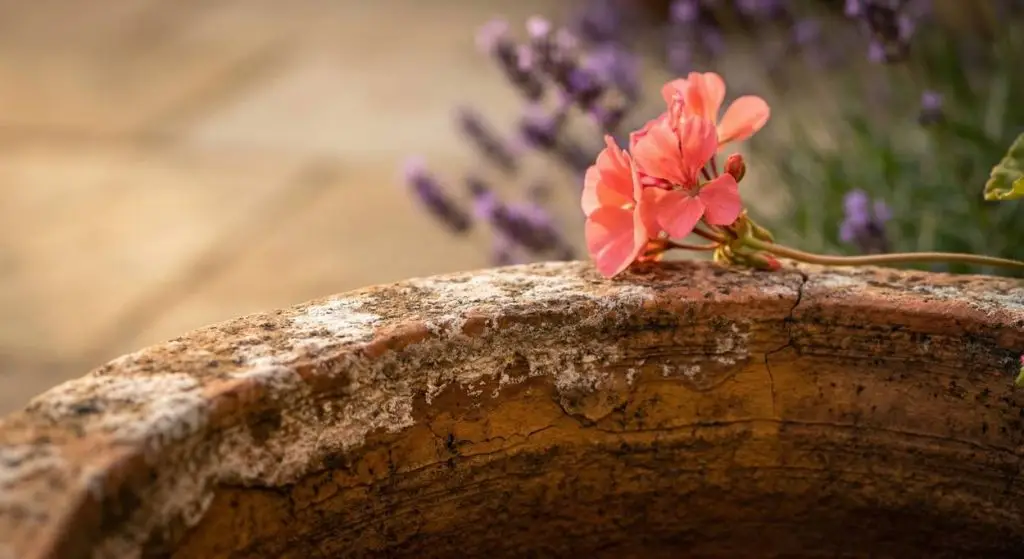
The third is making the layout too symmetrical. Two matching pots flanking a door is a classic — but rows of identical plants at equal spacing and same-sized pots in a straight line kills the relaxed, abundant quality that defines this style. Let things be uneven. Let them spill. A trailing pelargonium that has reached over the edge of its pot toward the path is not a problem — it’s exactly the kind of detail that makes a Mediterranean garden feel real.
For best results overall: choose plants suited to your actual conditions, give them lean well-draining soil, water deeply and infrequently, and resist the urge to over-tidy. This style rewards restraint and patience more than any other I’ve worked with.
Conclusion
Now you know how to style a Mediterranean garden step by step — from reading your sun and laying your stone foundation, to choosing anchor plants, building your planting layers, grouping terracotta pots, creating a shaded seating corner, and lighting the space for beautiful evenings.
The best news for those of us living with a genuinely hot, dry climate is that we’re not imitating this look from a distance — we’re in it. The sun, the sandy soil, the warm evenings, the long summers: we have all of it. The plants that define Mediterranean gardens are the same plants that make perfect sense for our conditions. We’re not fighting our environment. We’re working with it.
Start small. Three terracotta pots, one lavender, one rosemary, a bag of limestone gravel. Sit with it for a season. Watch what grows and how the light moves through the space. Then build from there. The Mediterranean garden rewards slow, layered progress — and the result, when it finally comes together, is genuinely one of the most satisfying spaces you can create at home.
FAQ
Q: Which Mediterranean plants grow best in hot, dry climates?
The most reliable performers in intense heat are rosemary, lavender (especially Lavandula stoechas, which handles heat better than angustifolia), thyme, sage, oregano, bougainvillea, jasmine, pelargoniums, and olive trees. All of these evolved in climates very similar to a hot dry environment and thrive with minimal watering once established. Avoid anything labeled Mediterranean that is actually a moisture-loving woodland variety.
Q: How often should I water Mediterranean plants in summer?
Much less than you would expect. Established lavender, rosemary, and thyme need deep watering roughly once a week in peak summer heat — sometimes less once their roots are fully developed. The key word is deep: water slowly so moisture reaches down into the root zone, then let the soil dry completely before watering again. Always water in the early morning before the heat peaks.
Q: Can I create a Mediterranean garden in a small walled courtyard?
Yes — a walled courtyard is actually close to ideal for this style. The walls provide wind protection, reflected warmth from pale stone keeps plants comfortable, and the enclosed space concentrates the scent of herbs and jasmine beautifully. Work with large containers rather than ground planting, use vertical space with climbing plants on the walls, and choose plants at varying heights to create depth within a small footprint.
Q: How do I age terracotta pots quickly?
Brush the outside of the pot with a solution of equal parts plain yogurt and water, then place it in a partially shaded spot outside for two to three weeks. The organic material encourages moss and mold growth that creates a natural grey-green patina. You can also paint on diluted muddy soil water and let it dry in the sun repeatedly. Both work well — the yogurt method tends toward a greener tone, the soil method gives a dustier grey finish. Either looks far more authentic than bright new terracotta.
Q: Do I need to protect Mediterranean plants through winter?
In a hot climate with mild winters, most Mediterranean plants — lavender, rosemary, sage, thyme, and olive trees — are perfectly happy outdoors year-round. The exception is bougainvillea, which dislikes cold nights below about 5°C. If you get occasional cold spells, move potted bougainvillea to a sheltered spot near a wall. Pelargoniums also appreciate some protection from the coldest nights. Everything else should be completely fine outdoors through the winter months.