Companion Planting for VegetablesWhat to Grow Together (and What to Never Plant Side by Side)
Introduction
If you’ve ever wondered why some parts of your vegetable garden thrive while others
struggle — despite getting the same water, sunlight, and care — the answer might
come down to what’s planted next to what. Companion planting is one of the oldest and
most effective gardening strategies around, and it’s having a genuine moment right now
among home gardeners who want healthier plants without reaching for chemical sprays.
The idea is simple: certain plants help each other grow. They repel pests, attract
pollinators, fix nitrogen in the soil, or simply make better use of shared space. And on
the flip side, some plant pairings actively work against each other — competing for
nutrients, releasing growth-inhibiting compounds, or attracting the same pests to the
same spot.
This guide breaks it all down in plain language so you can plan your vegetable garden
with intention this season — and actually see the difference.
🌿 FREE TOOL: Not sure which vegetables grow well together in your garden?
Use our free Companion Planting Checker tool to instantly check
plant compatibility before you plant.
What Is Companion Planting?
Companion planting is the practice of growing different plants near each other so they
can benefit one another. It’s based on a mix of traditional farming wisdom and modern
horticultural research, and it works at every scale — from a small raised bed on a
balcony to a large kitchen garden.
The benefits vary depending on the pairing. Some plants deter insects that would
otherwise damage their neighbors. Some attract beneficial insects like bees and
hoverflies that help with pollination. Some fix nitrogen from the air into the soil, making it
available to hungry neighboring plants. Others simply grow in complementary shapes —
a tall plant shading a low-growing crop that appreciates it, for example.
You don’t have to be a botanist to use it. You just need to know which combinations
work — and which ones to avoid
The Best Companion Planting Combinations
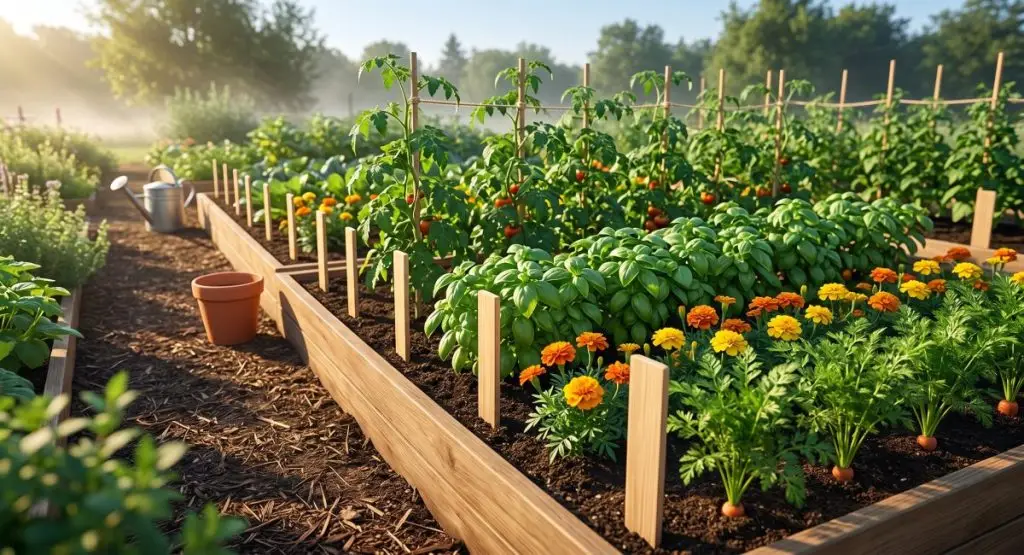
🍅 Tomatoes + Basil
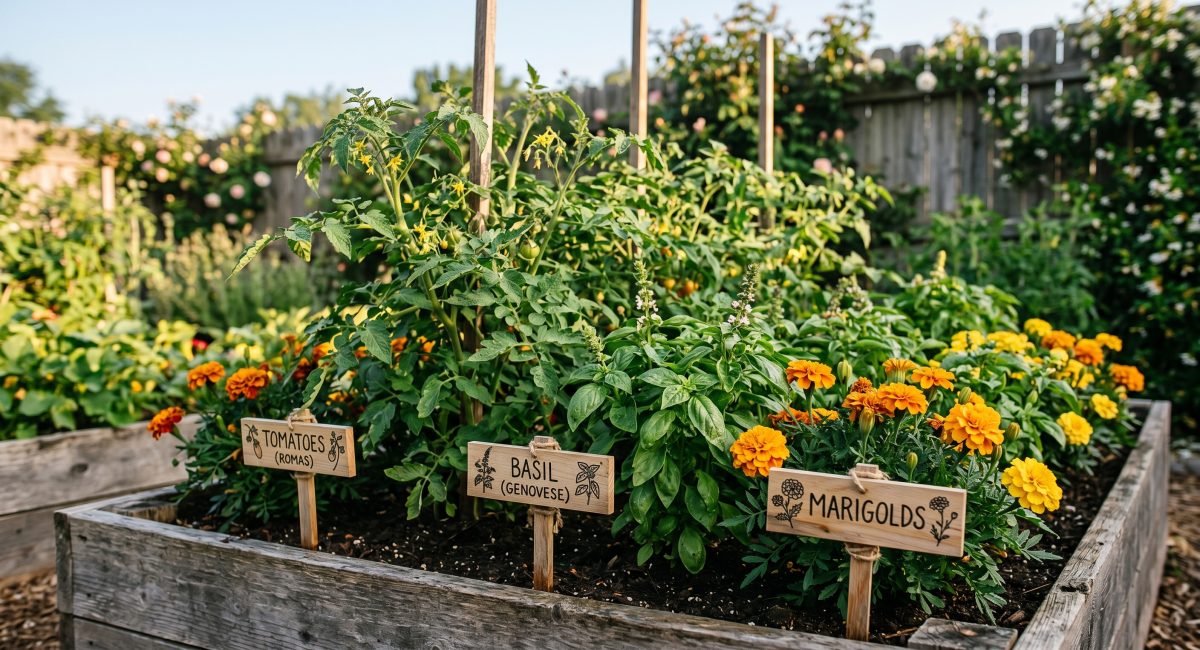
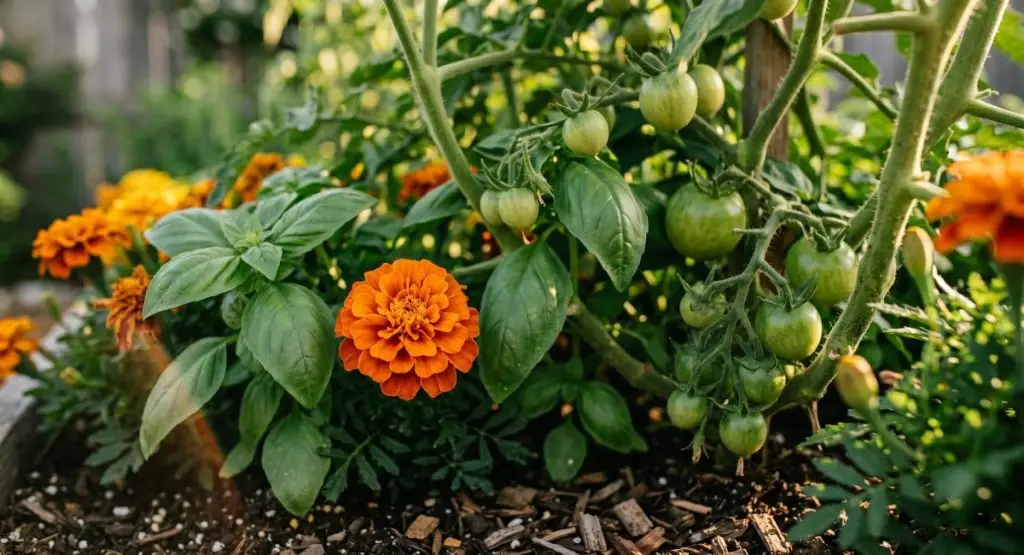
The most famous companion planting pair for good reason. Basil repels aphids, whitefly, and tomato hornworm. Plant basil at the base of your tomato plants. Both are widely available as seed starter packs on Amazon and at garden centers.
🌼 Tomatoes + Marigolds
Marigold roots release a substance that repels nematodes — microscopic soil pests that devastate tomato roots. They also deter aphids and attract predatory insects. Plant them around the border of your tomato bed. Marigold seeds and seedlings are inexpensive and widely available on Amazon and at any garden center.
🥕 Carrots + Onions (or Chives)
Carrot flies dislike the scent of onions, and onion flies dislike the scent of carrots — a natural mutual pest-deterrent system. Chives work just as well and take up less space. Find seed variety packs for both on Amazon.
🌽 Beans + Corn + Squash (The Three Sisters)
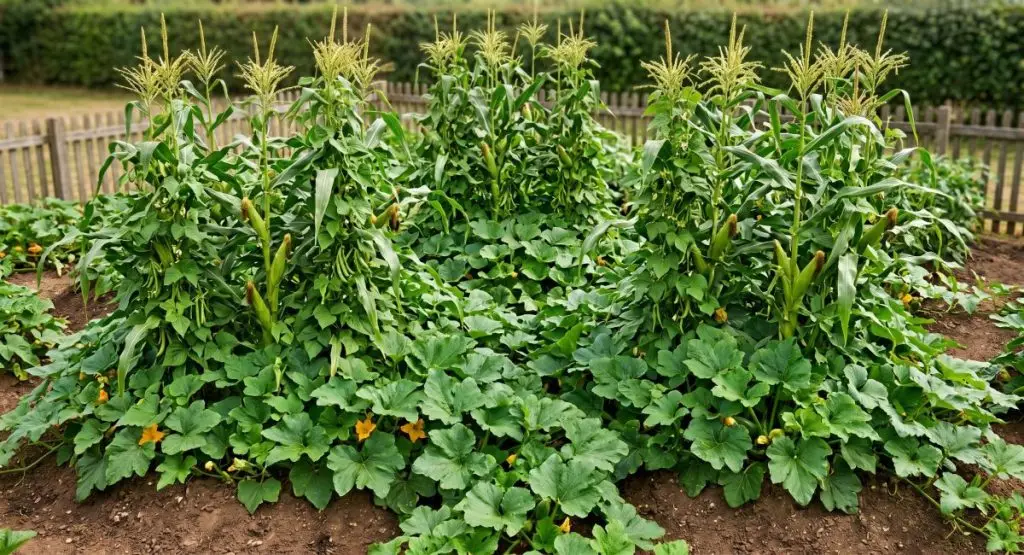
One of the oldest companion planting combinations in existence, used for centuries by Indigenous North American farmers. Corn provides a trellis for beans. Beans fix nitrogen for corn and squash. Squash shades the soil and suppresses weeds. A nearly self-sustaining system — three-variety seed packs are available on Amazon.
🥒 Cucumbers + Dill
Dill attracts beneficial wasps and predatory insects that feed on cucumber beetles and aphids. Plant dill within a few feet of your cucumbers — not directly against them. Trim regularly as mature dill can inhibit cucumber growth. Dill seeds are widely available and inexpensive on Amazon.
🥬 Lettuce + Tall Vegetables
Lettuce benefits from light shade during the hottest parts of summer. Plant it near tall crops like tomatoes, beans, or corn to extend its productive season. A great way to make maximum use of limited raised bed space.
🫑 Peppers + Basil + Carrots
Basil repels aphids and spider mites on peppers. Carrots loosen the soil around pepper roots as they grow, improving aeration. Particularly effective in raised beds. All three are available as seed starter sets on Amazon.
The Worst Companion Planting Combinations
Just as important as knowing what works is knowing what doesn’t. These pairings actively harm each other — keeping them apart will save you a lot of frustration.
- Tomatoes + Fennel: Fennel releases allelopathic compounds that inhibit nearby plant growth. Tomatoes are particularly sensitive. Keep fennel in an isolated container.
- Tomatoes + Potatoes: Botanical cousins that share the same diseases — especially blight. If it hits one, it spreads to the other immediately. Never plant them together.
- Beans + Onions or Garlic: Beans fix nitrogen, but onions and garlic are sensitive to excess nitrogen — they’ll grow all leaves and no bulb. Keep these apart.
- Cucumbers + Sage: Sage inhibits cucumber growth. A combination to avoid regardless.
- Fennel + Almost Everything: Fennel is allelopathic and should always be grown in isolation. The only plant that tolerates it somewhat is dill — but even then, keep them apart to avoid cross-pollination.
- Peppers + Fennel: Same issue as tomatoes. The allelopathic compounds affect pepper growth. Avoid completely.
How to Plan Your Layout
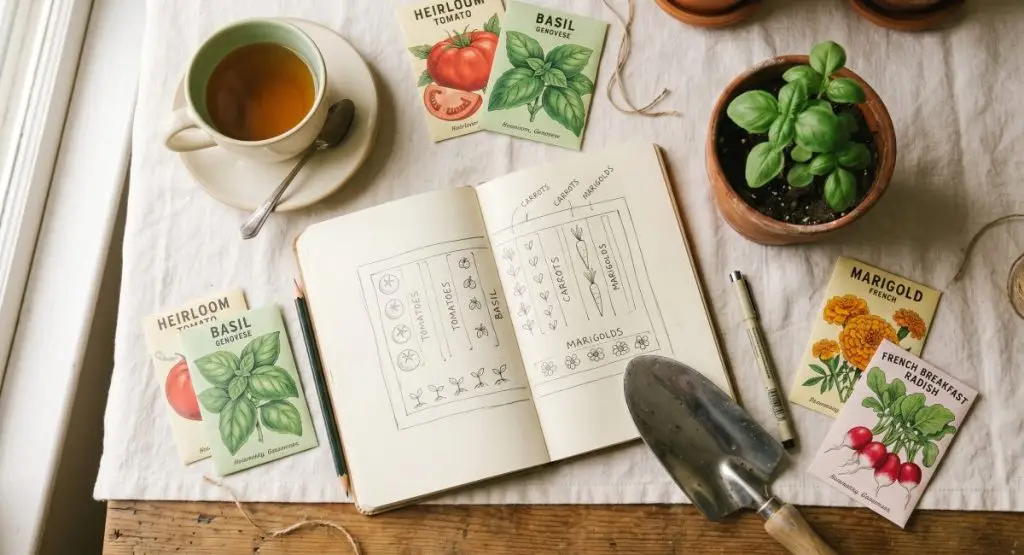
You don’t need to redesign your entire garden to make companion planting work. Here’s a simple approach:
- Start with your anchor crops — the main vegetables you want to grow.
- For each anchor crop, identify one or two companion plants from the list above.
- Check what NOT to plant nearby and make sure those go in a different bed or section.
- Fill gaps with general pest deterrents like marigolds and nasturtiums — both widely available on Amazon as seeds.
- Use our Companion Planting Checker tool on Unusual-R to verify any pairing you’re unsure about before you dig a single hole.
🌿 Try it free: Use the Companion Planting Checker to instantly see whether your plant pairs are friends or foes — before you plant.
Final Thoughts
Companion planting won’t solve every garden challenge, but it’s one of the most rewarding habits you can build. Once you understand the basic principles — and know which pairings to avoid — it becomes second nature. You start seeing your garden as an ecosystem rather than a collection of individual plants.
Start small this season. Pick one or two combinations — tomatoes and basil is the classic entry point — and watch what happens. Next year you’ll find yourself planning your entire garden layout around these relationships, and wondering how you ever gardened without them.
🌿 Before you plant this season: Check your combinations in our free Companion Planting Checker — it takes seconds and could save your entire harvest.
FAQ
Question: Does companion planting actually work?
Answer: Yes — though the effectiveness varies by combination. Some pairings like tomatoes and marigolds have solid horticultural backing: marigold roots are proven to repel soil nematodes. Others like the tomato-basil flavor enhancement are more anecdotal. The safest approach is to use well-established combinations (covered in this article), avoid the known bad pairings, and observe what works in your specific garden over time.
Question: What is the best companion plant for tomatoes?
Answer: Basil and marigolds are the two best companions for tomatoes. Basil is believed to repel aphids, whitefly, and tomato hornworm. Marigolds deter soil nematodes and aphids while attracting beneficial predatory insects. Plant basil at the base of your tomato plants and marigolds around the border of the bed. Both are inexpensive and available on Amazon as seeds or seedling packs.
Question: Can I do companion planting in containers or small raised beds?
Answer: Absolutely — companion planting works especially well in raised beds and containers where you control the layout precisely. The key is to choose compact companions that won’t crowd each other: basil and tomatoes in one container, carrots and chives in another. Avoid aggressive spreaders like squash unless you have a larger bed. Our Companion Planting Checker tool can help you verify pairings before you plant in your specific setup.
Question: Why is fennel bad for vegetable gardens?
Answer: Fennel produces allelopathic compounds — natural chemicals that inhibit the germination and growth of most other plants growing nearby. It’s essentially toxic to its neighbors. Almost no common vegetable grows well next to fennel, which is why experienced gardeners always keep it isolated in its own container, far from the main vegetable garden. If you love growing fennel, plant it alone in a pot rather than in a shared bed.
Question: How far apart should companion plants be?
Answer: It depends on the pairing. Some companions like basil and tomatoes can be planted very closely — within 6–12 inches of each other. Others like dill and cucumbers should be kept a few feet apart (dill can inhibit cucumbers as it matures). A general rule: companion plants should be close enough to interact (share root chemistry, attract insects to the same zone) but not so close they compete for light and nutrients. Check the specific spacing requirements for each vegetable on its seed packet or listing on Amazon.
Question: What is the easiest companion planting combination to start with?
Answer: Tomatoes and basil is the easiest and most rewarding starting point. Both are beginner-friendly to grow, they’re planted at the same time, and the pairing is well-established. Buy a tomato seedling and a basil seedling from your local nursery or garden center (or order seeds from Amazon), plant the basil 6–8 inches from the tomato base, and you’re done. It’s also a delicious harvest combination — the garden practically cooks for you.
Happy Growing