How to Style an Outdoor Living Room: The Patio Trend Transforming Backyards
The Outdoor Living Room Trend — And Why It Is Everywhere Right Now
Okay, real talk: my patio used to be embarrassing. Not in an obvious, broken-furniture kind of way — more in that quietly sad way where nothing’s wrong exactly, it’s just… nothing’s right either. Two garden chairs that didn’t quite match. A little metal table I’d picked up on sale and immediately forgotten about. One potted plant that I kept telling myself was “rustic” when really it was just struggling.
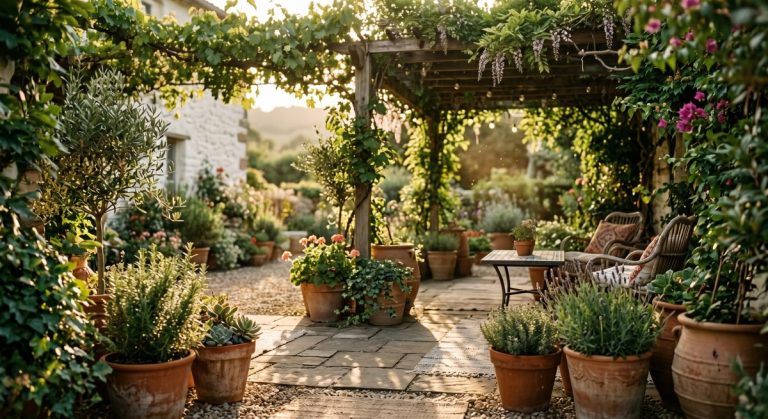
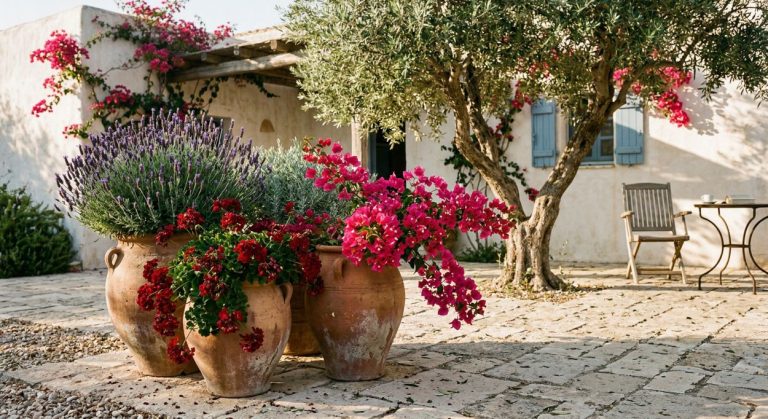
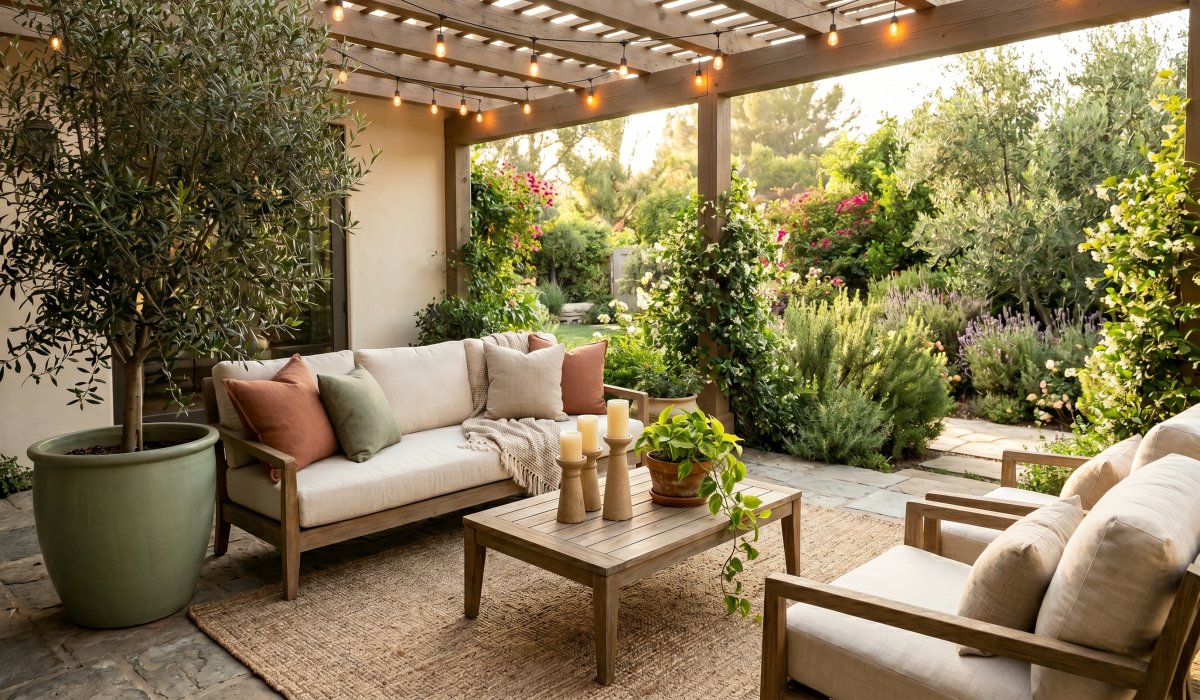
Then one evening I fell down a Pinterest rabbit hole — you know the one, where you go looking for one thing and come up forty minutes later with seventeen saved boards you don’t remember creating. And I kept stopping on the same kind of image: patios that looked like actual living rooms. Sofas and rugs outside. String lights strung from wooden beams. Clusters of terracotta pots overflowing with plants. Throw pillows. Real throw pillows. Outside.
That’s the outdoor living room trend, and it’s been quietly taking over backyards and patios everywhere. The idea isn’t complicated: you stop treating your outdoor space like a functional afterthought and start treating it like an actual room. Same intention, same layering, same love — just outside.
In this post I’m going to walk you through how to actually do it — from figuring out your layout to choosing the right furniture, rug, plants, lighting, and those little surface-styling details that most people overlook but that make all the difference.
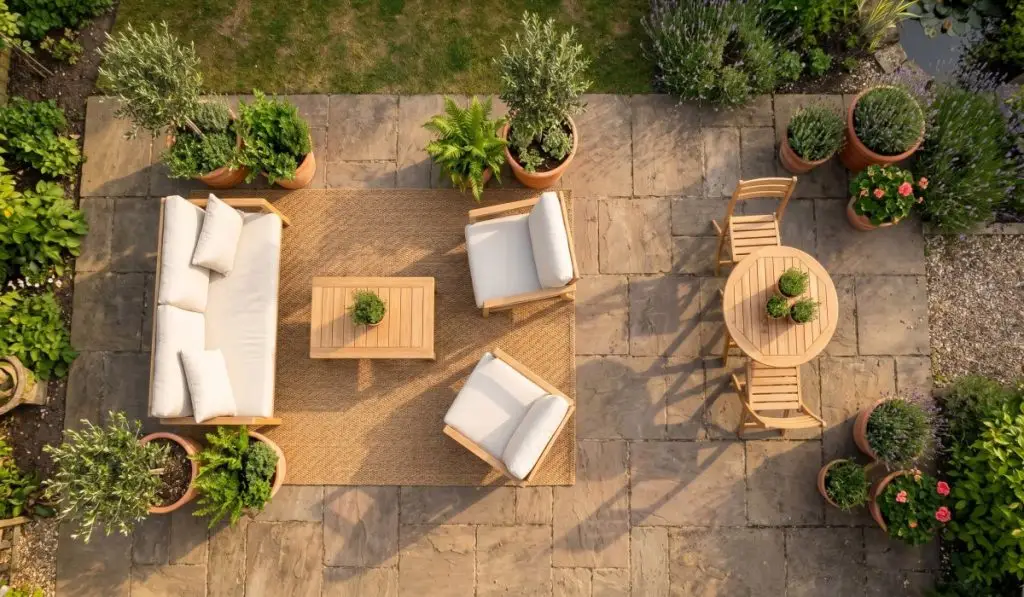
Start With Layout — Define Your Zone First
Before you buy a single thing — seriously, before you even start browsing — go stand in your outdoor space for five minutes. Just stand there. I know that sounds tedious, but most outdoor spaces look off not because the furniture’s wrong, but because nobody thought about how the space would actually be used before filling it.
What do you actually want from this space? Evening drinks with friends? A morning coffee spot that’s a little separate from everything? Somewhere to eat outside properly, not just balanced on your lap? Even a small patio can usually hold two zones if you’re thoughtful about it — a lounge area here, a little bistro moment there.
Also think about what you want to look at when you sit down. That sounds obvious but people forget it constantly — they place furniture facing a wall or a fence, then wonder why they never actually use the space. Find your best view, even if it’s just a corner with a good plant, and orient your seating toward it. Everything else will fall into place.
Choose Furniture That Feels Like It Belongs Inside
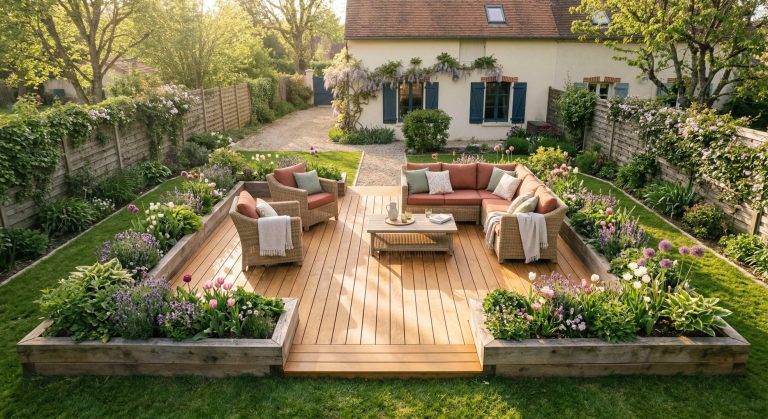
Here’s the thing about outdoor furniture that I didn’t understand for years: it doesn’t have to look like outdoor furniture. That slightly apologetic quality that most garden sets have — the vague sense that they’re making do — isn’t inevitable. Outdoor sofas with proper thick cushions exist. Low teak coffee tables exist. Side tables that look like they wandered outside from your living room exist.
What to actually look for:
- Deep-seat sofas and chairs — if you can’t sink into it properly, it’s not doing the job. Thick cushions are non-negotiable
- Neutral base fabrics — oatmeal, cream, linen, warm grey. You’ll change your cushion colors seasonally. The sofa itself should stay quiet
- Weather-resistant materials — powder-coated steel, teak, or resin wicker are the three that actually hold up. Untreated softwood won’t last
- A proper coffee table at the right height — somewhere to put your drink, your book, and a few styled objects. Without it, the whole setup feels unfinished
- Scale matters more than quantity — one sofa and two chairs that actually fit the space beats six mismatched chairs crammed in any day
| 🛒 Deep-seat outdoor sofas and lounge chairs are widely available on Amazon and at garden retailers — look for pieces labelled ‘weather-resistant cushions’ or ‘outdoor-grade fabric’ to ensure they hold up through sun and light rain. Resin wicker frames in dark brown or warm grey tend to look the most elevated outdoors. |
Lay an Outdoor Rug — It Changes Everything
If I could tell someone to do one thing first — just one — it would be this: get the rug before you get anything else. I’m serious. A rug on a patio changes the whole mood before a single piece of furniture arrives. It instantly makes the space feel intentional. It tells your brain: this is a room now, not a leftover bit of ground.
Same rule as indoors: go bigger than feels right. The front legs of everything should sit on it. A rug that’s too small just floats there looking uncertain, and suddenly even nice furniture seems unrooted. For this aesthetic I love natural textures — jute-look weaves, faded stripes in cream and sage, soft geometrics in terracotta tones. Nothing too fussy or bright.
| 🛒 Outdoor area rugs are one of the best value buys for patio styling — and there are beautiful options on Amazon across all sizes. Look for polypropylene weave rugs specifically labelled ‘outdoor safe’ or ‘UV resistant’ — they handle sun and light rain well and clean easily with a garden hose. |
Layer Your Lighting — This Is What Makes It Magic at Night
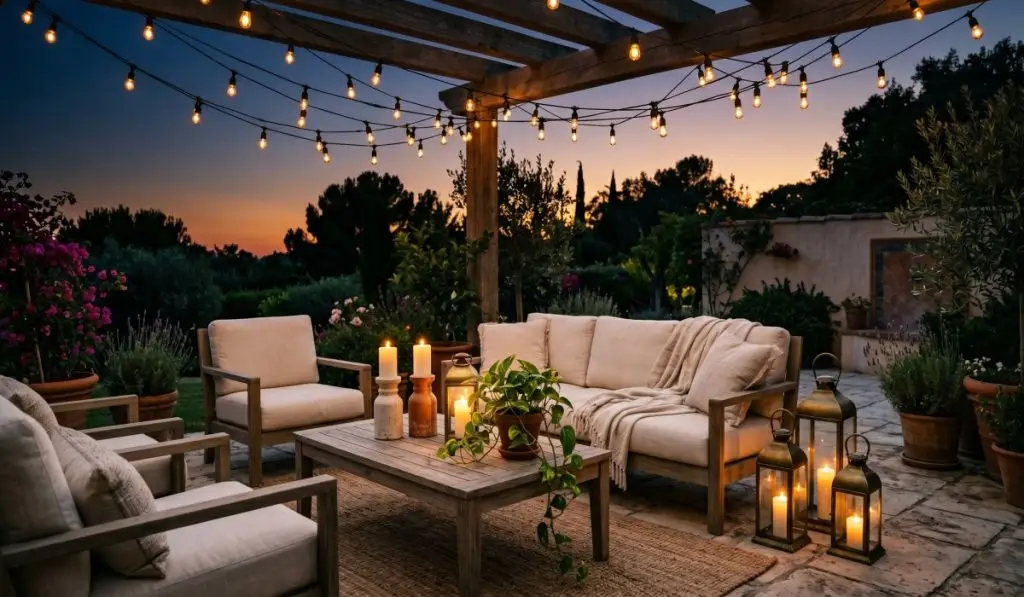
I want to talk about lighting for a second because I think it’s the thing most people get completely wrong — and it’s also the thing that makes the biggest difference after dark. The mistake is treating outdoor lighting like a single task. You put up some string lights, job done. But that gives you one flat layer of light, which ends up feeling more like a car park than a cozy room.
What you actually want is atmosphere. Multiple sources at different heights, some warm and dim, some just ambient. Think about how a good restaurant does it — you’re never blinking under one overhead light. It’s all layered. Here’s how to do that outside:
- String lights overhead — this is your main ambient layer. Drape them from a pergola, between two posts, or hook them to the wall. Warm white only, not cool white
- Floor lanterns in a cluster — group three at different heights near the sofa. Odd numbers always look better than even, for some reason that I can’t fully explain but is definitely true
- Candles in hurricane glass holders on the coffee table — this is your close, intimate layer. Nothing replaces actual candlelight for the feeling it creates
- Solar path lights leading to the seating area — they add depth, they’re free to run, and they define the edges of the space in a way that feels really nice at night
- An outdoor floor lamp if you have a power point close — genuinely useful if you actually sit outside and read. Not essential, but a very nice thing to have
Use Plants as Living Architecture — Layer Them Like a Designer
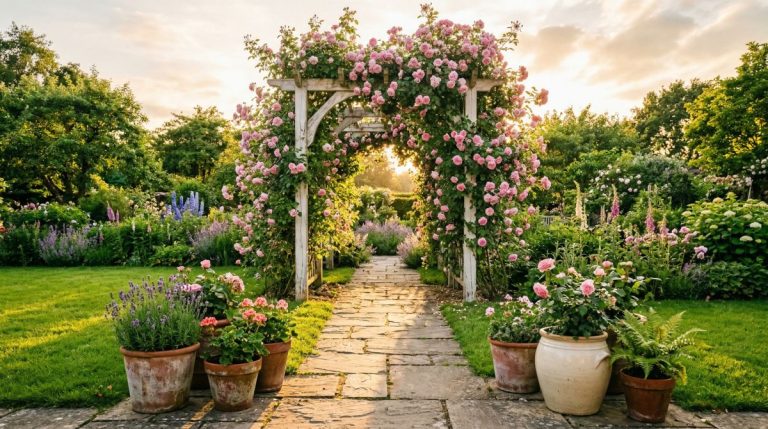
Plants are honestly what separates a patio that looks styled from one that looks alive. Without them, even the nicest furniture arrangement just sits there. With the right plants in the right places, something clicks — suddenly the space feels like a room that grew, not one that was assembled. And the best part is that you don’t need a garden bed for any of this. Container gardening has gotten so good that a full lush display in pots alone is completely achievable.
The way I think about it is three layers, and once you see this you can’t unsee it:
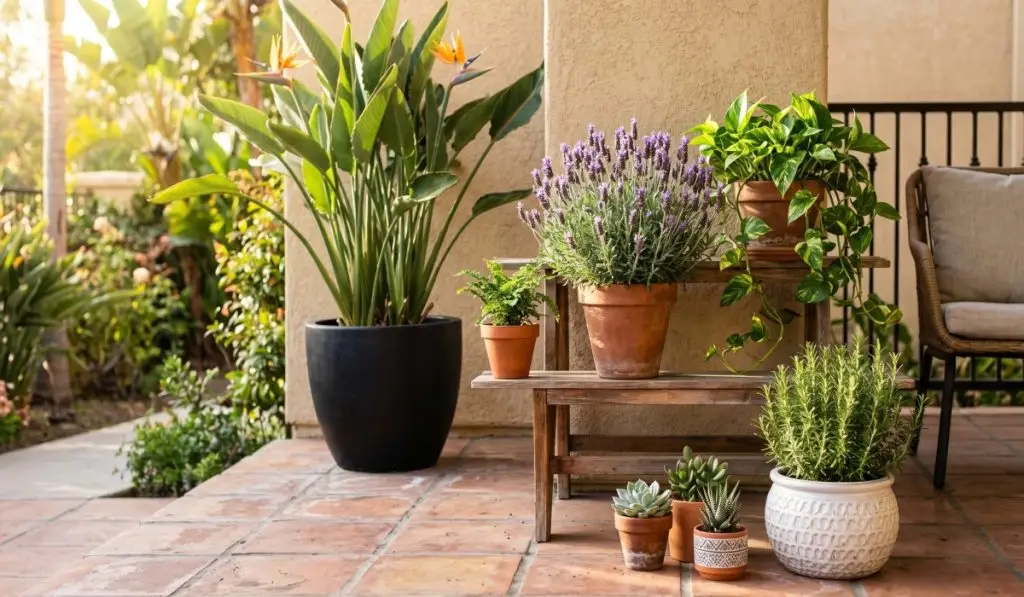
- Anchor layer — one or two large plants in beautiful containers that give the space its bones. Bird of paradise, olive tree, tall ornamental grass. These create height and make everything else feel purposeful
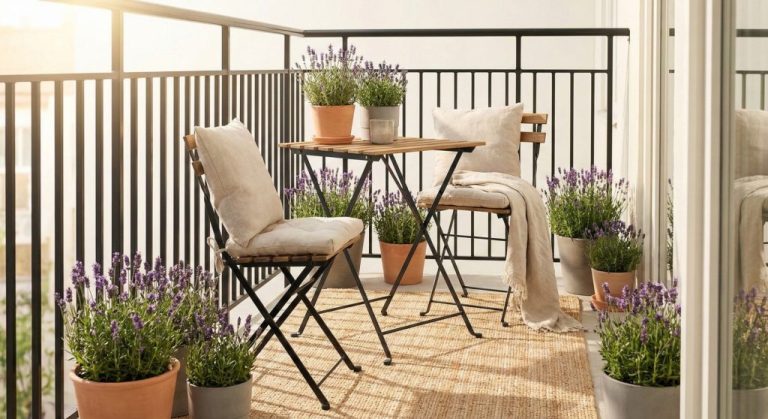
- Mid layer — medium plants that add texture and fill the gaps around the furniture. Lavender, ferns, agapanthus, flowering herbs. These are your color and fragrance layer
- Detail layer — small pots that sit on surfaces, steps, and shelves. Trailing ivy, succulents, a pot of rosemary on the coffee table. These are what make it feel genuinely curated rather than just “plants placed”
Group in odd numbers — threes, fives. It’s one of those rules that seems arbitrary until you try grouping four plants and then three and you understand immediately why the odd number works. And vary the heights: plant stands, an upturned crate, a wooden ladder shelf. Flat rows of same-height pots in a line look like a garden centre, not a styled space.
Add Textiles for Warmth, Color, and Personality
Cushions and throws are the bit people tend to be too cautious about outdoors. They go for one neutral cushion on each side, job done. But what makes outdoor rooms look rich and lived-in is layering textiles the same way you would inside — multiple cushions in different sizes, a throw that actually looks like you might use it, some color coming through.
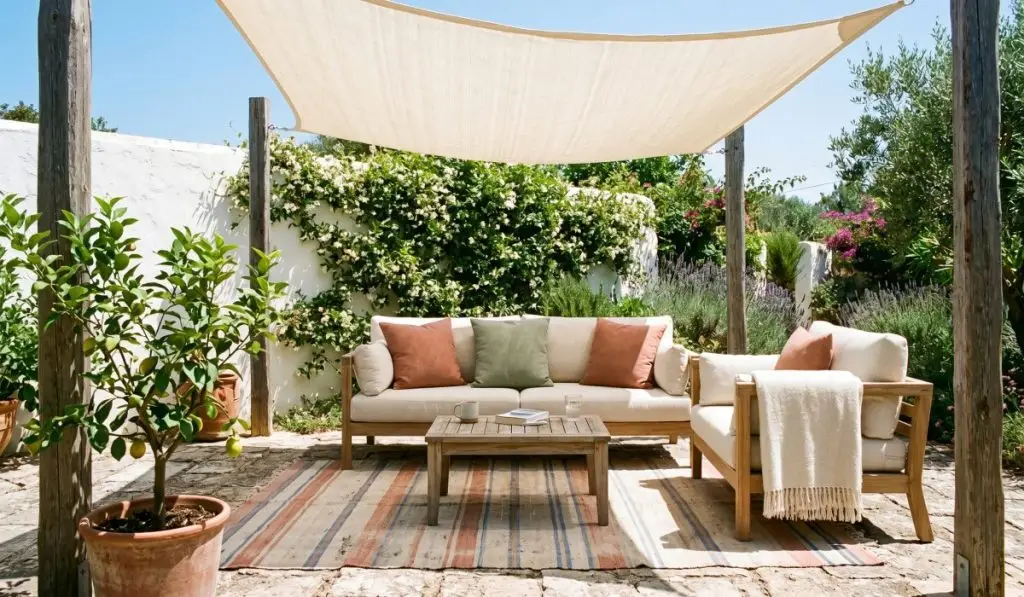
Right now I’m really drawn to jewel tones against neutral bases — deep terracotta cushions on a cream sofa, a sage green throw folded over one arm, maybe one warm amber pillow in the mix. It sounds like a lot but it photographs beautifully and it genuinely looks intentional rather than random. The neutral base furniture keeps it from feeling chaotic.
Just make sure whatever you buy is outdoor-rated. This genuinely matters — regular fabric fades and goes limp after a few weeks of sun exposure. Outdoor-rated cushion fabric holds up properly through a full season. It’s worth the slightly higher price.
Add a Shade Element — Your Outdoor Room Needs a Ceiling
This is the one that people often skip, and I understand why — shade feels like a purely practical problem rather than a styling one. But here’s the thing: a shade element also gives your outdoor room a ceiling. And a room with a ceiling feels like a room. A room without one feels like open air with furniture in it. The practical and the aesthetic are the same thing here.
The options that actually work and look good:
- A large market umbrella in a neutral linen-look fabric — the most flexible option, relatively affordable, and easy to close when the weather changes
- A shade sail between anchor points — modern, architectural, surprisingly affordable, and it looks genuinely designed when it’s done right
- Outdoor curtain panels from a pergola or tension rod — this is the romantic option. Billowing linen in a warm breeze is genuinely lovely. Also gives you privacy when you want it
- A bamboo or rattan screen overhead — earthy, natural, perfect if you’re going for a boho or Mediterranean feel. It filters the light rather than blocking it, which is actually nicer
If you’re working on the bigger outdoor picture, I cover related ideas in my post on Backyard Oasis Ideas for Spring: Low-Maintenance, Water-Wise Upgrades That Feel Luxurious — worth reading alongside this one.
Style Your Surfaces — The Coffee Table and Side Table Details
I want to say something about coffee table styling that might sound slightly intense: I think a bare outdoor coffee table is one of the saddest things in home decor. You’ve done all this work on the sofa and the rug and the plants, and then there’s this empty flat surface just sitting there, doing nothing. It’s a missed moment.
The formula I keep coming back to: three candles in different heights, one small pot (a herb or a succulent), a tray to corral the loose stuff like coasters and a lighter, and a small stack of outdoor magazines or a nice object you found somewhere. That’s genuinely it. That’s the whole recipe.
What the Best Outdoor Living Rooms All Have in Common
After spending way too much time thinking about outdoor spaces and why some feel genuinely special while others — with objectively nicer furniture — feel completely flat, I’ve noticed a few things they consistently have in common:
- They’re personal — there’s something in them that couldn’t belong to just anyone. A specific plant, a found object, a color that keeps showing up. They feel like someone, not just something
- They’re layered — surfaces have things on them, plants are grouped not scattered, textiles are present. Your eye has somewhere to go and then somewhere else to go after that
- They’re lit well — and I mean properly lit, not just one light source. The evenings in these spaces feel different from the afternoons in the best possible way
- They feel looked after — plants are healthy, furniture’s clean, things are where they’re meant to be. The space communicates care, which is maybe the most important thing of all
You don’t need a lot of money to do this. You really don’t. Start with a rug, one good plant, and a couple of decent cushions — and build from there. The whole point is that it layers up gradually, and that slow process of adding things over a season or two is honestly part of what makes it feel like yours.
Give your patio a real chance this summer. I think it might become your favorite room in the house — even though, technically, it’s not in the house at all.
If this post got you thinking about your outdoor space more broadly, these two go well alongside it:
🔗Cozy Outdoor Seating Ideas for Small Spaces: Smart Layouts, Stylish Furniture & Expert Tips
🔗 Summer Balcony Decor Ideas: How to Design a Cozy and Stylish Outdoor Retreat
Frequently Asked Questions
Do I need a big patio to create an outdoor living room?
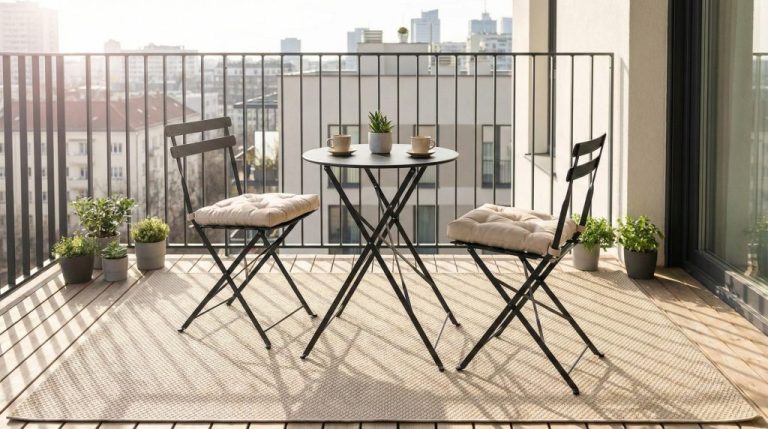
Not at all — and honestly some of my favorite outdoor rooms are in quite small spaces. The principles scale down really well: one sofa instead of two, a smaller rug, three plants instead of ten. The layering approach still works, you’re just working with a tighter footprint. If your space is genuinely compact, the key is getting the rug size right (still go larger than you’d instinctively think) and prioritizing vertical height with tall plants rather than spreading things out.
What’s the most important thing to buy first?
The rug, without question. It’s the single thing that most transforms how a patio feels before anything else arrives. It defines the space, makes it feel intentional, and gives your furniture something to anchor to. If I had to choose one purchase and one only, it would always be the rug first.
How do I make my patio feel cozy even on a budget?
Plants and lighting — both are incredibly high-impact for relatively low cost. A terracotta pot with a lush trailing plant costs almost nothing and does a huge amount of work. String lights are inexpensive and genuinely transformative at night. Add a couple of outdoor cushions from a sale and a throw, and you’ve done most of the heavy lifting already. The expensive stuff — the sofa, the coffee table — can come later and the space will still feel good in the meantime.
What kind of plants work best on a patio?
It depends on your light, but broadly: for sunny patios, olive trees, lavender, agapanthus, and ornamental grasses are wonderful. For shadier spots, ferns, hostas, and trailing ivy are your friends. For something architectural that works almost everywhere, bird of paradise is hard to beat if your climate allows it. The main thing is to pick plants that suit your actual conditions rather than the ones that look prettiest in photos — a struggling plant does more damage to the look of a space than no plant at all.
How do I keep outdoor cushions and textiles looking good?
Buy outdoor-rated fabric and store cushions inside (or in a waterproof box) when you know rain is coming. Most outdoor cushion covers are machine washable — check the label when you buy. A quick brush-down weekly keeps them looking clean. The ones that go wrong fastest are the ones left out in heavy rain repeatedly without drying properly, so a little protective storage goes a long way.
Is the outdoor living room trend just for summer?
The core of it is summer-focused, yes — but an outdoor room with the right plants and some weatherproofing can genuinely be used through autumn and into mild-weather winters. A patio heater, some thicker blankets, and a fire pit or candle storm lanterns can extend the season quite a bit. Some of the best outdoor room moments I’ve seen have been in October with leaves on the ground and a warm throw.
What’s the best way to add shade without spending a lot?
A large market umbrella is the most affordable flexible option and does a proper job. A shade sail is slightly more work to install but looks more architectural and is surprisingly inexpensive. If you have a pergola or even just a fence post and a hook, outdoor curtain panels on a tension rod are beautiful and very affordable — they move in the breeze, which is its own kind of lovely.
One Last Thing Before You Go
I want to be honest with you about something: the patio I described at the beginning of this post — the one with the two mismatched chairs and the struggling plant — wasn’t some distant memory. It wasn’t that long ago at all.
I’d been putting off doing anything about it for ages, in that particular way you do when a project feels slightly too big to start. Where do you even begin? What do you buy first? What if you get the rug and it looks wrong and then everything feels wrong and you’ve wasted your money and now you’re back to square one but with a rug you hate?
The answer, I eventually figured out, is that you just buy the rug. And then you see how it looks. And then you put one plant on it. And it keeps going from there.
The outdoor living room doesn’t have to arrive fully formed — in fact the ones that feel most genuinely lived-in never do. They build slowly, object by object, season by season, until one day you step outside with your coffee and realize this is actually where you want to be.
That’s the goal. Not a perfect patio. Just one that feels like yours.