Types of Plant Pots for Indoors and Outdoors: How to Choose, Place, and Style Them
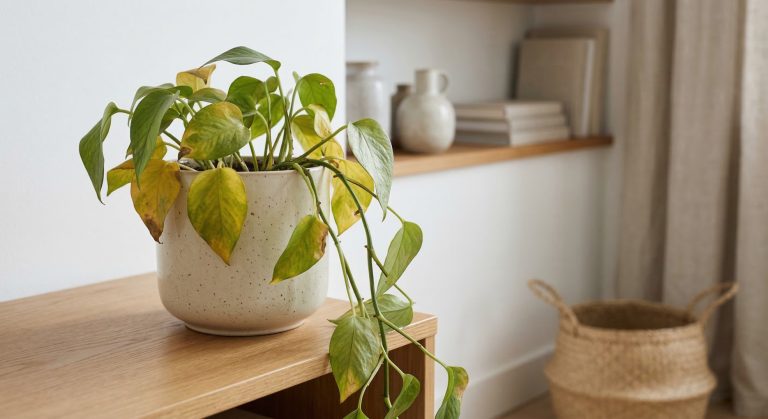
There was a time when I thought a plant pot was just… a pot. Something functional you stick a plant in and move on. Then I killed my third pothos in a single year and finally started asking why. Turns out, the wrong pot — wrong material, wrong size, wrong drainage — can quietly suffocate roots or drown them in moisture your plant never wanted. And your plant pays the price while you blame yourself.
Once I started paying attention to what I was planting in and why, everything changed. My indoor corners went from sad and scraggly to genuinely lush. My terrace pots stopped cracking every winter. And honestly? The right pot makes a space look intentional in a way that’s hard to explain but impossible to miss.
So whether you’re styling a windowsill, a patio, or a full garden — here’s everything I’ve learned, and wish someone had told me earlier.
The Main Types of Plant Pots — and What Each One Is Actually Good For
Not all pots are equal, and knowing the difference before you buy saves a lot of frustration. Here are the types worth understanding:
1. Terracotta Pots
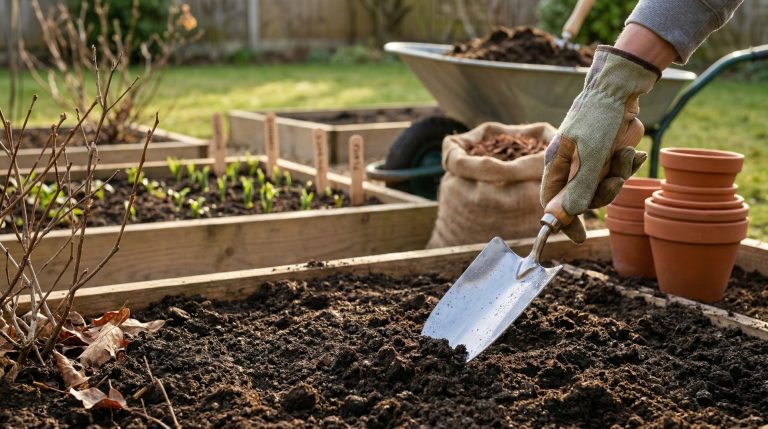
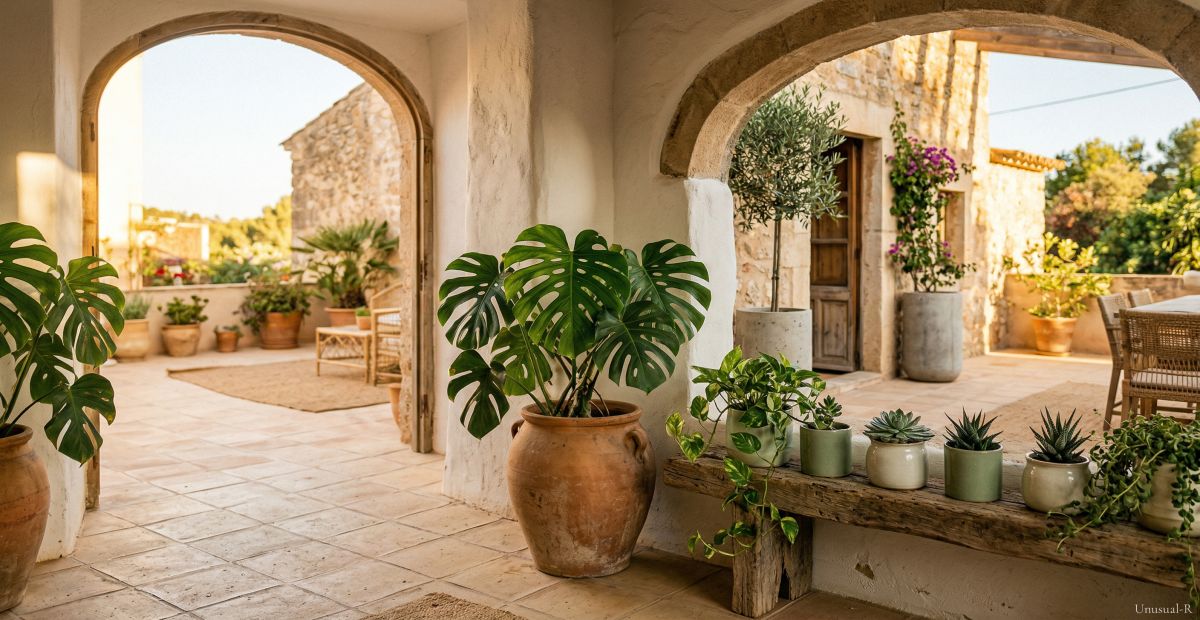
These are the classic reddish-brown clay pots that have been around for thousands of years — and there’s a good reason they’ve stayed. They breathe. The porous walls let air and moisture pass through, which is genuinely ideal for plants that hate sitting in wet soil: succulents, cacti, lavender, most Mediterranean herbs. If your plant is drought-tolerant, terracotta is almost always the right choice.
The downside is they dry out fast, which means more frequent watering in summer, and they can crack in hard frost if left outside unprotected. Indoors, they’re beautiful styled in clusters — especially when mixed with trailing plants at different heights. Terracotta pots in all sizes and finishes are readily available at garden centers and on Amazon.
2. Ceramic and Glazed Pots
Glazed ceramic pots are terracotta’s dressed-up cousin. The glaze seals the surface, which means they retain moisture longer — making them better for thirsty plants like ferns, peace lilies, and calatheas. They come in every color and finish imaginable, which makes them a favorite for interior styling.
They’re heavier than terracotta and a little more fragile, so I tend to use them indoors or in sheltered outdoor spots like covered patios. If you’re going to invest in a few beautiful pots, these are the ones worth spending on — they genuinely look expensive on a shelf or a dining table, and they age well.
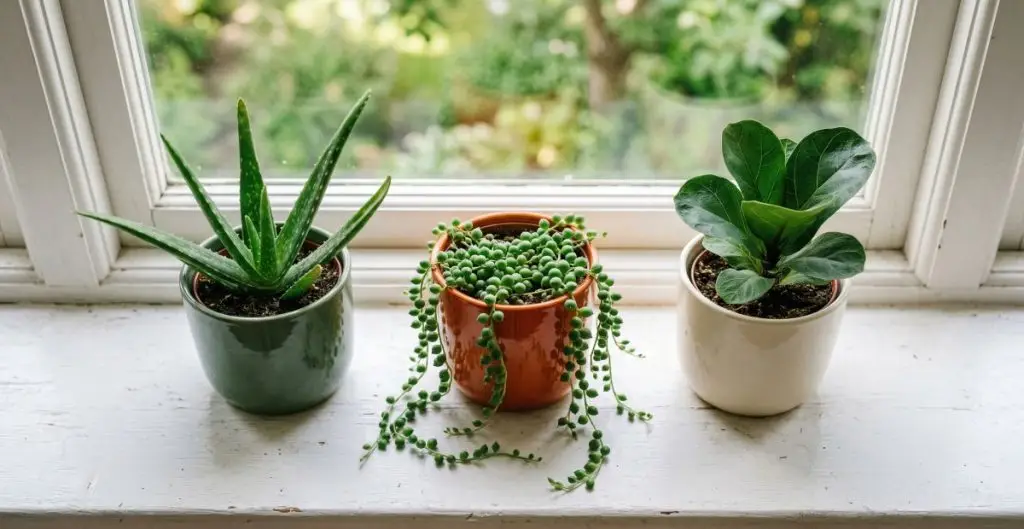
color to any windowsill arrangement
3. Plastic Pots
Plastic doesn’t feel very Pinterest-worthy, I know. But here’s the honest truth: plastic pots are lightweight, affordable, durable, and retain moisture really well. They’re the workhorses of any collection, especially for outdoor setups where you’re moving things around often.
The trick is to use them as inner nursery pots inside a more beautiful outer container. Your plant gets the practical benefits; your space gets the aesthetics. Many decorative planters are designed exactly for this — no drainage hole needed because the real pot sits inside.
4. Concrete and Stone Planters
If you want that architectural, editorial look outdoors — the kind you see on European hotel terraces — concrete planters are it. They’re incredibly durable, frost-resistant, and heavy enough that they won’t tip in strong wind.
The weight is both their strength and their limitation: once placed, they stay. So plan their position carefully. They work beautifully flanking a doorway, anchoring a corner of a patio, or lining a garden path. Large concrete planters filled with tall grasses or bamboo can also double as a natural privacy screen — something I wrote about more fully in Cozy Outdoor Seating Ideas for Small Spaces: Smart Layouts, Stylish Furniture & Expert Tips, where combining planters with seating zones creates a genuinely private outdoor room without any fencing at all.
Concrete and stone planters in a range of sizes and finishes are available at garden retailers and on Amazon, including lightweight faux-concrete versions that look identical but are much easier to move.
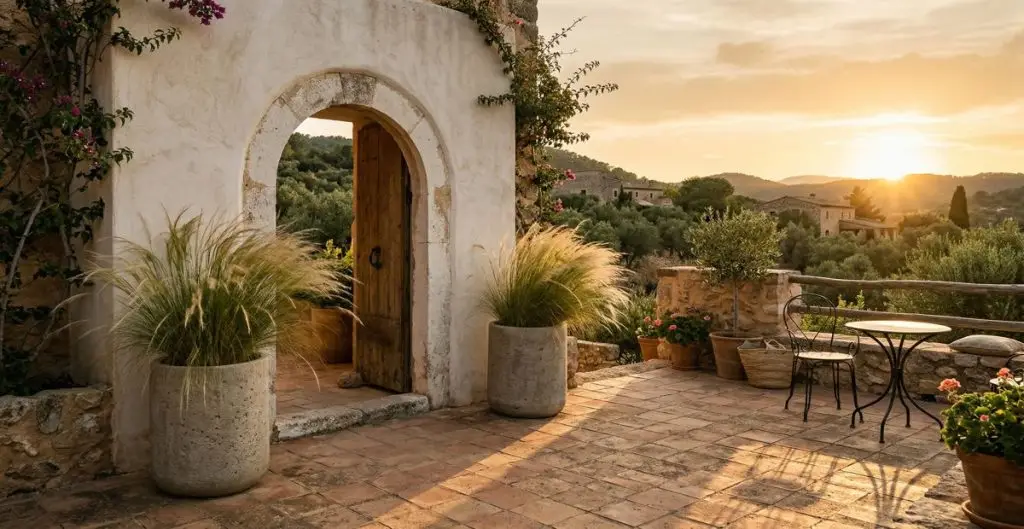
and a look that genuinely makes people stop and stare
5. Hanging Planters and Wall Pots
These completely change how a space feels. A trailing pothos or string-of-hearts in a woven macramé hanger instantly adds warmth and vertical life to a corner that furniture alone can’t reach. Outdoors, hanging baskets full of petunias or fuchsia along a porch or pergola beam transform the entire feel of the space. If you’re working with a small balcony and want to maximize planting without cluttering the floor, wall-mounted pots and railing planters are genuinely one of the smartest moves — and I covered exactly how to use them in Summer Balcony Decor Ideas: How to Design a Cozy and Stylish Outdoor Retreat, including which trailing plants work best in hanging pots for a balcony setting.
6. Self-Watering Planters
These have a reservoir at the bottom that allows roots to draw up water as needed. If you travel often, have a busy schedule, or simply keep forgetting to water (no judgment at all), self-watering planters are genuinely life-changing. They work especially well for herbs on a kitchen windowsill or for outdoor plants during hot summers. Look for them at garden centers or through online retailers — they range from very affordable to quite beautiful in ceramic finishes.
7. Raised Planters and Window Boxes
Technically pots, just elongated. Window boxes along a fence or balcony railing, or a raised planter box in the garden, give you a dedicated growing area for herbs, flowers, or strawberries. They’re practical, they look tidy, and they make it easy to keep different soil types separate for different plants. They’re also one of the easiest entry points if you’re new to outdoor gardening — manageable, contained, and instantly rewarding.
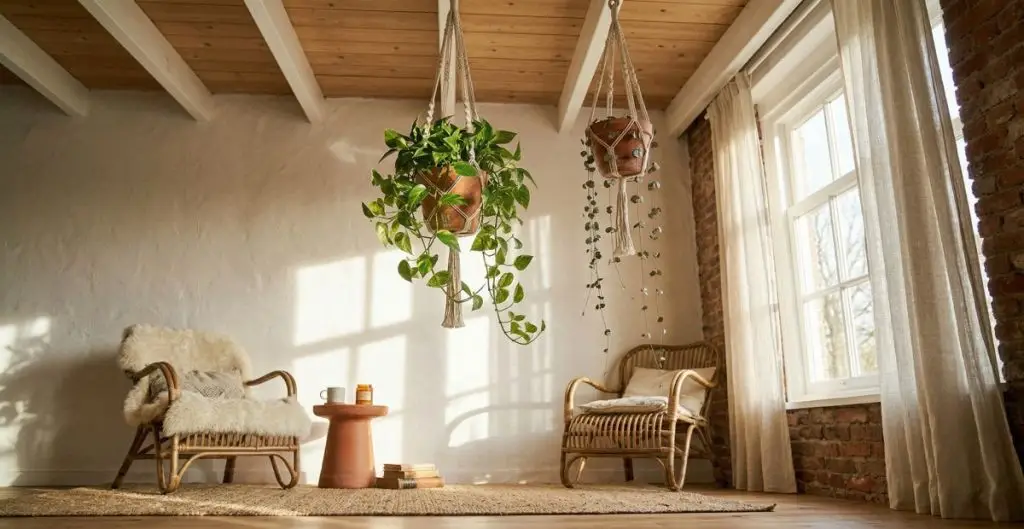
furniture alone can’t reach
How to Choose the Right Pot — The Three Questions That Actually Matter
Every time I stand in a garden center holding a pot I like the look of, I run through three quick questions before I buy:
- Does it have drainage holes? If not, can I add one? Most plants will rot without drainage. The only exception is using it as a decorative outer pot with an inner container inside.
- Is the material right for the plant? Moisture-loving plants need less-porous pots. Drought-tolerant plants need breathable, porous ones like terracotta.
- Will the size support the plant’s growth? A pot too small stunts roots; a pot too large holds excess wet soil and invites root rot. As a rule, go one size up from the current nursery pot.
Beyond the practical: think about weight if you plan to move the pot, and frost hardiness if it’s going outside year-round. Glazed ceramic and standard terracotta can both crack in a hard frost unless specifically rated for outdoor winter use.
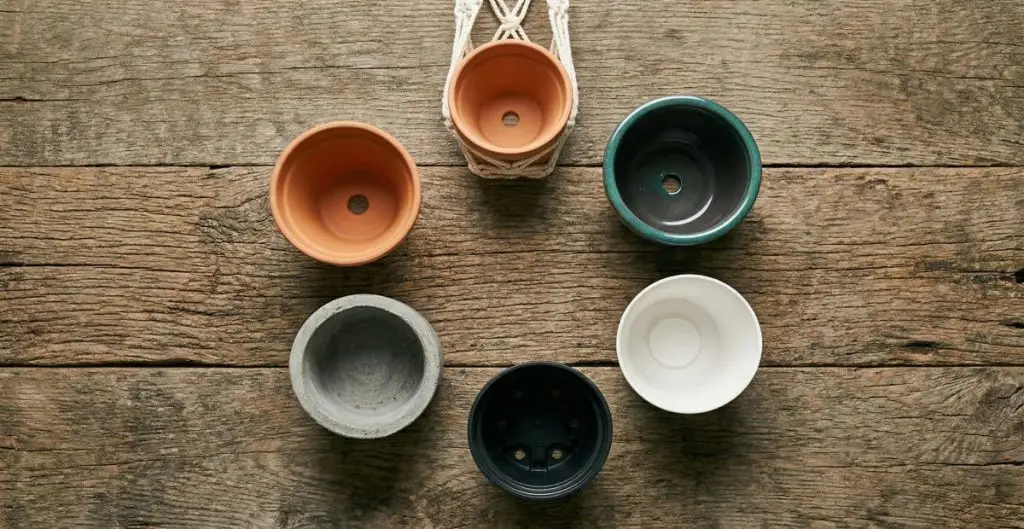
self-watering, and hanging — each type has its moment
Where to Place Plant Pots Indoors — Room by Room
Placement is half the battle. A beautiful plant in the wrong spot looks wrong, and more importantly, doesn’t thrive. Here’s how I think about it room by room:
Living Room
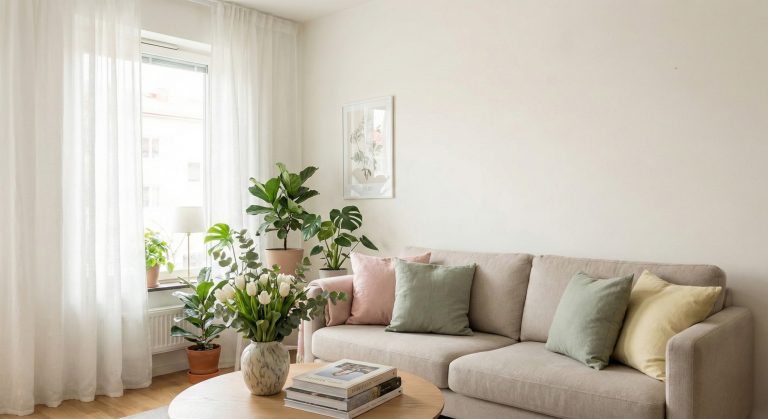
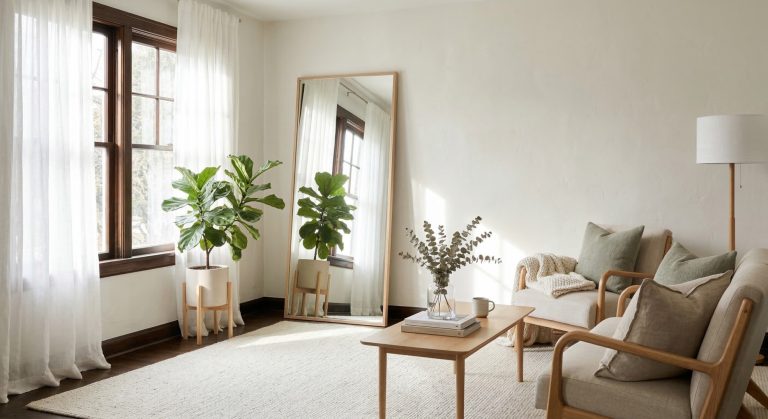
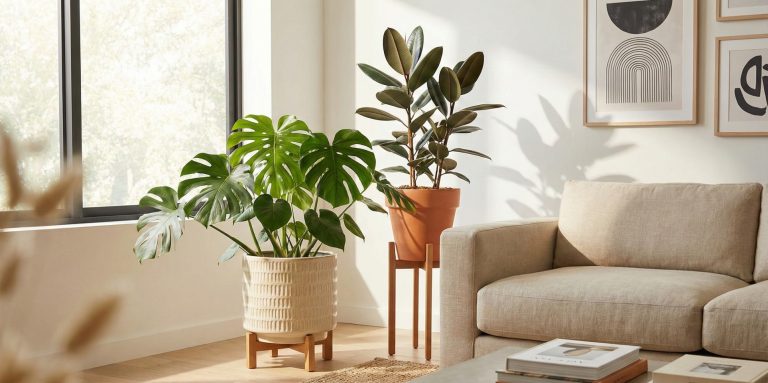
This is where you have the most freedom. Floor-standing pots with tall statement plants — a fiddle-leaf fig, a bird of paradise, a large monstera — work beautifully in corners beside sofas or next to a reading chair. Cluster smaller pots on shelves or a plant stand in odd numbers; groups of three and five always look more natural than pairs. Vary the heights deliberately — a mix of floor pots, shelf pots, and hanging planters in the same corner creates the kind of layered, lush feel that’s genuinely hard to achieve with plants all sitting at the same level.
Kitchen and Dining
Herbs on a sunny windowsill in small terracotta or ceramic pots are both practical and beautiful. Keep them accessible from the counter so they actually get used. A trailing plant on top of a high cabinet above the fridge uses forgotten vertical space and softens the whole room considerably — it’s one of my favorite small changes with a big visual impact.
Bedroom
Go for plants that are quiet and undemanding — snake plants, ZZ plants, peace lilies. A single beautiful pot on a bedside table or a small cluster on a dresser is enough. Avoid overwhelming the space; one or two well-chosen plants with a well-chosen pot feels more calming than a full jungle. For a deep dive into how to group different plants together beautifully — by height, texture, and light needs — my post on How to Group Indoor Plants: Best Ways to Arrange Houseplants for Style, Light, and Healthy Growth covers this in real detail, including which combinations work best in low-light rooms like bedrooms.
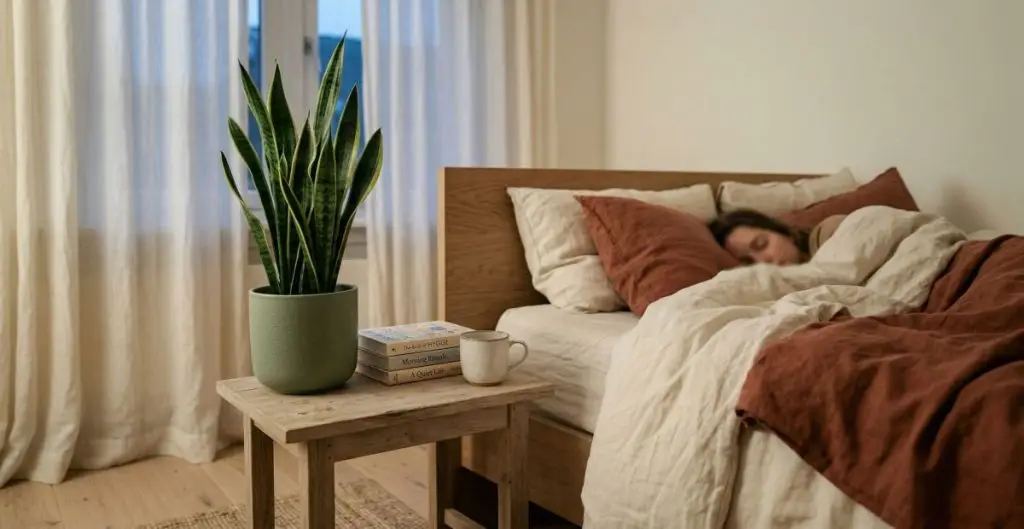
bedroom is proof
Where to Place Plant Pots Outdoors — Patios, Balconies, and Gardens
Outdoor pots do a different kind of work. They anchor spaces, guide movement, create privacy, and signal where life happens in a garden. Placement outdoors is less about aesthetics alone and more about how the pot and plant interact with sun, wind, and seasons.
Entryways and Doorways
Two matching pots flanking a front door are one of the oldest design moves for a reason — they work every single time. Go for something with presence: a large olive tree in a stone pot, a pair of topiary balls in glazed ceramic, or tall ornamental grasses in concrete cylinders. These are available at most garden retailers and on Amazon in styles to suit any home exterior, from Mediterranean to modern.
Patios and Terraces
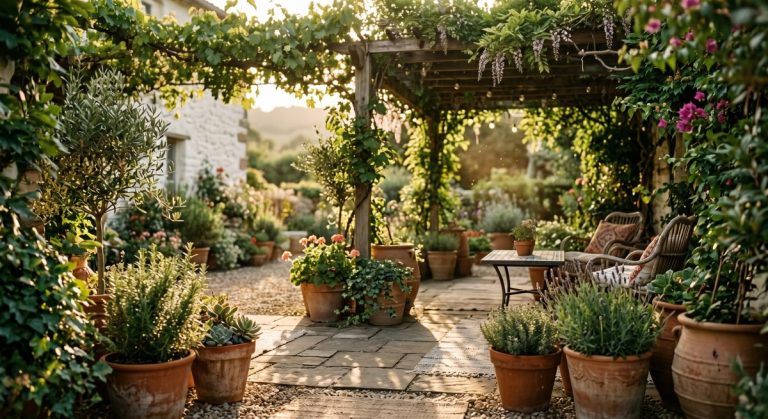
Think of your patio pots as outdoor furniture — they define zones and create a sense of enclosure. Line the perimeter with medium and large pots filled with lavender, rosemary, or tall grasses. Cluster pots in corners at different heights to create depth. A tall planter beside a seating area immediately makes the space feel more like an outdoor room and less like an open yard.
Balconies
Weight matters on a balcony, so lean toward plastic, lightweight composite, or fiberglass pots. Use railing planters and wall-mounted pots to free up floor space. A few trailing plants over the railing and a single large pot with a compact tree or tall grass can transform even the smallest outdoor space into something genuinely worth spending time in.
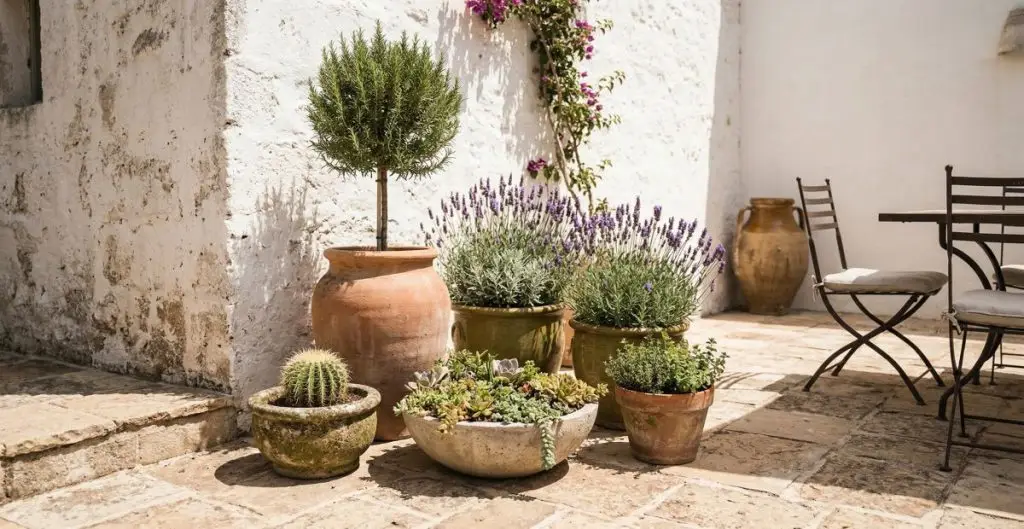
outdoor space instantly look designed rather than just decorated.
How to Style and Organize Plant Pots So They Look Intentional
Individual pots are nice. A thoughtfully styled collection is something else entirely. Here’s what actually works, based on a lot of trial and error:
- Vary heights deliberately. Use plant stands, stools, stacked books, or upturned crates to lift pots to different levels. Never line up pots all at the same height — it looks flat and unconsidered.
- Mix textures, not colors. A matte terracotta beside a glossy ceramic beside a rough concrete adds richness without visual chaos. Stick to two or three consistent colors across the pots themselves.
- Let one plant be the hero. In any cluster, there should be one plant that’s noticeably larger or more dramatic than the rest. Everything else supports it.
- Use a consistent color palette. Our brand palette of terracotta, sage green, and creamy white works naturally for this — repeat those pot colors across the space and it instantly feels cohesive.
- Don’t hide the drainage. A terracotta saucer or simple catch tray under each pot keeps surfaces clean and actually looks beautiful paired with the right pot.
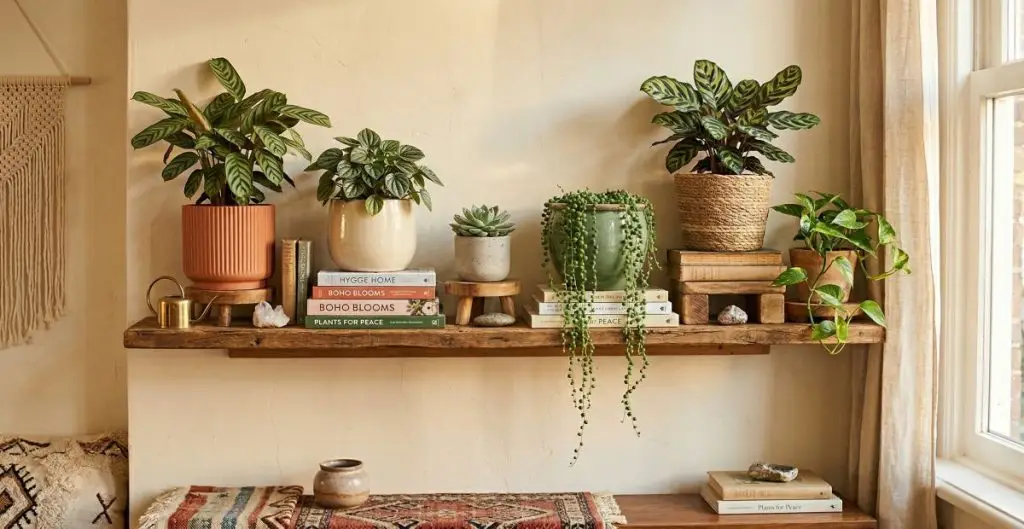
and let one plant dominate the rest
A Few Practical Things I Always Tell People
- Season your terracotta before first use. Soak it in water for 24 hours so the porous clay doesn’t steal moisture from your plant’s soil immediately after potting.
- Drainage is non-negotiable. If a pot you love has no holes, drill one — a ceramic drill bit costs almost nothing and takes minutes.
- Match pot size to plant size. New plant parents almost always go too big too fast. Repot in increments — one size up from the current pot each time.
- Check UV resistance for outdoor plastic pots. Not all plastics are equal outdoors — unrated ones crack within a single season of sun exposure.
- Plan concrete pot placement before filling. A large concrete planter filled with moist soil can be extremely heavy. Once it’s there, it’s staying.
Most of these pots, accessories, saucers, and supplies — from terracotta to self-watering planters to decorative outer containers — are available at local garden centers and through Amazon, which makes building out a collection much more manageable budget-wise.
Frequently Asked Questions
Q: What is the best pot material for indoor plants?
A: It depends on the plant. For drought-tolerant plants like succulents and cacti, terracotta is best because it breathes and dries out between waterings. For moisture-loving plants like ferns, peace lilies, and calatheas, glazed ceramic or plastic pots retain moisture better and prevent the soil from drying out too quickly.
Q: Do plant pots need drainage holes?
A: Yes — for almost every plant. Without drainage, water sits at the bottom and roots rot. If you fall in love with a pot that has no drainage hole, use it as a decorative outer pot and place a plastic nursery pot with drainage inside it. That way you get the look without the risk.
Q: How do I choose the right pot size?
A: Go one size up from the current nursery pot. If a plant is in a 4-inch pot, move it to a 6-inch pot. Going too large at once means the surrounding soil stays wet for too long before roots can absorb it, which often causes root rot. Repot in stages as your plant grows.
Q: Can I leave terracotta pots outside in winter?
A: Standard terracotta can crack in frost because moisture trapped in the clay expands when it freezes. If you live somewhere with hard winters, either bring terracotta pots inside, wrap them for insulation, or invest in frost-rated terracotta specifically designed for outdoor year-round use.
Q: What pots work best for a small balcony?
A: Lightweight plastic, fiberglass, or composite pots are best for balconies — weight matters. Use railing planters to keep the floor clear, and choose trailing plants in hanging pots to take advantage of vertical space. Self-watering railing planters are especially practical for balconies since they reduce the frequency of watering.
Q: How do I make a group of plant pots look styled and not just random?
A: Vary the heights using stands or risers, mix pot textures (matte next to gloss, rough next to smooth), stick to two or three consistent pot colors, and let one plant be noticeably larger than the rest. Odd numbers — three, five, seven — almost always look more natural than even-numbered groupings.
Final Thoughts
Choosing the right plant pot used to feel like a small decision. Now I think of it as one of the foundational ones — as important as choosing the plant itself. The right pot supports healthy root growth, fits the space practically, and adds something to the feeling of a room or terrace in a way that’s quiet but constant.
Start with one or two pot types you’re genuinely drawn to, learn how your plants respond, and build from there. And don’t be afraid to mix materials — some of the most beautiful indoor and outdoor spaces are the ones where terracotta meets concrete meets a handwoven basket, held together by nothing more than a consistent color story and a plant that clearly loves where it lives.
Happy potting.