Your Dream Kitchen Setup: How to Create a Space That Feels Beautiful, Stays Effortlessly Tidy, and Makes Every Day Just a Little Easier
Introduction: The Kitchen That Feels Like You
There is a particular feeling that comes from walking into a kitchen that is truly yours — one that is calm instead of chaotic, beautiful instead of just functional, and set up in a way that makes even a tired Tuesday evening feel manageable. Not a showroom kitchen. Not a kitchen from a magazine that no one actually cooks in. A real, lived-in kitchen that has been arranged with intention, where everything has a home and the space itself feels good to be in.
Most of us spend more time in our kitchens than in any other room in the house. We start our mornings there. We unwind there at the end of the day. We feed the people we love from that space, and we carry the stress of it when it is cluttered, overwhelming, or just not working the way it should. A kitchen that functions beautifully is not a luxury — it is one of the most meaningful home improvements you can make for your daily quality of life.
This guide is about creating exactly that. Not through an expensive renovation or a full weekend overhaul, but through a series of intentional, practical decisions about what stays, what goes, where things live, and how the space looks and feels when it is at its best. You will find a complete setup plan, a curated essentials list, storage strategies that actually last, and decor-conscious organization ideas that make your kitchen a place you genuinely want to spend time in. Let us start with the foundation.
1. Designing Your Kitchen Zones: The Layout That Changes Everything
The single most impactful thing you can do for a kitchen — before buying a single organizer or container — is to divide it into intentional zones. A zone is simply a dedicated area where one type of activity happens and where all the tools for that activity are stored. This concept, used in interior design and professional kitchens alike, transforms a space from reactive (constantly searching for things) to intuitive (everything is exactly where you expect it).
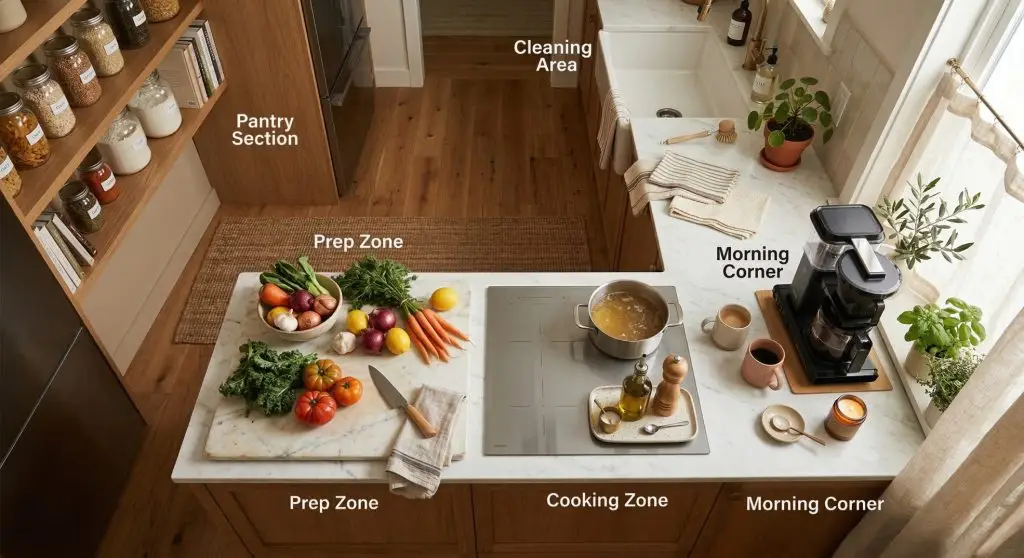
A well-designed home kitchen has five natural zones, and once you map yours out, you will wonder how you ever cooked without them:
- The Prep Zone —your main counter workspace. This is where ingredients get washed, chopped, and assembled. It should be clear, spacious, and close to the sink. Keep your cutting board, knives, and mixing bowls here and nowhere else.
- The Cooking Zone —the area immediately surrounding your stove. Oils, everyday spices, spatulas, and pans belong here — within arm’s reach while you cook. This zone should be self-contained: if you have to cross the kitchen to grab a spoon while something is on the heat, the zone needs refining.
- The Morning Zone —your coffee maker, tea, mugs, and a small basket of morning snacks. Having a dedicated morning corner means you can start your day without opening multiple cabinets. It is a small thing that makes mornings noticeably calmer.
- The Pantry and Food Storage Zone —dry goods, canned foods, and storage containers. Organize this by how you cook: grains and pasta together, baking supplies together, canned goods together, snacks together. When everything is grouped logically, grocery unpacking and cooking prep both become faster.
- The Cleaning Zone —under the sink and the area immediately beside it. Dish soap, sponges, trash bags, cleaning sprays, and a small compost catcher all live here. Keeping cleaning supplies contained in one spot prevents them from spreading across the kitchen and taking over drawer space.
| ✨ Quick Win Before moving anything, stand in the center of your kitchen and map your zones on paper. Just five minutes of planning before you reorganize will save you from moving things twice and help you see opportunities you would otherwise miss. |
2. Decluttering With Clarity: Keeping Only What Earns Its Place
Kitchen clutter does not usually arrive all at once. It accumulates slowly, one “useful someday” gadget at a time, one duplicate spatula, one novelty mug that gets kept out of guilt. Before any organizational system can work, the clutter that is quietly consuming your cabinet space, drawer space, and mental energy needs to go.
The most effective way to declutter a kitchen is to set aside the emotional approach — the question is not “do I love this?” but “do I actually use this, and does it earn the space it takes up?” For most households, the answer is no for roughly a third of what is in the kitchen. Here is a simple framework for deciding what stays:
- Keep —items you use at least once a month, items that are genuinely the best version of what they do, and items that make your kitchen look or feel the way you want it to.
- Donate —duplicates of things you only need one of, gadgets that do one tiny job you could do with a regular knife or spoon, and items you kept “just in case” but have not touched in over a year.
- The 30-Day Box —anything you are unsure about goes into a box with today’s date. If you do not reach for it in 30 days, it was not a kitchen essential — it was storage rent.
When you clear the clutter first, the organizational systems you put in place afterward stay cleaner longer, because there are fewer items competing for the same space. Organization on top of clutter just creates more complicated clutter.
The Countertop Rule That Transforms How a Kitchen Looks
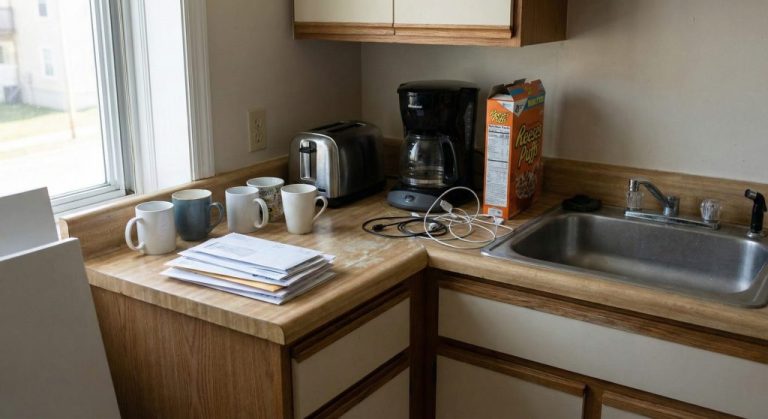
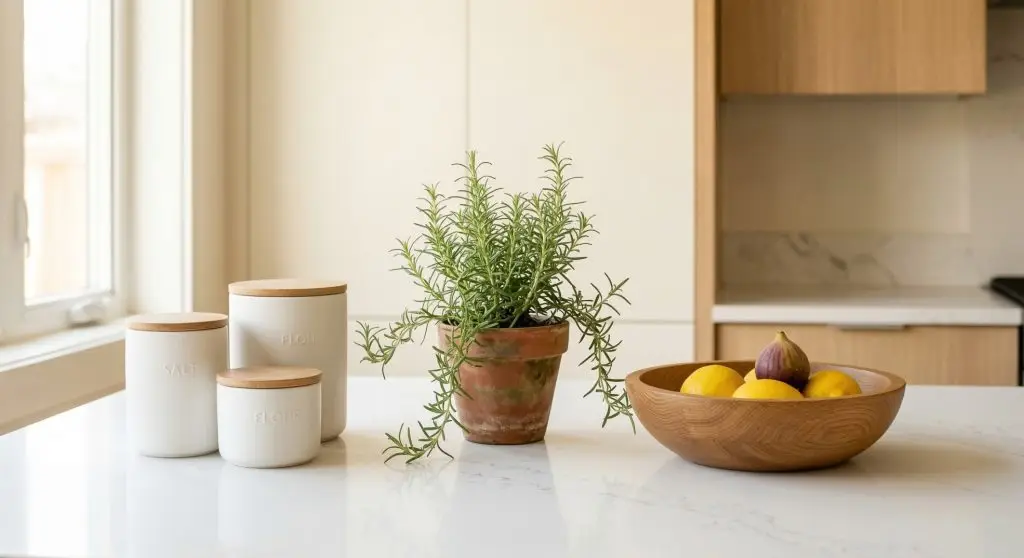
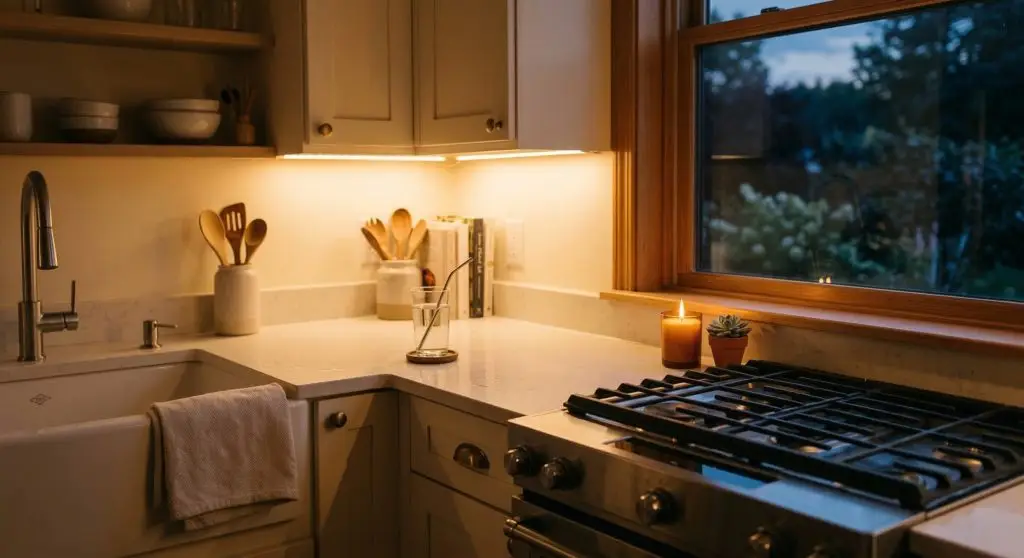
One of the most immediately visible improvements you can make to a kitchen is reducing countertop items to a maximum of three things per section. Most kitchen counters are overloaded with appliances, decorative items, mail, and tools that could just as easily live in a drawer or cabinet. When you clear the counter down to just the essentials — a coffee maker, a knife block, a small plant or candle, a fruit bowl — the entire kitchen feels larger, calmer, and more like the beautiful spaces you save on Pinterest. The counter is your kitchen’s most visible surface. Treat it as display space, not storage space.
3. Storage That Is as Beautiful as It Is Functional
The best kitchen storage systems do two things simultaneously: they keep everything organized and easy to find, and they make the kitchen look intentional and lovely when a cabinet or drawer is open. This is not superficial — the visual harmony of an organized kitchen affects how you feel in the space every single day. Opening a pantry filled with matching clear containers and neat labels is a genuinely satisfying experience. Opening a cabinet where mismatched bags and half-open boxes are falling over each other is a quietly draining one.
The Pantry: Your Kitchen’s Most Powerful Organizing Opportunity
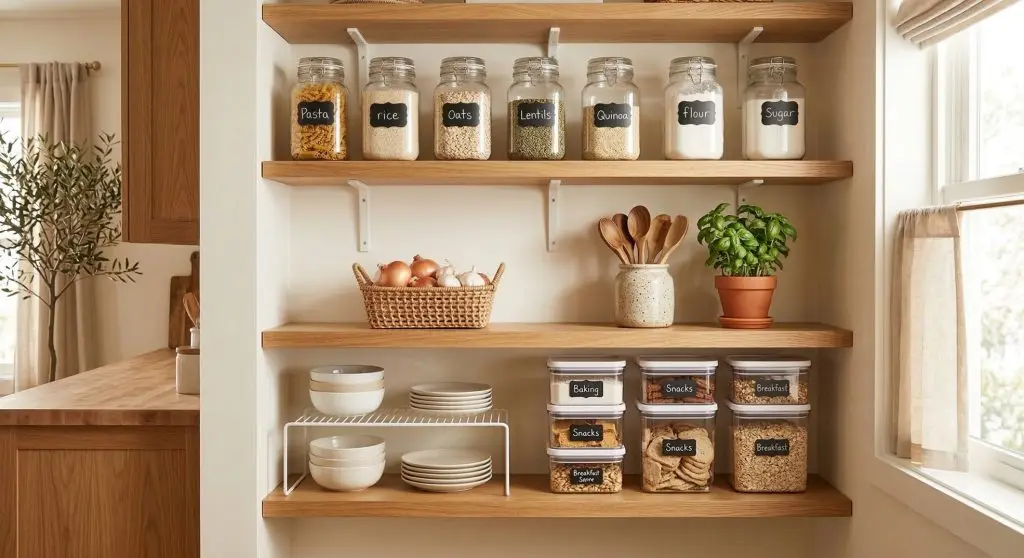
A well-organized pantry is the backbone of an effortless kitchen. Start by transferring dry goods — pasta, rice, flour, sugar, oats, lentils, cereals, baking staples — into clear, airtight containers. Square or rectangular containers are significantly more space-efficient than round ones because they sit flush against each other without wasted air gaps. Choose a uniform style: all glass, all matching plastic, or a mix that shares the same shape family. The visual consistency is what creates that calm, curated look.
Label every container clearly — either with a label maker for a clean printed look, or with a chalk marker for a warm handwritten aesthetic. Organize the pantry in tiers: breakfast items together, dinner staples together, baking supplies together, snacks together, and a small backstock section for extras. When your pantry is this organized, grocery shopping becomes faster because you can see exactly what you have, and cooking becomes faster because you spend zero time searching.
Drawers: Where Small Kitchens Win
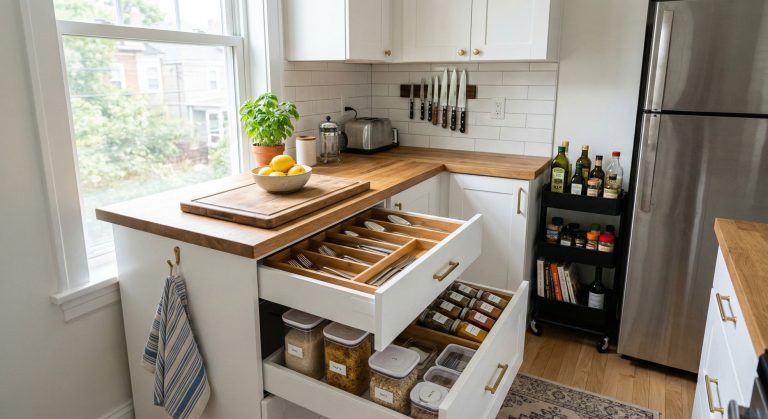
Drawers are the most underutilized storage space in most kitchens. Without dividers, they become the catch-all for everything that does not have a home elsewhere — and once one item lands without a home, ten more follow. Add drawer dividers to every kitchen drawer and assign each section a clear category. The drawer nearest the stove holds active cooking tools: spatulas, tongs, a whisk, and a wooden spoon. The prep drawer holds knives (ideally in an in-drawer knife insert), a peeler, a grater, and measuring tools. A third drawer handles wraps, bags, and parchment. When drawers have categories and dividers, they stay organized without effort.
Using Vertical Space: The Upgrade Most People Overlook
The majority of kitchen cabinets have far more vertical space than the items stored in them require. A stack of plates uses only eight inches of a 14-inch shelf, leaving six inches of wasted air. Shelf risers double your storage by creating a second level inside a single shelf. Under-shelf baskets hang from existing shelves to add a bonus storage tier for wraps, napkins, or small pantry items. A slim rolling cart tucked beside the refrigerator or in a narrow gap adds a surprising amount of accessible storage for oils, spices, or small appliances. Going vertical costs very little but can effectively expand your usable kitchen storage by 30 to 50 percent.
4. The Morning Ritual Corner: Starting the Day in a Space That Feels Good
There is something quietly powerful about a kitchen corner that is designed specifically for the first 20 minutes of your day. A morning ritual space — even a small one — signals to your brain that the day is beginning intentionally rather than reactively. It is one of those home details that sounds small but has a disproportionate effect on how you feel.
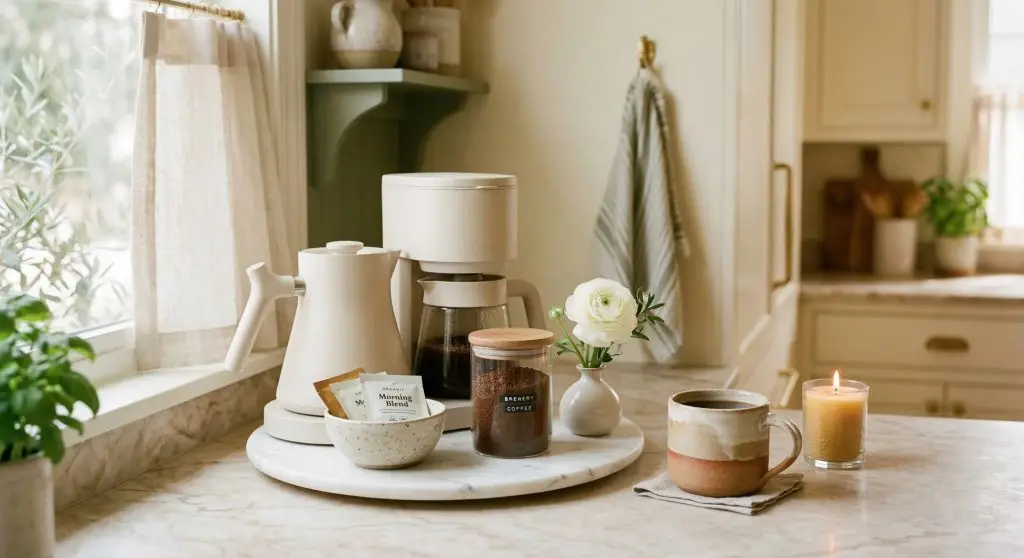
A well-designed morning corner does not require a lot of space. A section of counter about 18 to 24 inches wide is more than enough. It holds your coffee maker or kettle, a small tray or woven basket holding coffee, tea, and a few daily supplements or vitamins, one or two mugs that you genuinely love the look and feel of, and one small decorative element — a candle, a tiny potted succulent, a framed print propped against the backsplash. That is it. Everything else goes away. The restraint is what makes it feel special rather than cluttered.
The tray is the key organizing element here. When everything in your morning corner sits on a tray, the whole setup can be lifted and moved in a single motion for counter cleaning, and it visually frames the collection as intentional rather than just stuff that ended up there. A wooden tray, a marble slab, or a woven rattan tray all work beautifully depending on your kitchen’s aesthetic.
5. Making Meal Prep Effortless: The Weekly Habit That Saves the Most Time
Nothing makes the daily rhythm of a kitchen feel more manageable than a simple, consistent weekly prep habit. Not elaborate meal prep with portioned containers of every meal for the next five days — just a 45 to 60 minute investment once a week in preparing a handful of building-block components that make every other meal of the week faster, easier, and more satisfying.
The concept is simple: rather than cooking complete meals from scratch every night, you prepare versatile components in advance. A batch of grains — rice, quinoa, or farro — that forms the base of bowls, sides, and quick stir-fries all week. A sheet pan of roasted vegetables, generously seasoned and caramelized until golden, that adds flavor and substance to nearly anything. A prepared protein — baked chicken, seasoned lentils, or a pot of spiced ground meat — that turns a handful of ingredients into a complete meal in minutes.
With these three components in the refrigerator, a genuinely good home-cooked dinner on a tired Wednesday night takes 10 to 15 minutes. Not because you are rushing, but because the foundational work is already done. The kitchen that enables this kind of ease is one with clear containers, a visible pantry, and a prep station that is always clean and ready.
Containers: The Detail That Makes Meal Prep Actually Enjoyable
Invest in a set of matching glass containers with airtight lids in two or three sizes. This is not about aesthetics alone — though a refrigerator full of matching, clearly labeled glass containers genuinely does look beautiful and makes you feel good every time you open the door. Glass containers do not absorb odors or stain, they are safe to reheat directly without transferring to another dish, and they last for years. Label each container with the contents and the date. Store components separately rather than pre-assembled so you can mix and match throughout the week.
6. Decorating Your Kitchen With Intention: Style That Does Not Sacrifice Function
A kitchen that is organized and a kitchen that is beautiful are not competing goals — the most satisfying kitchens are both simultaneously. And the good news is that the decorative details that make the biggest visual impact in a kitchen are almost all functional items that you would have anyway: the choice of a cutting board material, the style of your canisters, the color of your dish towels, the type of storage baskets you use.
The most powerful decorating principle for a home kitchen is cohesion. You do not need expensive items or a full renovation — you need the items you already have to feel like they belong together. Choose one or two accent colors and let them recur throughout the space: sage green towels, a sage green plant pot, and a sage green soap dispenser create a design thread that pulls a kitchen together without any of those items individually being significant. A consistent material story — all wood cutting boards, all ceramic containers, all linen textiles — creates the calm, intentional feeling that makes a kitchen look styled rather than just tidy.
Plants in the Kitchen: The Easiest Decor Upgrade
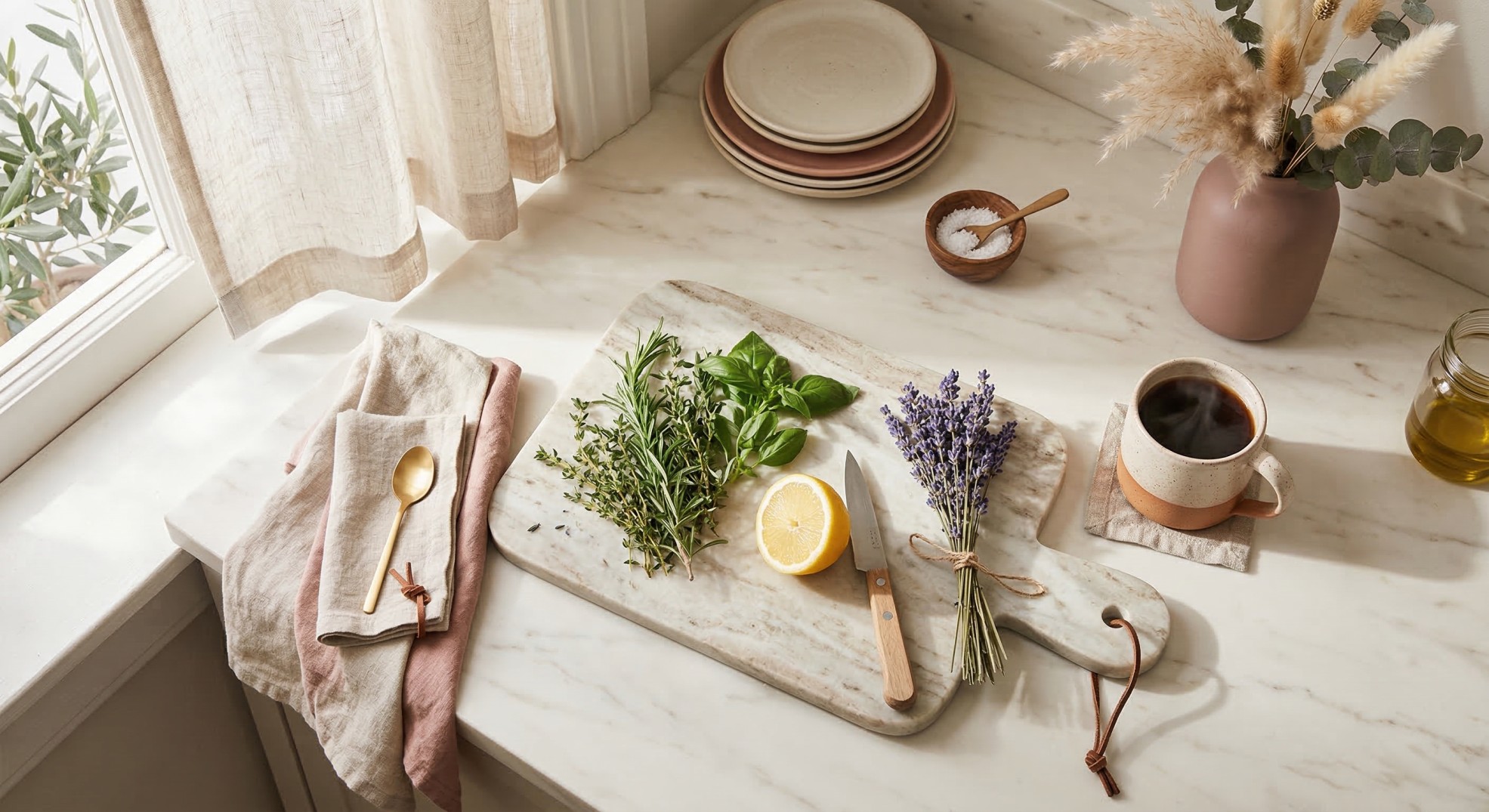
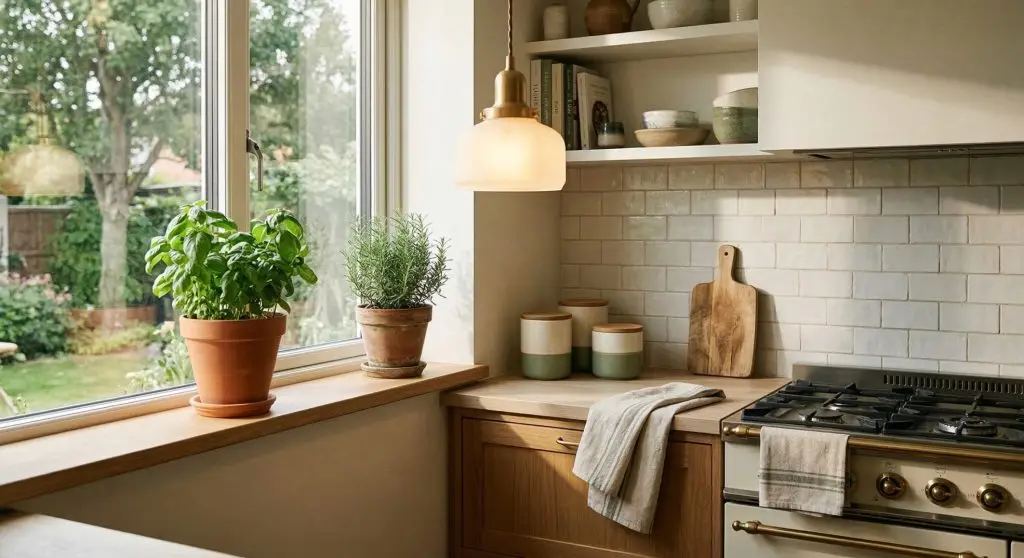
A single living plant transforms the energy of a kitchen more than almost any other decorative addition. Plants bring warmth, life, and color to a space that can otherwise feel hard and utilitarian. For kitchens, the best choices are those that thrive in humidity and indirect light: pothos, which trails beautifully from a high shelf; herbs like rosemary, basil, or mint in terracotta pots on the windowsill, which are both beautiful and useful; a small snake plant for a corner that needs structure; or a single stem of eucalyptus in a bud vase on the counter for fragrance and softness. Any one of these costs very little and elevates the feeling of the entire space.
Lighting: The Detail That Changes Everything
Kitchen lighting is one of the most overlooked elements of kitchen decor, and it is also one of the most transformative. Harsh overhead fluorescent lighting makes even a beautifully organized kitchen feel cold and institutional. Warm bulbs in pendant lights over a counter or island, a small lamp on a corner counter, or even battery-operated LED strip lights inside cabinets change the entire atmosphere of the space. If you cannot change your main lighting, a single warm lamp on the counter — especially during morning and evening routines — will soften the space more than any decoration.
7. The Habits That Keep a Beautiful Kitchen Beautiful
The most common frustration with kitchen organization is not setting it up — it is keeping it that way. A kitchen that looks stunning on Saturday afternoon can feel chaotic by Tuesday if the right daily habits are not in place. The good news is that the habits required to maintain a well-organized kitchen are genuinely small — they take minutes, not hours, and once they are part of your daily rhythm, they require no willpower at all.
- The evening reset —five minutes before bed, return everything to its designated home. Wipe the counters, load the dishwasher, put away the dish rack. You will wake up to a calm, clean kitchen and it changes the tone of your entire morning.
- The one-touch rule —when you take something out, put it back immediately after use rather than setting it down temporarily. Temporary placements are how clutter accumulates. The habit of returning things immediately is the single biggest factor in a kitchen that stays tidy without effort.
- The weekly pantry scan —before your grocery shop each week, spend three minutes scanning your pantry and refrigerator for items that are running low or need to be used soon. Plan one or two meals around those items before buying more. This habit alone can cut food waste significantly and keeps your pantry from becoming overstocked with duplicates.
- The seasonal edit —every three to four months, do a quick 20-minute pass through your kitchen cabinets. Remove anything that has not been used since the last edit, return misplaced items to their zones, and refresh any labels that have worn. This seasonal reset prevents the slow accumulation of clutter that eventually makes a kitchen feel overwhelming.
- The container audit —once a month, make sure every storage container has a matching lid and is clean. Missing lids, cracked containers, and stained plastic are the quiet sources of visual chaos in an otherwise organized pantry. Replace worn containers and donate mismatched ones.
| ✨ The Reset Rule Think of your kitchen’s organized state as its default — not a special condition you achieve after a big clean. Every small habit you build is just returning the kitchen to its default. When tidying feels like returning rather than achieving, it stops feeling like work. |
8. The Curated Kitchen Essentials List
This is a practical, no-excess list of what most households genuinely need — organized by category so you can check off what you have and identify gaps without buying duplicates or clutter.
Cooking and Prep Essentials
- One great chef’s knife and a small paring knife
- One large cutting board (wood or composite) — one secondary board for proteins
- A 10 to 12-inch skillet, a saucepan, a medium-large pot, and a sheet pan
- Silicone spatula, wooden spoon, tongs, whisk — one each is enough
- Measuring cups and measuring spoons
- A colander, a box grater, a vegetable peeler
- Two or three mixing bowls that nest together
- A kitchen scale for accurate portioning
Storage and Organization
- Clear airtight containers in uniform sizes for pantry staples
- Matching glass meal prep containers with locking lids
- Drawer dividers for every kitchen drawer
- Shelf risers for cabinet and pantry shelves
- A small Lazy Susan turntable for oils, sauces, and condiments
- Stackable clear bins for pantry categories
- A label maker or chalk markers for labeling
Decor and Atmosphere
- One or two living plants — herbs on the windowsill or a trailing pothos on a shelf
- A cohesive dish towel set in your chosen accent color
- A matching canister set for counter display
- One warm light source — a pendant, a small lamp, or cabinet LED strips
- A tray to corral your morning corner or stove area
- One personal decorative element — a framed print, a small vase, a ceramic dish
FAQ
Q: How do I organize a small kitchen that feels completely overwhelming?
Start with zones, not storage products. Before buying a single bin or organizer, map out where each activity happens in your kitchen and move every item to its correct zone. This alone reduces the overwhelm because it gives everything a logical home. Then declutter within each zone — remove duplicates and unused items — before adding any organizers. Buying storage products before decluttering just creates more organized clutter.
Q: What are the best containers for a beautiful pantry?
For the most visually cohesive result, choose one container style and stick to it throughout the pantry. Glass jars with bamboo lids have a warm, natural aesthetic that photographs beautifully. Clear acrylic canisters give a clean, modern look. Square containers maximize shelf space better than round ones. Whatever you choose, uniformity is what creates the calm, curated pantry look — mixing different shapes and brands breaks the visual harmony regardless of how tidy the contents are.
Q: How do I make my kitchen look more stylish without renovating?
Three changes have the biggest visual impact without touching the structure: clear the counters to three items or fewer per section, add one or two plants, and choose cohesive textiles — matching dish towels, a consistent color of pot holders, and a unified canister set. These three changes cost very little but create the kind of intentional, styled look that most people associate with a beautiful kitchen. Warm lighting is a close fourth — changing a bulb or adding a small lamp near the counter can transform the atmosphere completely
Q: How long does a weekly meal prep session take?
A well-organized prep session for three to four components takes 45 to 75 minutes, and most of that time is hands-off — grains simmer unattended while vegetables roast. The return is four to six weeknight dinners that each take 10 to 15 minutes of active work. The key to making prep feel easy rather than laborious is having a clear, organized kitchen to work in: a clean prep surface, accessible containers, and a visible pantry that shows you exactly what you have.
Q: What plants work best in a kitchen?
The best kitchen plants are those that tolerate humidity, indirect light, and occasional neglect. Fresh herb plants — basil, rosemary, mint, and thyme — are ideal because they are both beautiful and useful. Pothos is nearly indestructible and trails elegantly from a high shelf. A snake plant works in a darker corner with minimal watering. For a purely decorative and fragrant touch, a small bud vase with eucalyptus or dried lavender on the counter adds a lot of warmth without any maintenance at all.
Q: How do I keep my kitchen organized when I have a busy household?
The most effective systems for busy households are the simplest ones. Complex organization with many small categories breaks down quickly when multiple people use the space. Instead: use large, clearly labeled bins for broad categories (Snacks, Pasta, Baking), keep the counter rule strict (only daily items stay out), and make the evening reset a shared five-minute habit rather than one person’s responsibility. When every person in the household knows where things live and returning items is faster than leaving them out, the system maintains itself
Q: Is it worth investing in matching containers and organizers, or is that just aesthetic?
It is both, and the two are more connected than they might seem. Matching containers and uniform organizers are not just prettier — they are functionally better. They stack more efficiently, they are easier to label, they take up less mental bandwidth because your eye does not have to process visual chaos every time you open a cabinet, and they make the reset habit easier because there is an obvious right place for everything. The upfront cost of a good container set pays back in daily ease and in the longevity of the organizational system
10 Things to Do This Weekend
- Map your five kitchen zones before moving anything
- Clear counters to three items or fewer per section
- Declutter one drawer using the 30-day box method
- Transfer pantry staples into clear, labeled containers
- Add drawer dividers to your top two most-used drawers
- Create a morning ritual corner on a tray
- Add one plant — an herb pot, a pothos, or a bud vase with eucalyptus
- Install a shelf riser in your most crowded cabinet
- Set up a matching glass container set for meal prep
- Start the evening reset habit tonight — just five minutes
Conclusion: A Kitchen That Feels Like Home
The kitchen you have been imagining — the one that is calm before it is busy, beautiful before it is functional, and set up in a way that makes every day just a little easier — is not far away. It does not require a renovation budget or a free weekend. It requires a plan, a few intentional choices about what stays and where it lives, and the small daily habits that keep the system working.
Start with one zone today. Clear it, organize it, and notice how it feels to use it. Then build from there — the morning corner, the pantry, the prep station, the plants on the windowsill. Each small change compounds into a kitchen that genuinely reflects how you want to live in your home.
The kitchen is where mornings begin and evenings wind down. It deserves to feel like the most intentional room in the house.