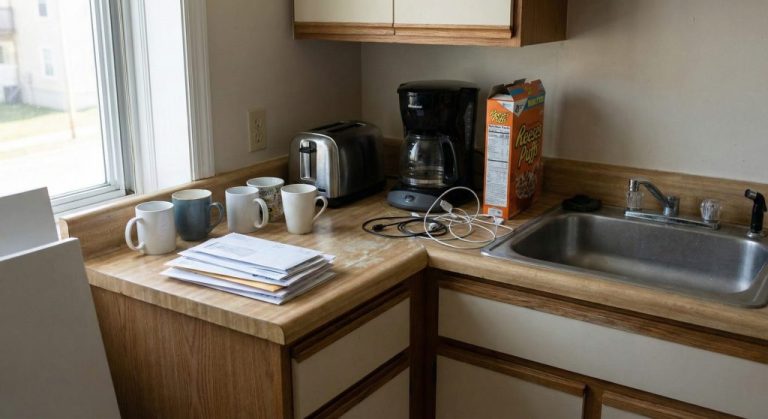
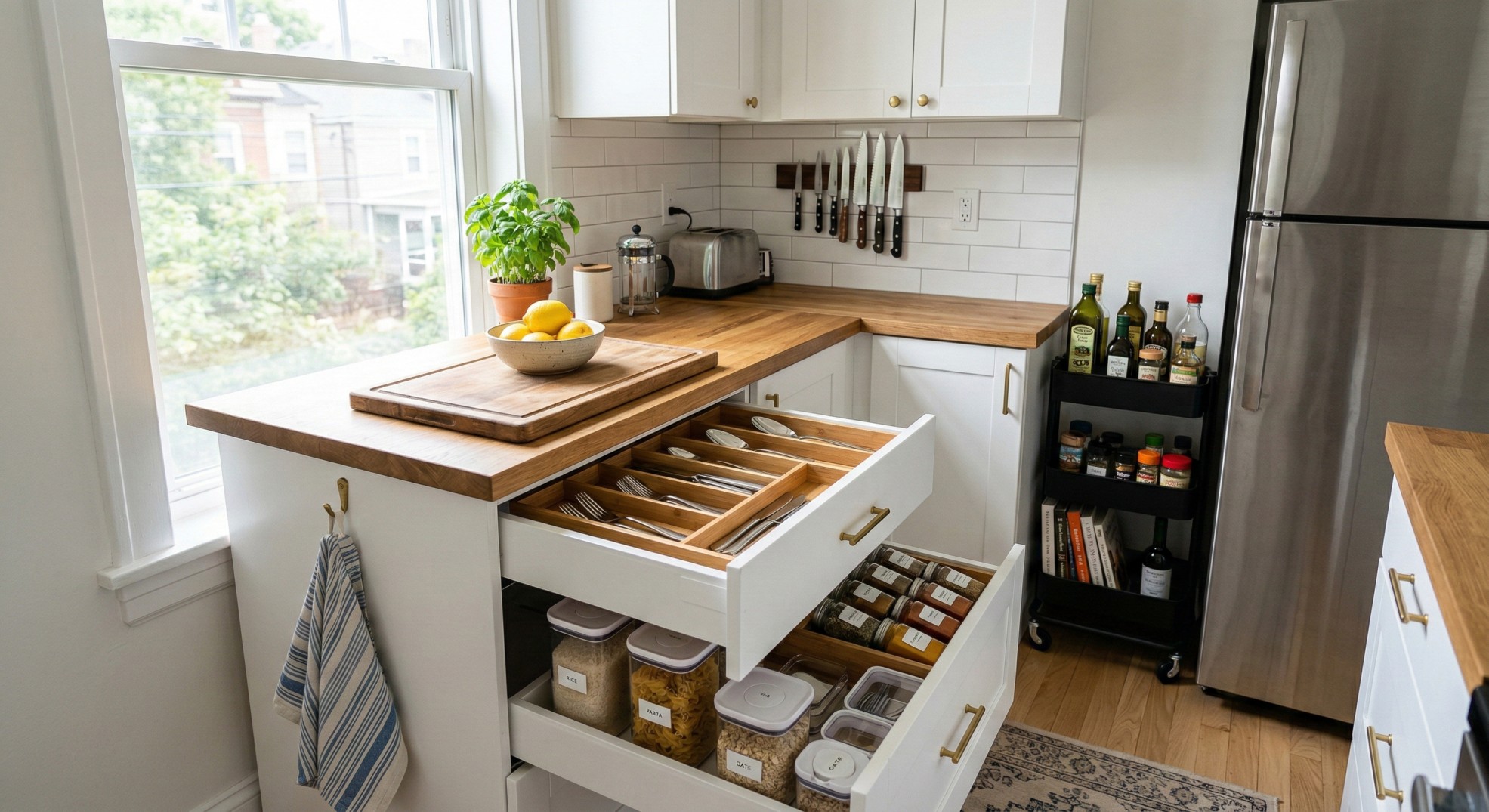
The Complete Kitchen Essentials & Storage Plan: Maximize Every Inch (With Shopping List + Tips)
Introduction
In this post you’ll get a simple, practical kitchen plan you can follow in one weekend: what to keep, what to store, and where everything should go—so your kitchen feels bigger, works faster, and stays tidy even on busy days. You’ll also get a complete essentials list (no clutter, no duplicates), plus storage rules that make every inch count.
Quick wins (do these first)
- Clear one “junk drawer” and turn it into a daily-use drawer (scissors, tape, pens, chargers)
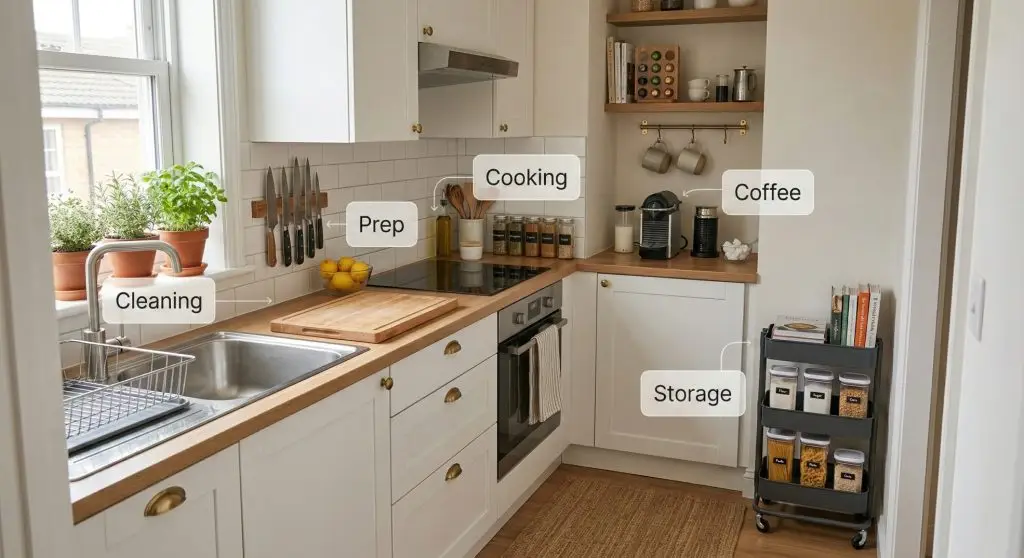
- Create zones: cooking, prep, coffee/snacks, cleaning, food storage
- Store everyday tools within one step of where you use them
- Add drawer dividers so utensils stop migrating and piling up
- Use vertical space: shelf risers, stackable bins, under-shelf baskets
- Put labels on pantry containers and bins for instant reset
- Move rarely used items to high shelves or deep cabinets
- Keep counters to 1–3 items max per section (it’s a game-changer)
- Use the inside of cabinet doors for wraps, lids, and cleaning supplies
- Give every category a home—so cleaning up takes minutes, not motivation
Step-by-step
Step 1: Measure, map, and pick your “must-have” zones
Before buying anything, do a quick map of your kitchen. Stand in the center and decide where these zones belong:
- Prep zone: cutting board, knives, mixing bowls
- Cooking zone: pots/pans, spatulas, oils, spices
- Coffee/snack zone: mugs, coffee/tea, quick bites
- Food storage zone: pantry staples, containers, wraps
- Cleaning zone: sponges, dish soap, trash bags, towels
When each zone has a home, you’ll stop shuffling items across the kitchen every time you cook.
Step 2: Declutter by function, not by emotion
Instead of asking “Do I love this?”, ask: “Do I use this at least monthly?”
Kitchen clutter usually comes from duplicates and “just in case” items.
Keep (most kitchens):
- 1–2 chef’s knives (or one good one)
- 1 cutting board you actually like using (plus a second if you meal prep)
- 1 skillet + 1 saucepan + 1 larger pot + 1 sheet pan
- A few mixing bowls, a colander, measuring cups/spoons
- A small set of everyday plates/bowls/mugs you truly use
Let go (common space-wasters):
- Gadgets that do one tiny job (unless you use them weekly)
- Extra mugs, novelty glasses, mystery lids
- Worn nonstick pans, warped sheet trays, duplicate spatulas
Put “maybe” items in a box. If you don’t reach for them in 30 days, they’re not essentials—they’re storage rent.
Step 3: The “Prime Real Estate” rule (store like a designer)
Think of your kitchen like a city: the best blocks go to the busiest shops.
Prime spots (eye-level shelves + top drawers):
Everyday items you touch daily: utensils, knives, plates, most-used spices, coffee.
Middle spots (easy-to-reach cabinets):
Pots/pans, mixing bowls, pantry staples, food containers.
Hard spots (high shelves, deep corners):
Holiday serveware, extra bulk items, rarely used appliances.
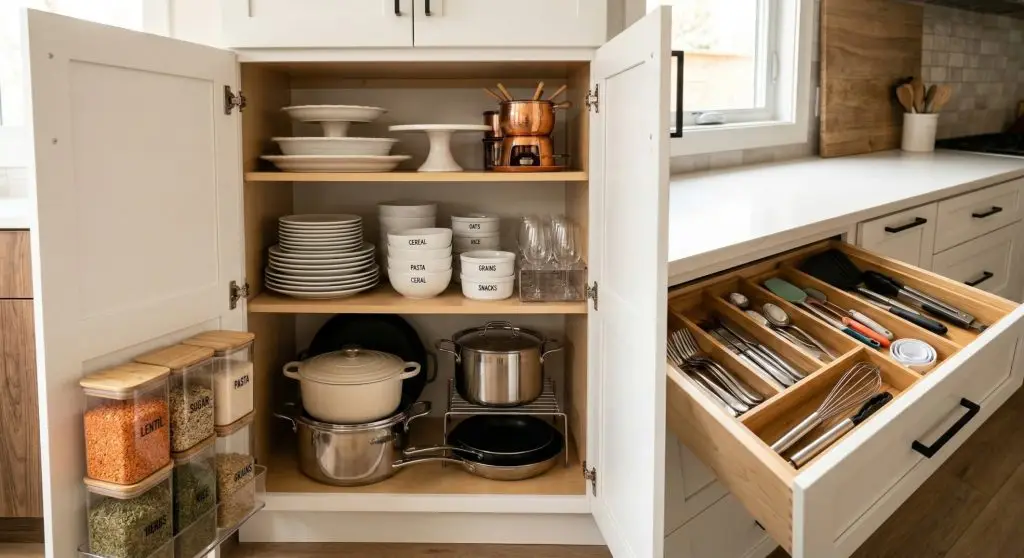
Step 4: Maximize drawers (your secret weapon)
Drawers are where small kitchens win—because they store more without becoming a black hole.
Set up your top drawers like this:
- Drawer 1 (closest to stove): spatula, tongs, whisk, thermometer
- Drawer 2 (prep): knives, peeler, grater, measuring tools
- Drawer 3 (wraps + bags): foil, parchment, zip bags in a dispenser or bin
If you need more ideas for tiny kitchens, link over to: Small Kitchen Organization Ideas That Actually Work (Budget-Friendly + Easy).
Step 5: Go vertical—then go slimmer
If your cabinets feel full, your problem is usually not “space.” It’s air.
Vertical organizers remove empty air and turn it into usable storage.
Try these upgrades:
- Shelf risers to double stack plates or pantry items
- Stackable bins for snacks, baking supplies, or packets
- Under-shelf baskets for wraps or napkins
- Slim rolling cart for oils, snacks, or small appliances
- Magnetic strip for knives or spice jars (if safe for your home setup)
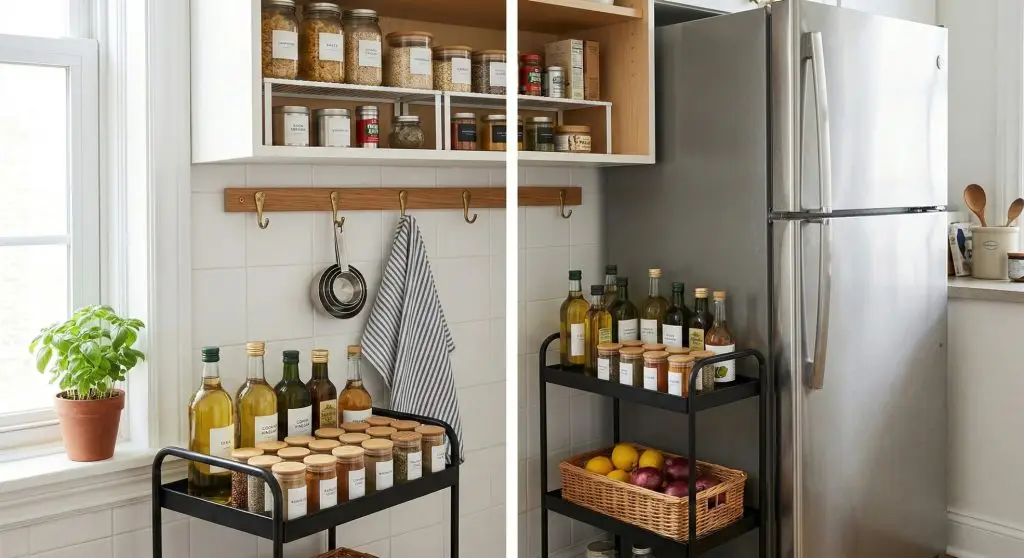
Step 6: Containers that actually help (not just look pretty)
A storage plan works best when you can see what you have and reset fast.
Best container rules:
- Use square/rectangle containers (they stack tighter than round)
- Choose clear bins so you don’t forget what’s inside
- Label by category: “Pasta,” “Baking,” “Snacks,” “Breakfast”
- Keep a bin for backstock (extra rice, extra canned goods)
If you cook often, matching food containers also stops the “lid avalanche.” Keep one bin just for lids.
Kitchen Essentials Checklist (the “most important” things to have)
This is a practical essentials list that covers most households without turning your kitchen into a gadget museum.
Everyday cooking essentials
- Chef’s knife + small paring knife
- Cutting board (1–2)
- Skillet + saucepan + medium/large pot
- Sheet pan + baking dish
- Silicone spatula, tongs, whisk, wooden spoon
- Measuring cups + measuring spoons
- Can opener, peeler, grater
- Mixing bowls + colander
- Food storage containers (stackable)
Pantry basics (build your base)
- Salt, pepper, garlic powder (or granulated), paprika
- Olive oil + neutral oil
- Rice/pasta + canned tomatoes
- Beans/lentils + broth/stock
- Flour + sugar (or sweetener you use)
- Vinegar (white or apple cider) + soy sauce
Cleaning essentials
- Dish soap, sponges/brush
- Microfiber cloths
- Trash bags + recycling bags
- All-purpose cleaner (or simple vinegar mix if preferred)
- Small bin for under-sink organization
Shopping list / tools list
These tools make the plan easier and help you keep the system long-term:
- Drawer dividers or cutlery tray
- Shelf risers for cabinets and pantry
- Stackable clear bins (2–6 depending on pantry size)
- Airtight containers for staples (flour, rice, pasta, cereal)
- Lazy Susan turntable (for oils, sauces, spices)
- Under-sink organizer (two-tier if possible)
- Label maker or simple labels + marker
- Over-the-door cabinet hooks (towels, gloves)
- Slim rolling cart (optional, amazing in tight kitchens)
You can find most of these on Amazon and other retailers, and they’re the kind of items that keep paying you back every time your kitchen resets faster.
If you only pick three upgrades to start, make them these:
- Drawer dividers (so daily tools stop piling up)
- Clear stackable bins (so pantry categories stay contained)
- A Lazy Susan turntable (so sauces and oils stop hiding in corners)
They’re small changes, but they remove the everyday friction that makes kitchens feel messy again.
FAQ
How do I maximize every inch in a small kitchen?
Use zones, store daily items in prime spots, and go vertical with shelf risers, stackable bins, and under-shelf baskets. The goal is to remove wasted air space and make everything easy to grab and put back.
What are the most important kitchen essentials to have?
A solid knife, cutting board, basic cookware (skillet, saucepan, pot), a sheet pan, and a few core tools (spatula, tongs, whisk, measuring set). Add containers and labels to keep food storage under control.
How do I organize kitchen cabinets so they stay organized?
Assign categories, use bins to contain each category, and keep everyday items at eye level. Put rarely used items up high or deep back. Labels help everyone in the home reset the system quickly.
What’s the best way to organize a pantry without buying a lot?
Start by grouping items (snacks, breakfast, baking, dinner staples). Use shoe-box-sized bins or even sturdy reused boxes. Add labels and keep backstock separate so you don’t overbuy.
How do I stop counters from getting cluttered again?
Limit each counter section to 1–3 items and make sure every “homeless” item has a drawer or bin home. Most counter clutter is just items without a designated storage spot.
Are clear containers better than original packaging?
Often yes—clear containers stack better, reduce visual clutter, and make it easier to see what you’re running low on. Keep a small bin for items you prefer in original packaging (like snack bars).
Wrap-up: your kitchen, but easier
A kitchen that works isn’t about having a bigger space—it’s about having a better plan. When you set zones, keep only the essentials, and use smart storage tools, you’ll feel the difference every single day: faster cooking, quicker cleanup, and less clutter creeping back in.