How to Organize Your Living Room in One Weekend: The Ultimate Step-by-Step Guide
Introduction
A messy living room can make your entire home feel off. Even when the floors are vacuumed, the couch is wiped down, and the shelves are dust-free, the room can still feel chaotic if there is too much visual clutter, poor storage, or no clear system in place. In fact, many of the biggest problems are the small ones people overlook, which is why Things That Make a Home Feel Messy (Even When It’s Clean) is such a helpful related read.
The living room is where life happens. It is where people gather, relax, watch shows, host guests, scroll on their phones, fold laundry, and sometimes leave half their daily life behind. That is why it tends to become a magnet for blankets, remotes, cords, books, toys, cups, paperwork, and random items from other rooms.
The good news is that you do not need a full renovation or a week-long reset to fix it. You can organize your living room in one weekend if you approach it with a smart plan. Instead of trying to do everything at once, the key is to declutter in stages, create functional zones, choose storage that matches real life, and make sure every item in the room has a home.
This guide walks you through exactly how to do that. It is practical, easy to follow, and designed for real people with real homes, not picture-perfect showrooms. Whether your space is large or small, minimal or family-focused, this step-by-step method will help you create a living room that feels calmer, looks cleaner, and stays organized longer.
Why an Organized Living Room Changes Everything
The living room is often the most visible room in the house. When it looks messy, the whole home can feel messy. When it feels calm and organized, the house instantly feels more put together.
An organized living room helps you:
- reduce visual clutter
- make everyday cleaning easier
- create more usable space
- make guests feel comfortable
- enjoy relaxing at home more
- stop clutter from spreading into other rooms
- make storage feel intentional instead of random
A lot of people clean their living room without truly organizing it. That is why the room may still look off afterward. It is not always dirt that creates stress. Often, it is too much stuff in the wrong places.
What You Need Before You Start
Before you begin, gather the basics so you can move through the weekend without stopping every few minutes.
Helpful supplies
- trash bags
- donation box or bin
- microfiber cloths
- all-purpose cleaner
- vacuum or handheld vacuum
- storage baskets
- lidded boxes
- drawer dividers
- cable organizers
- labels or sticky notes
- a laundry basket for items that belong in other rooms
If you need a few practical tools to make the job easier, simple storage pieces like woven baskets, cable management kits, decorative trays, storage ottomans, and fabric bins can help make the whole process smoother.
Step 1: Start With a Clear Goal
Before you touch anything, decide what you want your living room to feel like and how you actually use it.
Ask yourself:
- Is this mostly a place to relax?
- Do we entertain here often?
- Do kids use this room every day?
- Does this room double as a reading area or workspace?
- Do I want it to feel cozy, minimal, practical, or polished?
This matters because organization is not just about putting things away. It is about making the room work better for your lifestyle. A family movie room needs different storage than a formal sitting room. A small apartment living room needs different solutions than a large open-plan space.
When you know the purpose of the room, it becomes much easier to decide what deserves space and what is only adding clutter.
Step 2: Remove Everything That Does Not Belong
The fastest way to make the room feel better is to remove the obvious non-living-room items first.
Walk around with a basket or box and collect things like:
- dishes and mugs
- laundry
- shoes
- unopened mail
- school supplies
- kitchen items
- bathroom products
- chargers from unrelated devices
- toys that belong elsewhere
This step gives you an instant visual improvement and helps you focus on the clutter that actually belongs to the room.
Step 3: Declutter What Is Left
Now that the obvious non-living-room items are gone, it is time to deal with what remains. This is where the biggest transformation happens.
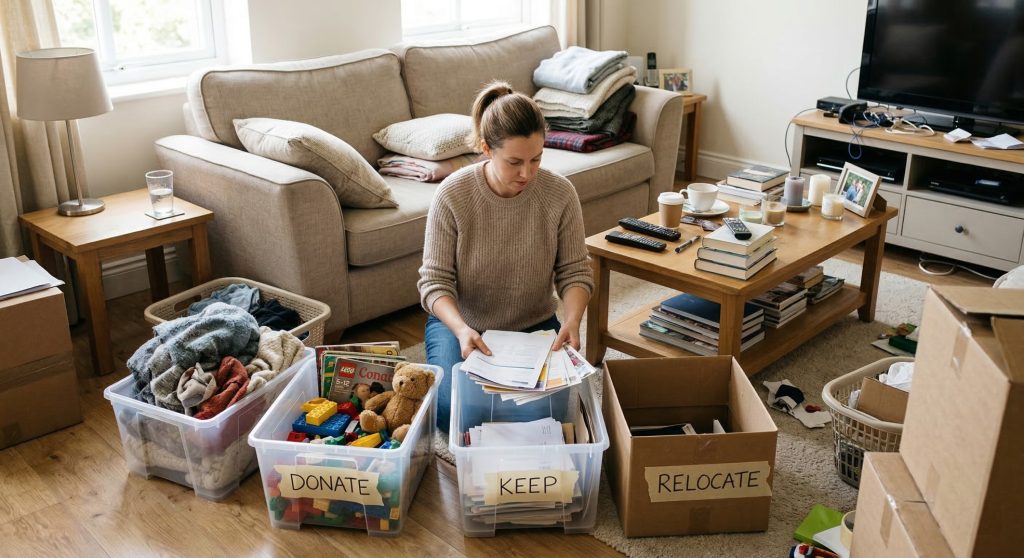
Go through everything in the room and sort it into four simple categories:
- keep
- donate
- toss
- relocate
Be honest during this stage. A living room often holds far more than it needs. Old magazines, tangled cords, broken decor, extra pillows, unused candles, outdated books, random paperwork, and small forgotten electronics all take up valuable space.
Best things to declutter first
- old magazines and newspapers
- broken or outdated decor
- duplicate remote controls
- unused electronics
- tangled or mystery cords
- empty boxes
- dead batteries
- too many throw pillows
- items you no longer use or enjoy
A useful rule is this: if it is not helpful, beautiful, or meaningful, it may not need to stay in the most-used room of your home.
Step 4: Group Similar Items Together
Once you know what you are keeping, create categories. This makes it easier to assign storage and prevents random placement later.
Common living room categories include:
- books
- throws and blankets
- remotes
- charging accessories
- games
- toys
- candles
- coasters
- magazines
- seasonal decor
- electronics
Grouping similar items together helps you see how much you really have. It also tells you what kind of storage makes sense. One basket for blankets may be enough. A media console may be better for electronics. A tray may solve coffee table clutter instantly.
Step 5: Clean the Room Before Reorganizing It
Do not skip this part. Once the surfaces are clear and the clutter is out, give the room a proper clean before putting anything back.
Focus on:
- vacuuming under the sofa
- dusting shelves and decor
- wiping down side tables and the coffee table
- cleaning the TV stand
- wiping windowsills
- cleaning lamps and light switches
- shaking out or vacuuming pillows
- washing any removable covers if needed
This fresh reset makes the final result feel much more satisfying.
It also helps explain why a room can still feel untidy after cleaning. If you want to understand that side of the problem too, Things That Make a Home Feel Messy (Even When It’s Clean) fits naturally here.
Step 6: Create Functional Zones
One of the smartest ways to organize a living room is to divide it into zones. This makes the room easier to use and much easier to maintain.
Useful living room zones
- seating or conversation area
- TV or entertainment area
- reading corner
- toy or family zone
- storage zone
- small drop zone near the entry if needed
Zoning gives purpose to the room. Instead of everything floating around, each activity has a place. That makes it much easier to know where items should go when you are putting the room back together.
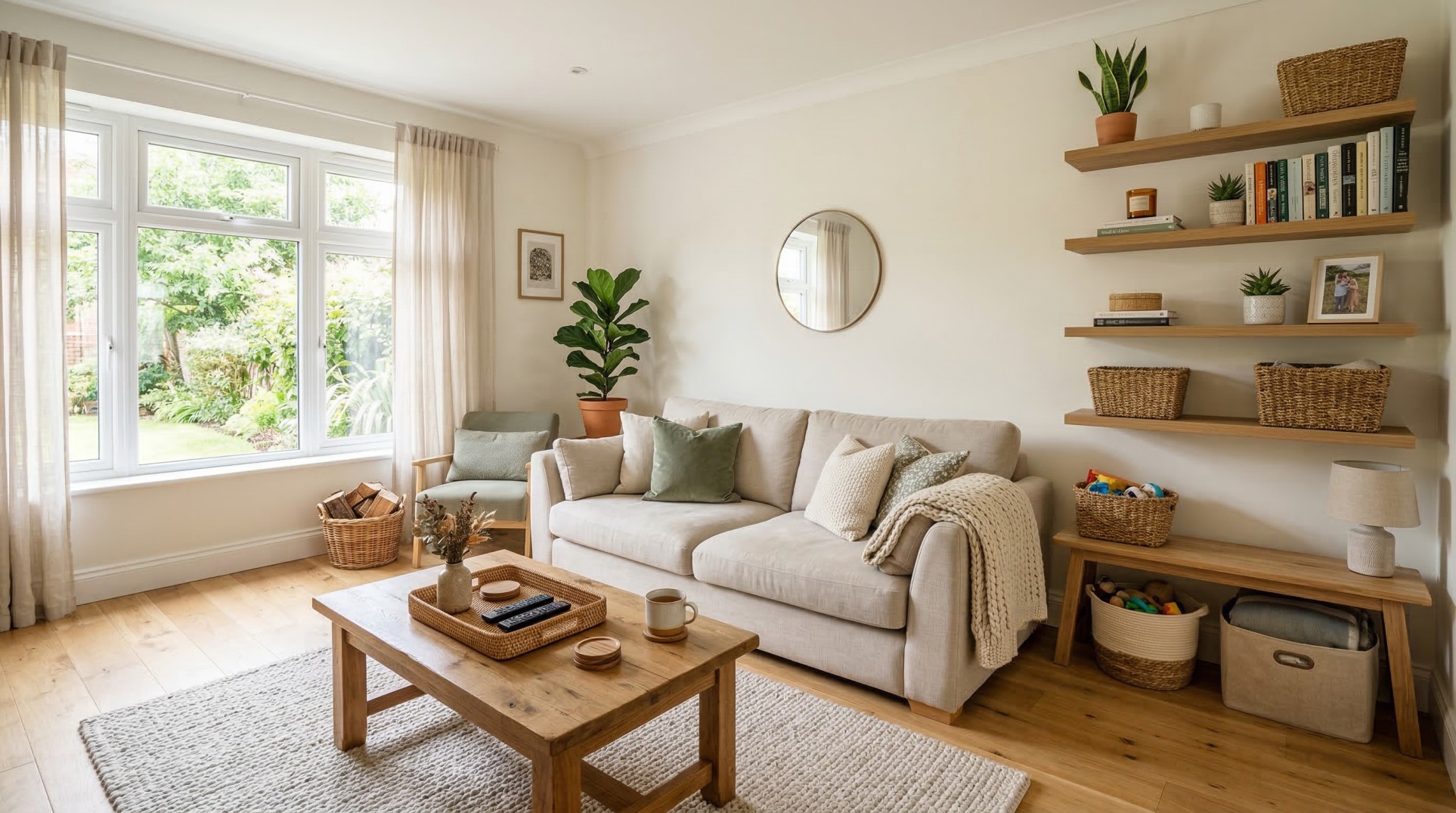
For example, if the family always uses blankets during movie night, keep a basket beside the sofa. If people always leave remotes all over the room, place a tray on the coffee table. If books pile up in random places, create a reading corner with a small shelf or basket.
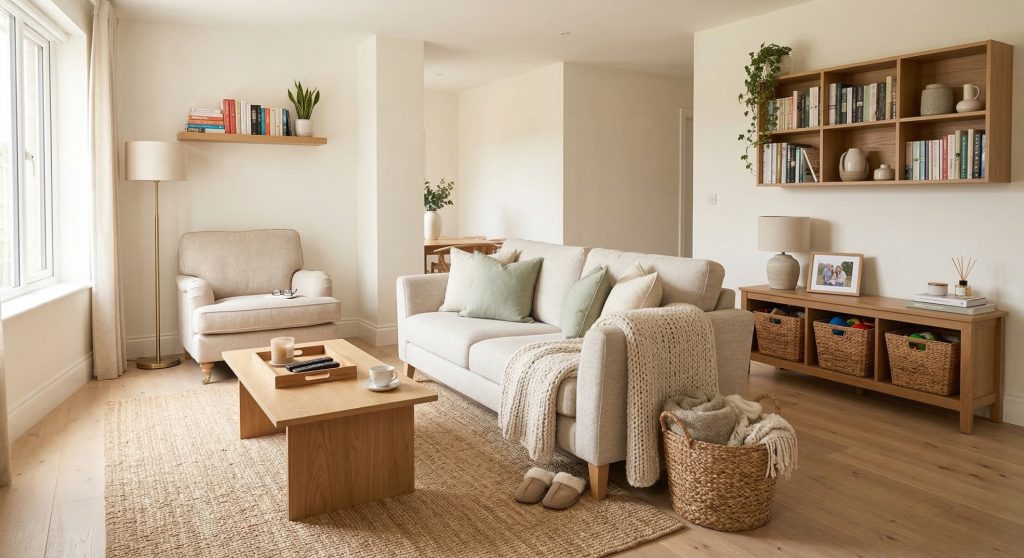
Step 7: Choose Storage That Solves Real Problems
Storage should make life easier, not just hide clutter. The best living room storage is simple, attractive, and matched to how the room is used every day.
Smart storage ideas for living rooms
- woven baskets for blankets
- lidded bins for toys
- a storage ottoman for remotes, games, or chargers
- cube organizers for books and bins
- floating shelves for decorative storage
- a media unit with drawers
- decorative trays for coffee table essentials
- magazine holders for reading materials
- cable boxes for power strips and wires
The best storage pieces are:
- easy to access
- easy to put things back into
- suitable for your style
- sized correctly for your room
- not too complicated to maintain
If you need to lift three lids and move two baskets just to put away a remote, the system will not last.
Step 8: Fix the Surfaces That Collect Clutter Fastest
In most living rooms, clutter builds on surfaces first. That means your coffee table, side tables, media console, and shelves need extra attention.
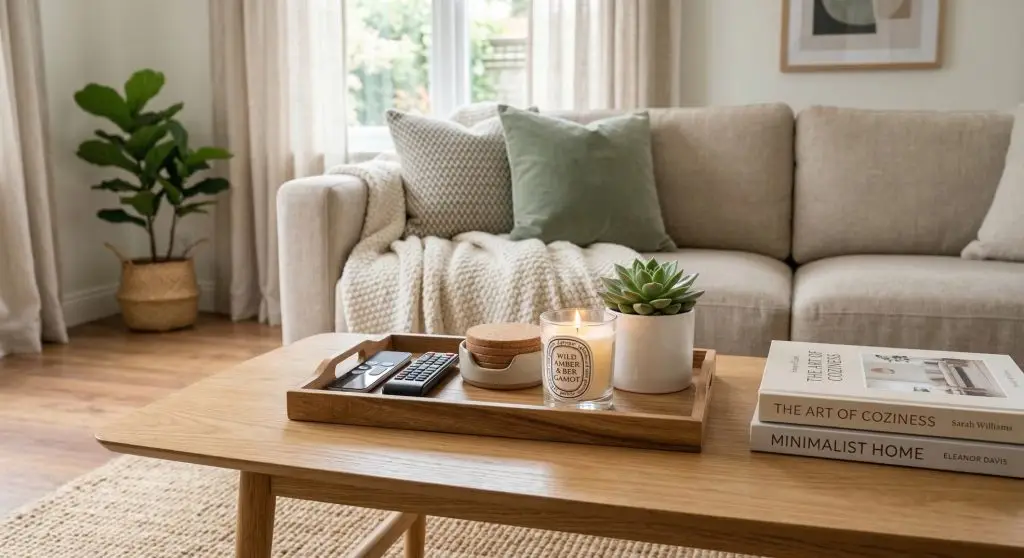
Coffee table essentials that actually work
- a tray for remotes and coasters
- one candle or decorative object
- one small plant or vase
- one or two books at most
The goal is to make the surface useful without turning it into a drop zone.
Side table tips
- keep only what is used regularly
- add one lamp or decorative piece
- store small extras in a drawer or nearby basket
- avoid piling up random papers or charging cords
Keeping visible surfaces lighter is one of the quickest ways to make a room feel calmer.
Step 9: Hide the Cable Clutter
Even a clean room can still look messy when cords are everywhere. This is one of the most overlooked parts of living room organization.
Easy ways to manage cords
- bundle wires with cable ties
- use cord sleeves behind the TV stand
- hide power strips in cable boxes
- label chargers if several people use the room
- store extra batteries in one small container
- get rid of electronics you no longer use
Cable management pieces are usually inexpensive, easy to install, and worth considering if you want the room to look more polished.
Step 10: Style the Room Without Overcrowding It
A well-organized living room should still feel warm, personal, and comfortable. The mistake many people make is replacing clutter with too much decor.
Best styling tips
- use a few larger decor pieces instead of many tiny ones
- leave breathing room on shelves
- mix storage with decorative items
- keep colors and textures consistent
- add one or two plants for freshness
- use throws and pillows in moderation
Avoid this
- overfilling open shelves
- stacking too many objects on the coffee table
- displaying every decorative item you own
- using visible storage for messy items
- crowding every corner with furniture or accessories
This is another place where Things That Make a Home Feel Messy (Even When It’s Clean) fits naturally, especially if you want readers to understand how visual clutter affects the way a room feels.
Step 11: Give Everything a Home
This is what keeps the room from getting messy again next week.
Every item in the living room should have a designated place.
For example:
- blankets go in the basket
- remotes go in the tray
- chargers go in the drawer
- games go in the cabinet
- books go on the shelf
- toys go in a labeled bin
- extra candles go in the ottoman
If an item does not have a clear home, it usually ends up on the nearest surface. That is how clutter slowly comes back.
Step 12: Build a Simple Reset Routine
Once the room is organized, you want it to stay that way. The easiest way is to create a quick reset habit that takes only a few minutes.
Easy daily or weekly habits
- fold and return blankets each evening
- clear the coffee table before bed
- throw away trash right away
- return remotes to the tray
- put stray items back in their proper rooms
- do a quick five-minute reset every night
- keep a donation bag nearby for things you no longer want
The easier the system is, the more likely everyone in the home will actually follow it.
Best Things to Do for a Cleaner, Calmer Living Room
If you want the biggest impact fast, focus on these:
- declutter before buying storage
- keep surfaces mostly clear
- use baskets for soft clutter like throws and toys
- hide cords whenever possible
- create zones based on real-life activities
- choose storage furniture that does double duty
- leave open space on shelves and tables
- assign every item a home
- keep maintenance simple
These are the changes that make a living room feel more spacious, more functional, and much more enjoyable to spend time in.
Common Mistakes to Avoid
Many people organize their living room once, then watch it slowly fall apart again. Usually, one of these habits is the reason:
- keeping too many things in the room
- buying storage before decluttering
- using open storage for messy items
- ignoring cable clutter
- overcrowding shelves and tables
- not creating zones
- not having a place for everyday items
- creating a system that is too hard to maintain
Good organization should feel natural. If it feels complicated, it probably will not last.
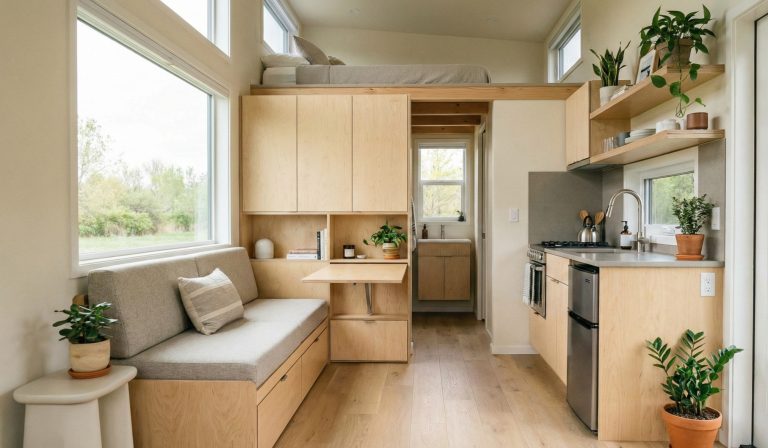
Small Living Room Tips
If your living room is small, you need to be even more intentional.
What works well in a small space
- use vertical storage like floating shelves
- choose an ottoman with hidden storage
- keep decor simple and not too bulky
- use baskets that slide beside or under furniture
- stick to a lighter color palette
- avoid too many tiny decorative objects
- use furniture with clean lines
In smaller rooms, every object matters more. That is why organization has such a powerful effect.
Simple Storage Solutions That Make a Big Difference
Sometimes, organizing your living room is less about buying more furniture and more about choosing a few practical pieces that help control everyday clutter.
A woven basket can keep throw blankets in one place without making the room feel crowded. A storage ottoman can hide games, chargers, or extra remotes while also giving you extra seating. Decorative trays are useful for keeping coffee tables neat, especially when small items like remotes and coasters tend to spread out. If you have children, lidded bins or fabric cubes can make toy cleanup much faster and keep the room looking calmer. For media-heavy spaces, cord organizers and magazine holders can also help reduce visual clutter.
The key is to choose storage that solves a real problem in the room. When each organizer has a purpose, the space feels more natural and less overfilled.
Conclusion
Organizing your living room in one weekend is absolutely doable when you break the process into simple steps. Start by removing what does not belong, decluttering what you no longer need, grouping like items together, cleaning thoroughly, creating zones, and adding storage that makes sense for the way you actually live.
The goal is not to create a perfect showroom. It is to create a room that feels peaceful, works better, and is easier to maintain every day.
A few thoughtful changes can make a big difference. A basket for blankets, a tray for remotes, better cable control, and lighter surfaces can completely change how the room feels. And when every item has a home, staying organized becomes far less stressful.
If you also want to explore the visual side of clutter, Things That Make a Home Feel Messy (Even When It’s Clean) is a strong related article to include in this post because it helps explain why a room can still feel untidy even after cleaning.
An organized living room does more than improve appearance. It changes how your home feels, how you use your space, and how easily you can enjoy it every day.