
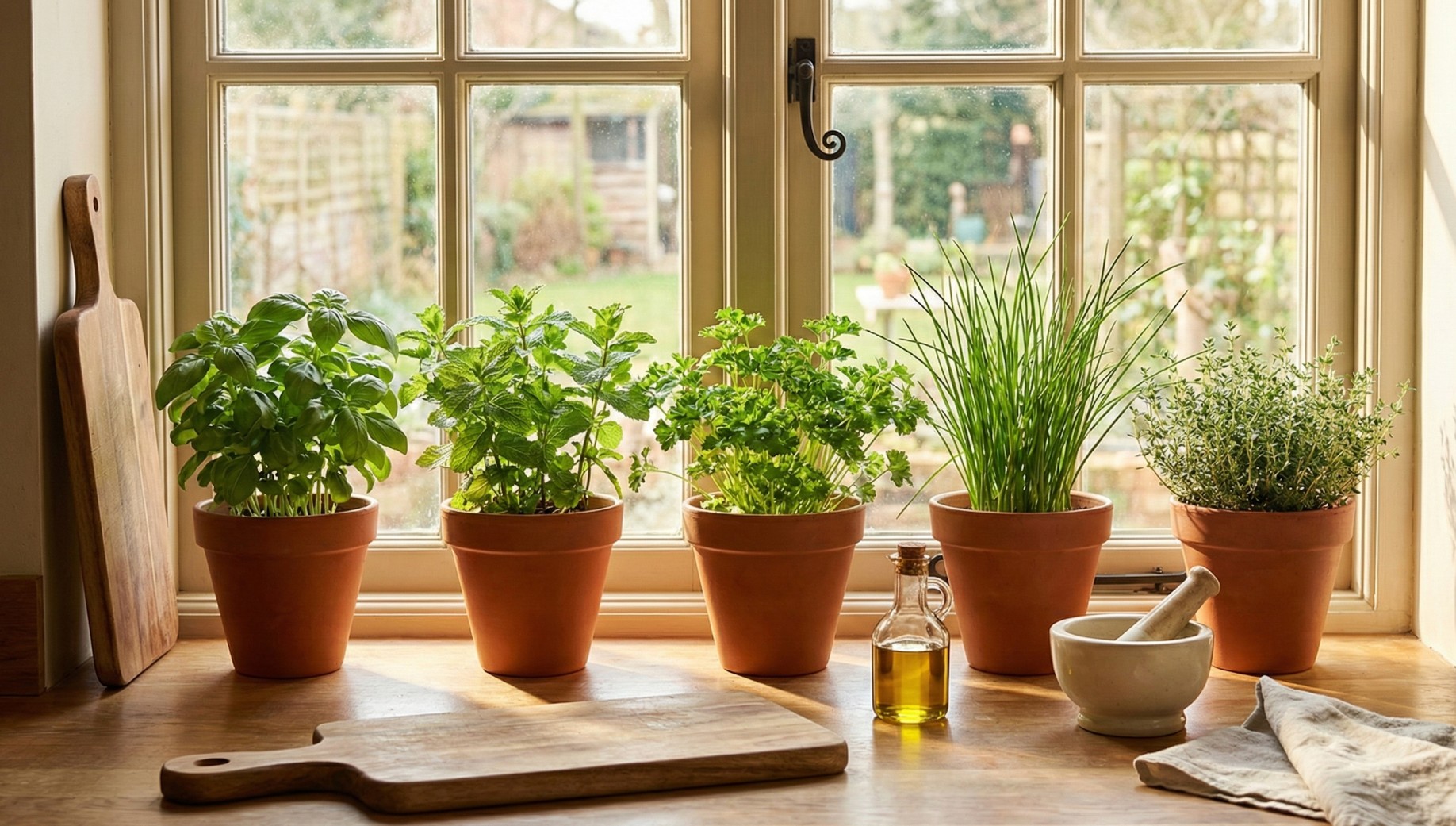
Best Herbs to Grow on a Windowsill (Top 5)
Growing herbs on a windowsill is one of the easiest ways to keep fresh flavor within arm’s reach. With a bright window, a pot that drains well, and simple trimming, you can keep herbs producing for weeks (and often months). Here are five reliable herbs that work great indoors.
1) Basil
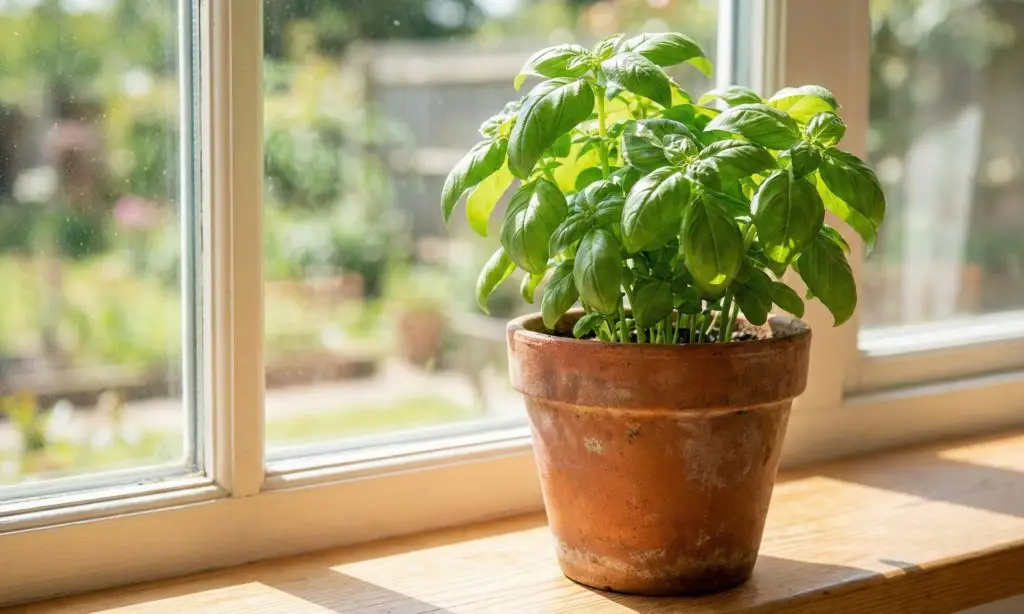
What it is: Basil is a tender, sweet herb with a slightly peppery taste, famous for pairing with tomatoes and garlic.
Why grow it: It grows quickly and gives you lots of leaves, and fresh basil tastes far better than dried.
How to grow it: Plant basil in a pot with drainage and place it in your sunniest windowsill. If you start from seed, keep the soil lightly moist until it sprouts.
How to take care of it: Basil likes warmth and steady moisture (not soggy soil). Pinch the top growth regularly so it becomes bushy instead of tall and thin.
How to use it: Harvest by cutting stems just above a pair of leaves so it keeps branching. Use it fresh in salads, pasta, sandwiches, and pesto—add it near the end of cooking for the best flavor.
Like most leafy plants, basil releases oxygen during daylight and can slightly increase indoor humidity, but the real everyday benefit is having fresh, fragrant leaves that make simple meals taste “restaurant-level.”
2) Mint
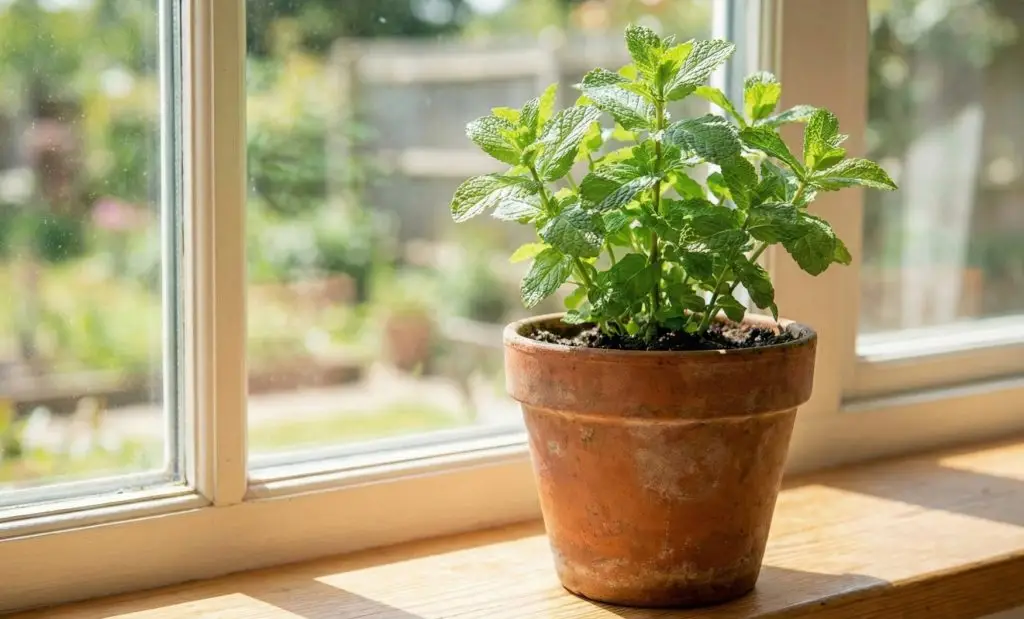
What it is: Mint is a hardy herb with a cool, refreshing flavor and a strong aroma.
Why grow it: It’s one of the most forgiving herbs for beginners and keeps producing even if you forget it once in a while.
How to grow it: Start with a small plant or cutting and keep mint in its own pot because it spreads fast. Place it in bright light, but it can handle a bit less sun than basil.
How to take care of it: Water when the top of the soil feels dry, and trim it often to keep it full and leafy. If it gets leggy, cut it back and it will regrow.
How to use it: Snip stems anytime for mint tea, lemonade, smoothies, fruit salads, or yogurt. Lightly crush the leaves before using to release more aroma.
Mint’s biggest bonus is its scent—many people love how it makes a kitchen feel fresher. It also contributes small “normal plant” benefits like daytime oxygen and a little humidity, but its real superpower is instant flavor and fragrance.
3) Parsley
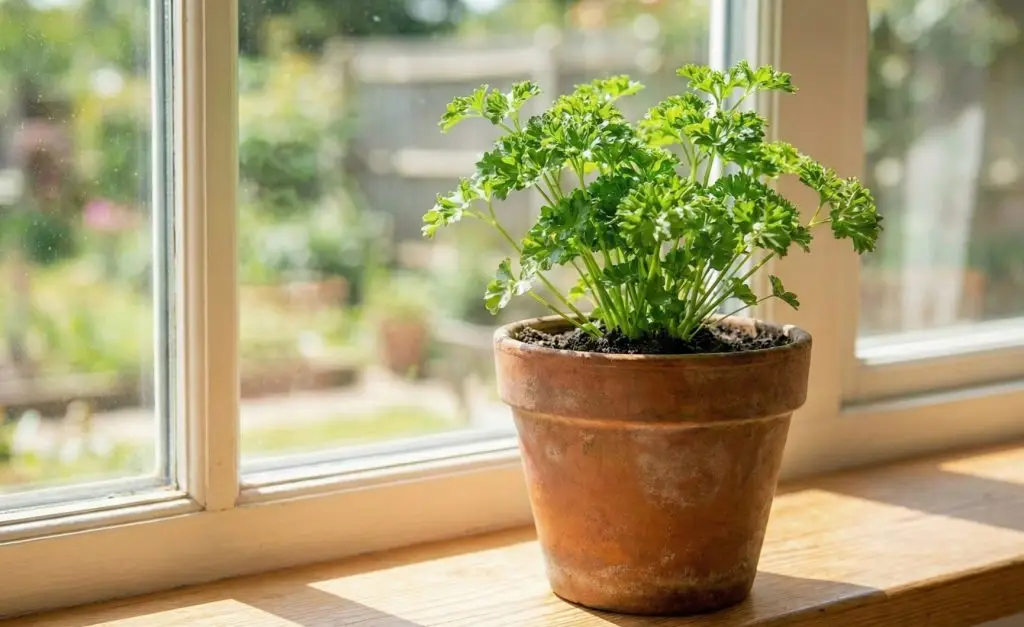
What it is: Parsley is a bright, fresh-tasting herb (flat-leaf or curly) that works in almost everything.
Why grow it: It’s incredibly versatile and turns basic dishes—soups, rice, eggs, salads—into something more flavorful and balanced.
How to grow it: Parsley likes a deeper pot than most herbs. You can grow from seed, but it’s slower to sprout, so a starter plant is the quickest way to begin.
How to take care of it: Keep it in bright light and water when the top layer of soil dries out. Harvest from the outside first so the center keeps producing new growth.
How to use it: Chop it fresh over soups, roasted vegetables, pasta, or mix into sauces and marinades. It’s one of the best herbs to use generously.
Parsley is a great “everyday nutrition” herb because it adds freshness without extra salt or heavy sauces. As a plant, it also helps slightly with daytime oxygen and humidity, but the most noticeable benefit is how it upgrades meals quickly.
4) Chives
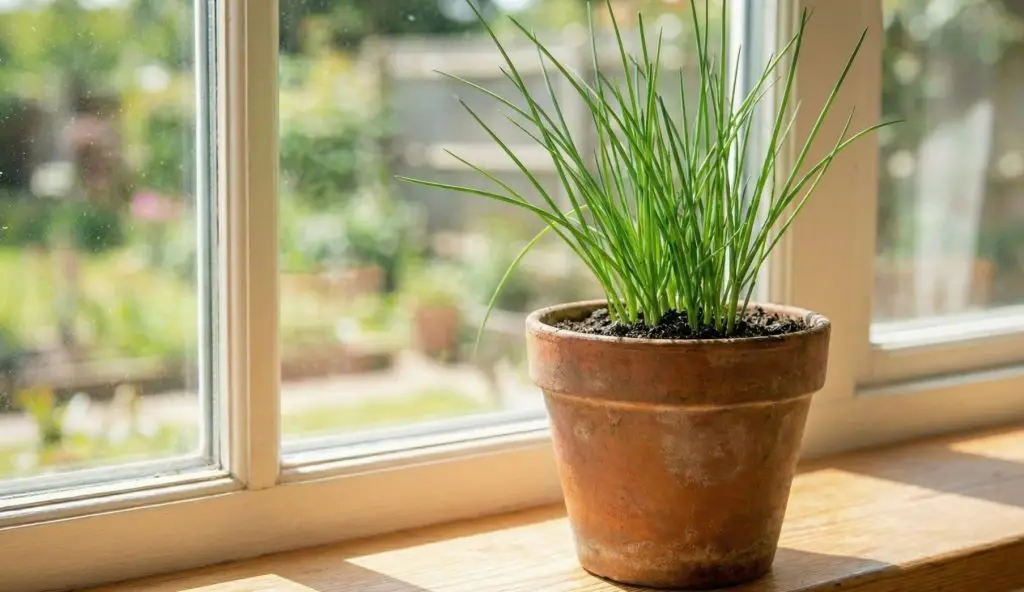
What it is: Chives are thin green herbs with a mild onion flavor.
Why grow it: They’re easy, tidy, and perfect for “snip what you need” cooking.
How to grow it: Grow chives in a small pot with drainage and give them bright light. They grow well from starter plants and also from seed if you’re patient.
How to take care of it: Let the soil dry slightly between watering, and trim regularly to encourage fresh shoots. If they start to flop, they usually need more light.
How to use it: Snip with scissors and sprinkle on eggs, potatoes, salads, soups, and creamy dips. Add at the end for the best flavor.
Chives make healthy food taste better with almost no effort—great if you’re trying to cut down on salt while still wanting flavor. Their plant benefits (oxygen/humidity) are small, but their convenience is huge.
5) Thyme
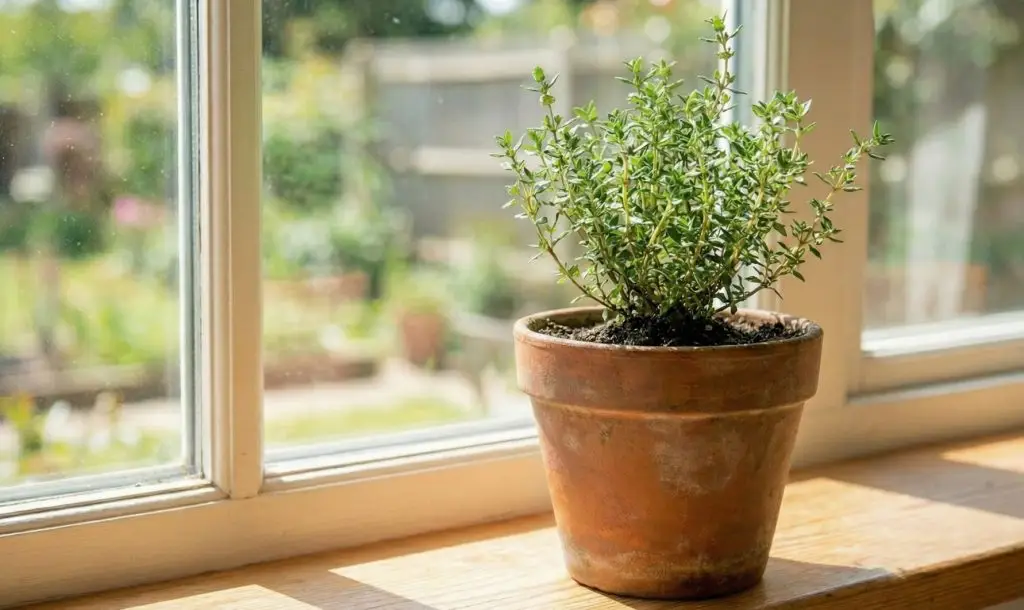
What it is: Thyme is a woody herb with tiny leaves and a strong, savory flavor.
Why grow it: It’s low-maintenance and doesn’t need constant watering, making it great if you forget sometimes.
How to grow it: Start with a small thyme plant, use well-draining potting mix, and place it in your brightest window.
How to take care of it: Water only when the soil has dried more than you would for basil or parsley—thyme hates wet feet. Trim lightly to keep it compact and encourage new growth.
How to use it: Snip sprigs for soups, stews, roasted potatoes, chicken, and vegetables. Thyme holds up well in cooking, so you can add it earlier in the recipe.
Thyme’s aroma can make your kitchen feel cozy and “herby,” especially while cooking. Like other plants, it contributes a small amount of daytime oxygen and moisture, but its best benefit is being an easy, reliable flavor booster.
Conclusion
A windowsill herb garden is a small upgrade that pays off every day: meals taste fresher, you waste less money on store-bought herbs, and your kitchen feels more alive. Start with one or two herbs that match your habits—basil if you cook often, thyme if you want low maintenance, mint if you love drinks—and add more once you get the watering rhythm right. With steady light, proper drainage, and regular harvesting, these five herbs can keep your home cooking stocked with fresh flavor whenever you need it.