Small Space Decorating Ideas That Make Any Room Look Bigger
Introduction
Small rooms can feel cozy… or cramped. The good news is you don’t need a remodel to make your space feel larger—you just need a few smart decorating choices that change how the eye reads the room. The best small-space tricks focus on light, layout, scale, and visual “quiet.” Whether you’re working with a tiny bedroom, small living room, or apartment kitchen, these ideas will help your room look bigger, brighter, and more put together.
1) Declutter first (it’s the fastest way to gain “space”)
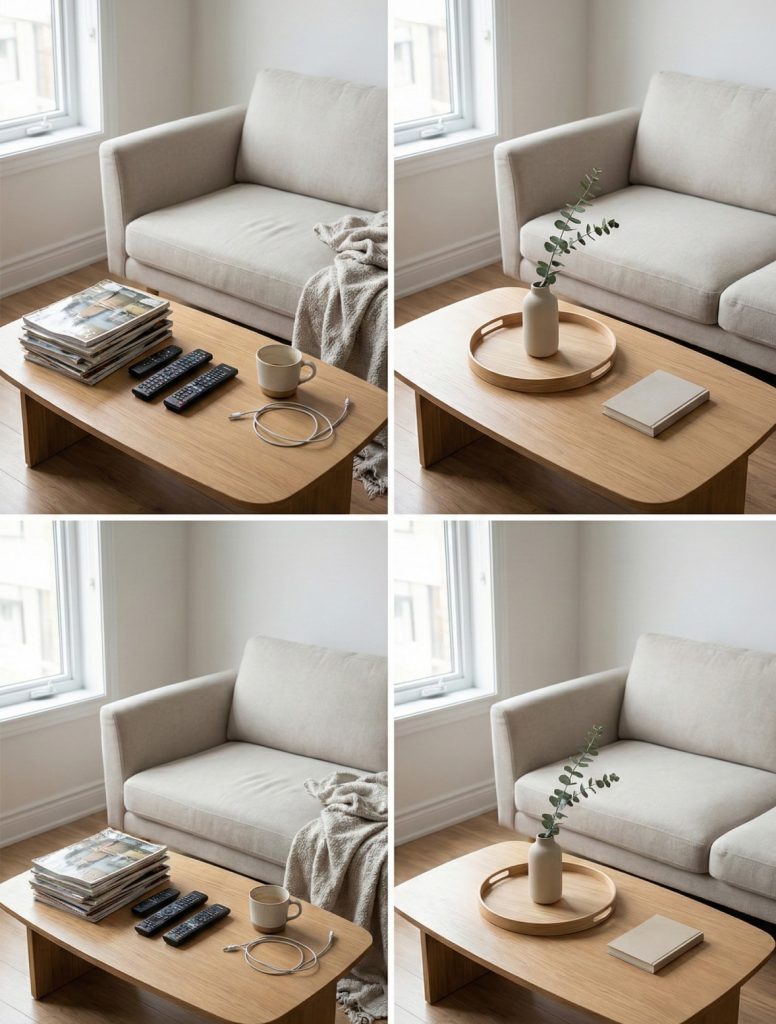
Before buying anything, remove what you don’t love or use. In small rooms, visual clutter takes up “mental square footage.” Clear surfaces see the biggest impact: coffee tables, counters, nightstands, and entryway consoles. If you want a simple rule, aim to remove 20–30% of what you see at eye level. Then store the rest out of sight in baskets, bins, or lidded boxes.
2) Choose a light color story and repeat it
Light walls help bounce light around, but the real trick is repeating your main color throughout the room. When your walls, large furniture, and key decor share a similar tone, the eye travels smoothly instead of stopping at sharp contrasts. You can still add personality—just keep it intentional. A simple small-space palette is: warm white + light wood + black accents (or brass).
3) Hang curtains high and wide
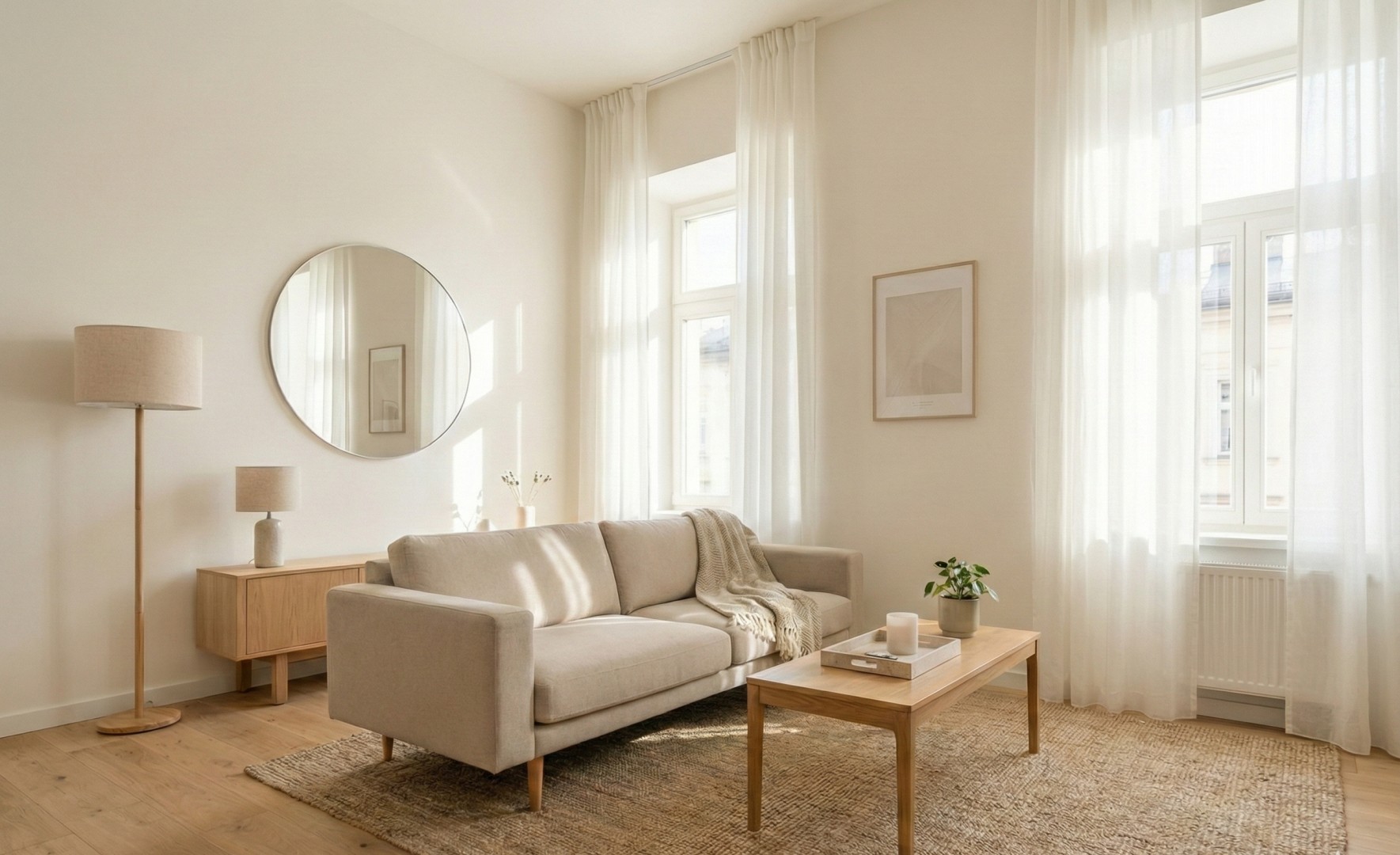
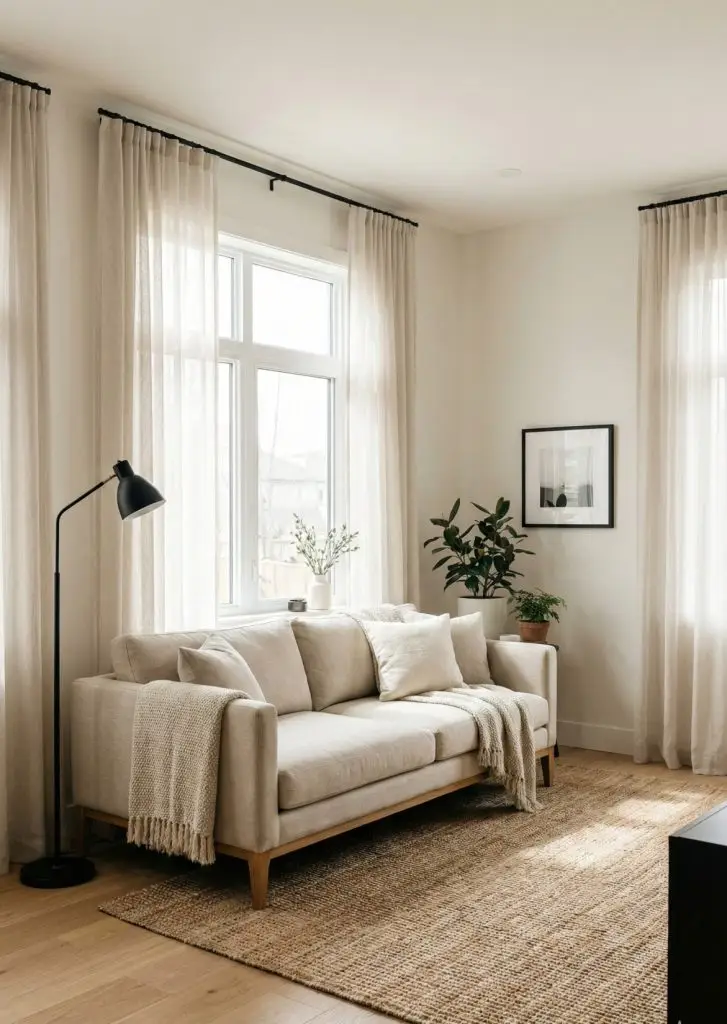
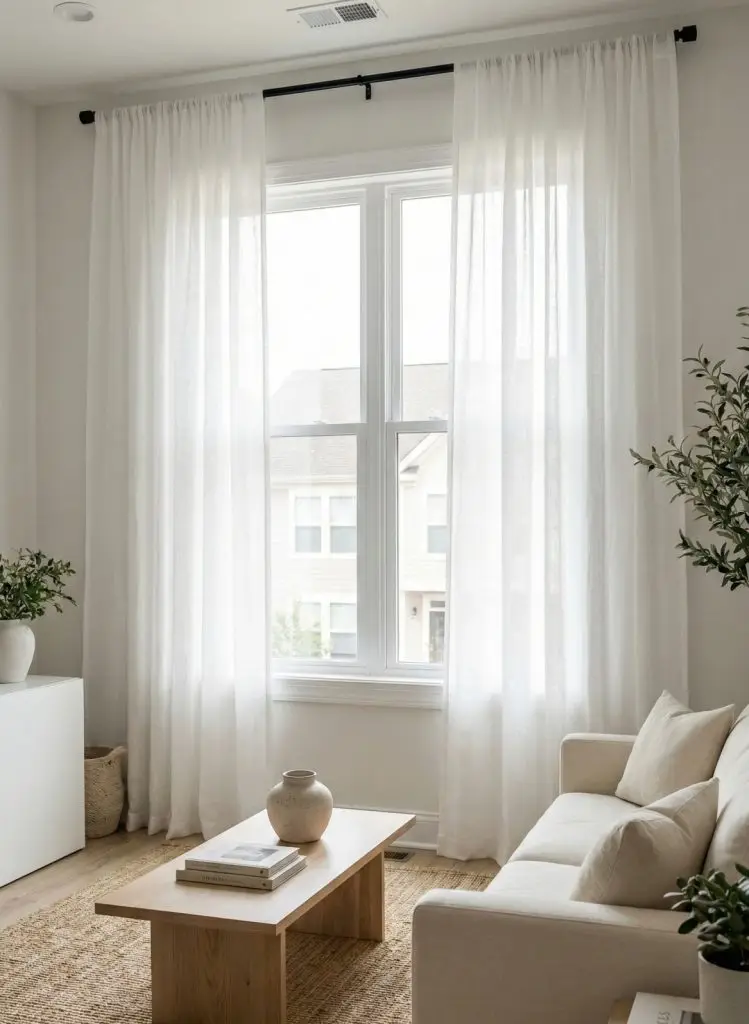
This is one of the biggest “wow” upgrades. Mount your curtain rod closer to the ceiling (not right above the window frame), and extend it wider than the window. This makes windows look larger and ceilings look taller. Bonus: it also makes the wall feel more expansive. Choose panels that are long enough to kiss the floor for a polished look.
4) Use mirrors to reflect light and depth
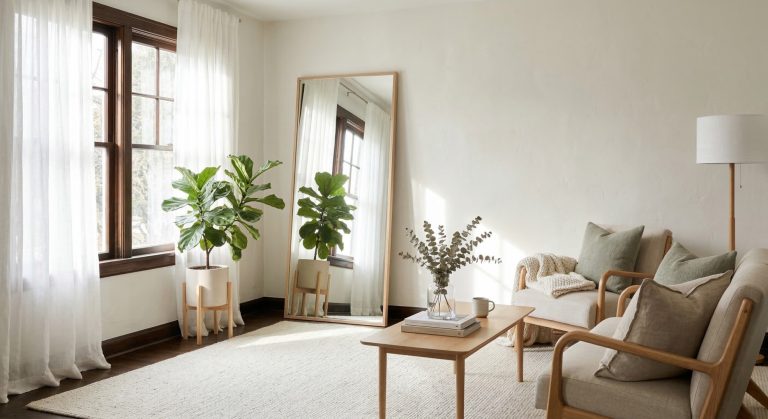
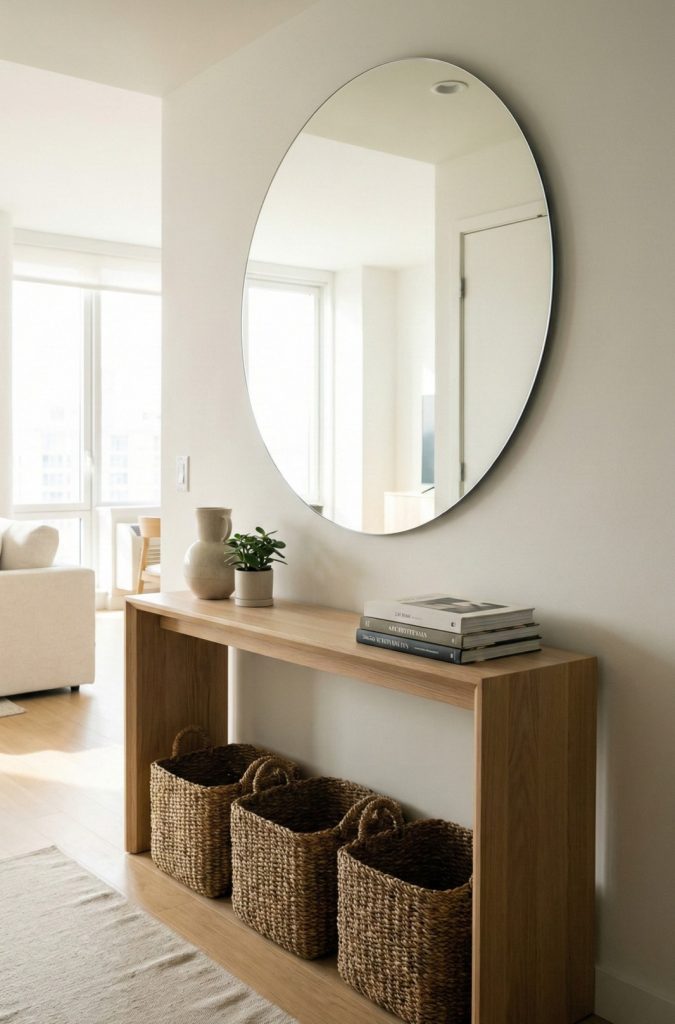
Mirrors can double the brightness in a room when placed correctly. The best spot is across from a window or angled toward natural light. A full-length mirror leaning on the wall can also add depth (and it’s renter-friendly). Keep the mirror simple and sized appropriately—tiny mirrors won’t create the same open effect.
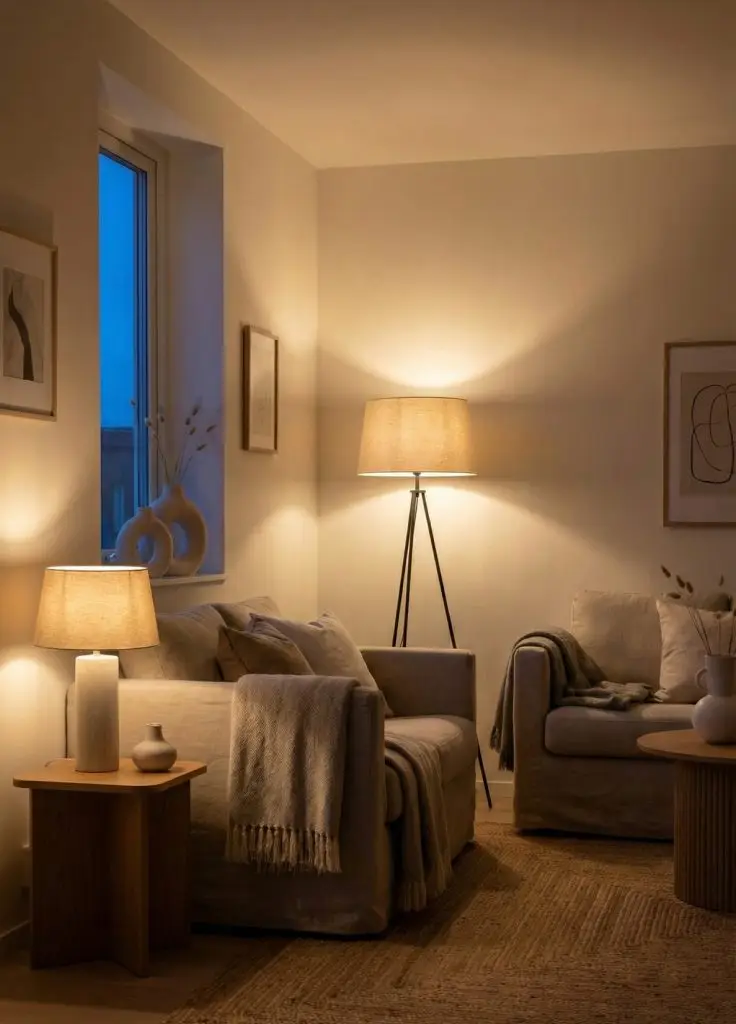
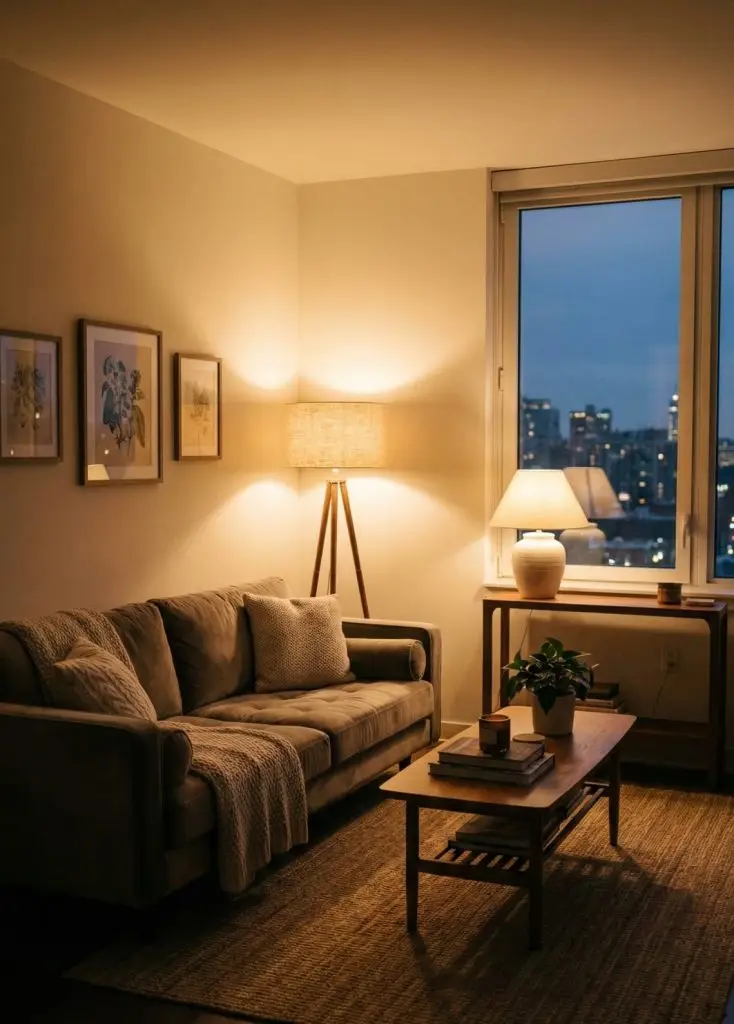
5) Layer your lighting (don’t rely only on overhead)
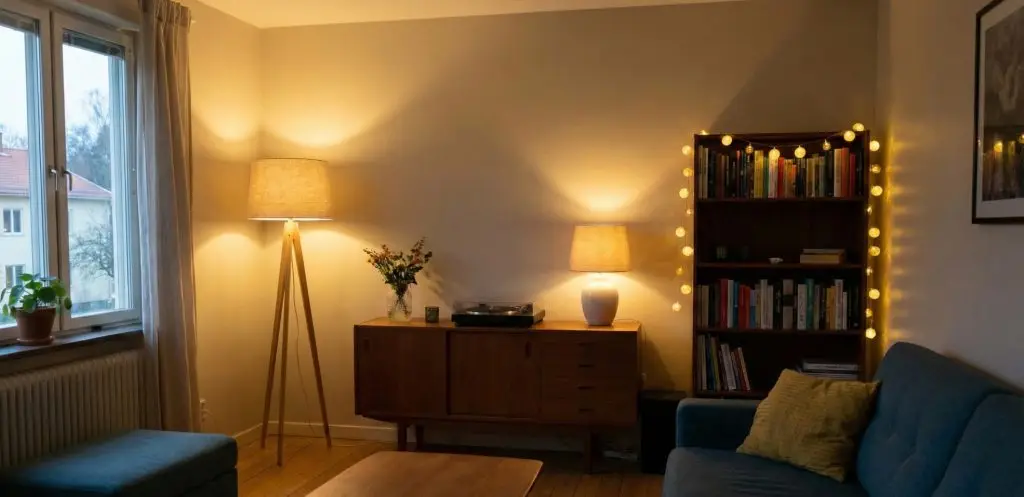
Small rooms feel flat and harsh with one overhead light. Layering creates depth. Aim for a mix of:
- one ambient light (ceiling or floor lamp)
- one task light (table lamp or desk lamp)
- one accent light (wall sconce or small lamp in a corner)
Warm bulbs make the space feel inviting and “glowy” rather than boxed in.
6) Choose furniture with legs and show the floor
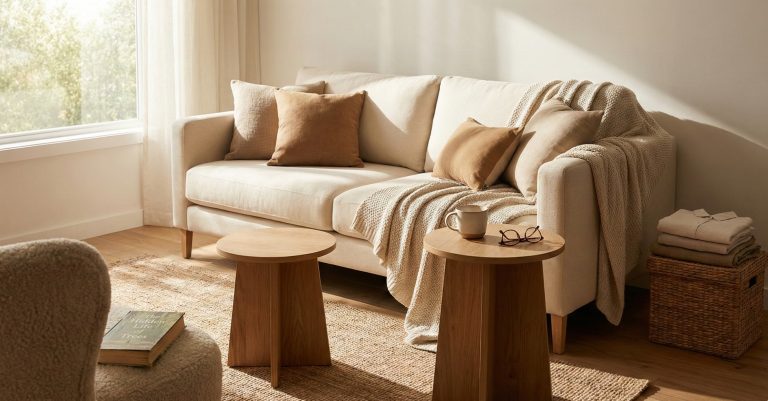
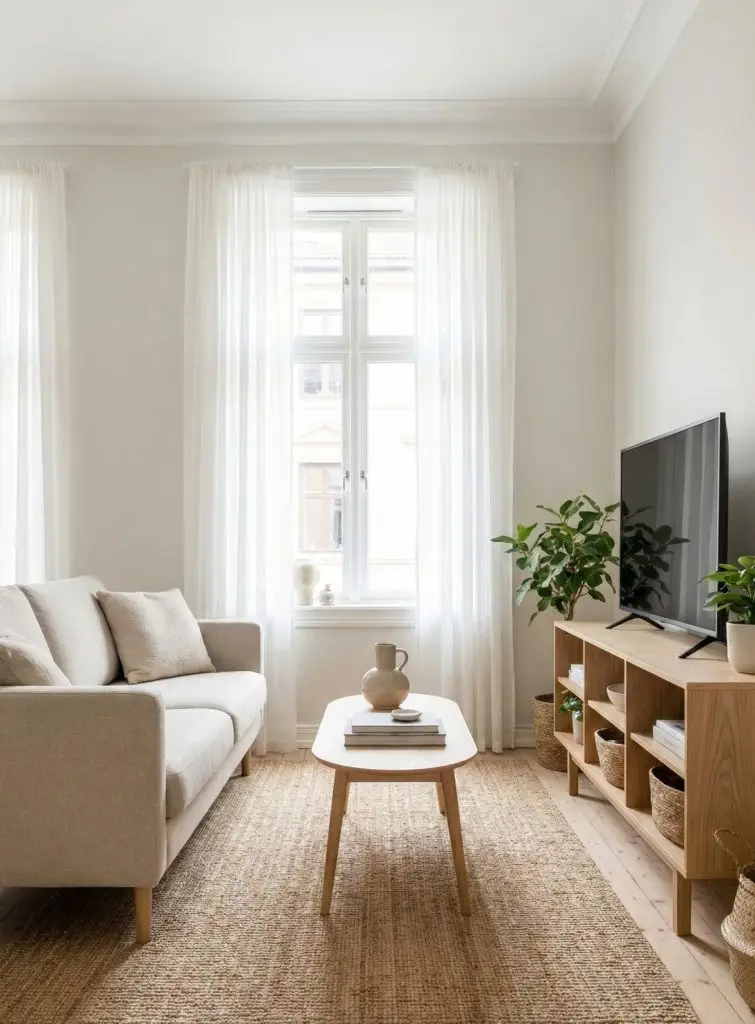
When you can see more floor, the room feels bigger. Furniture with legs lets light pass underneath and reduces visual heaviness. If your current pieces feel bulky, balance them with lighter elements: a glass-top table, slim side table, or open shelving instead of a heavy cabinet.
7) Get the rug size right (too small shrinks the room)
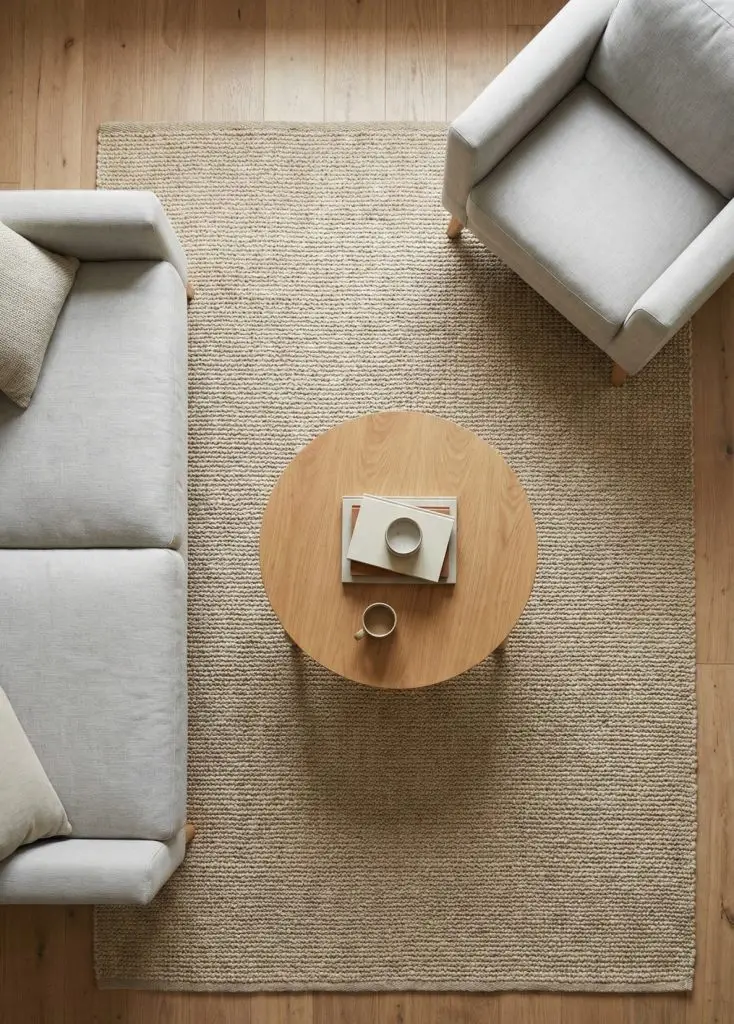
When you can see more floor, the room feels bigger. Furniture with legs lets light pass underneath and reduces visual heaviness. If your current pieces feel bulky, balance them with lighter elements: a glass-top table, slim side table, or open shelving instead of a heavy cabinet.
8) Use vertical space to draw the eye upward
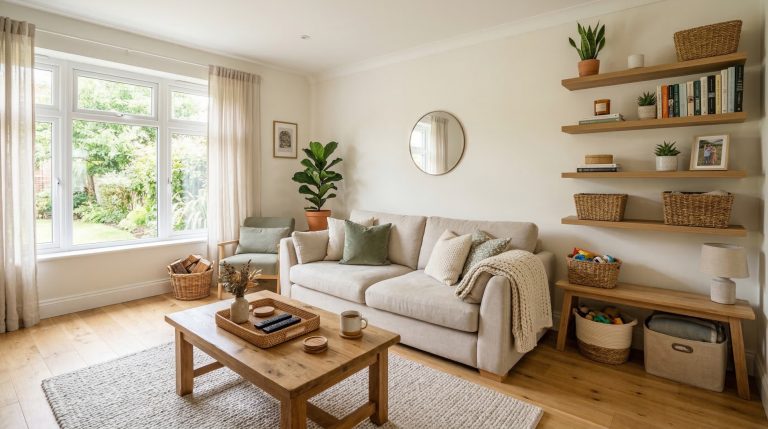
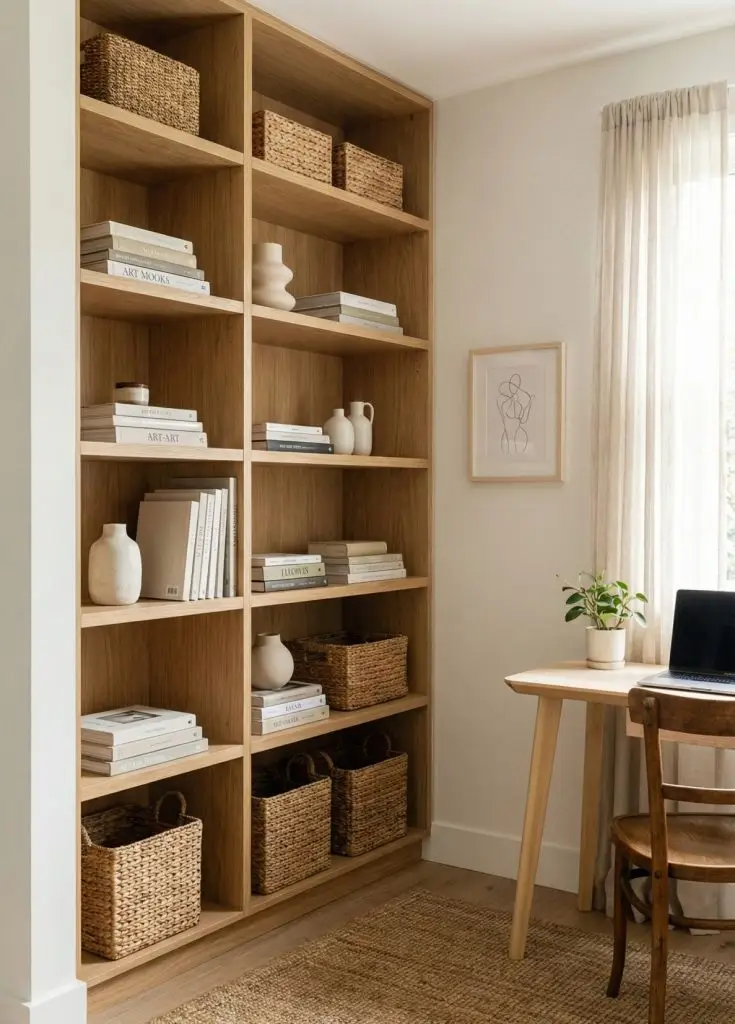
Small rooms often have unused wall height. Add tall bookcases, floating shelves, or wall hooks to move storage up and off the floor. Tall items also create the illusion of higher ceilings. Just avoid overfilling shelves—leave breathing room for a light, open look.
9) Keep surfaces styled with trays and “drop zones”
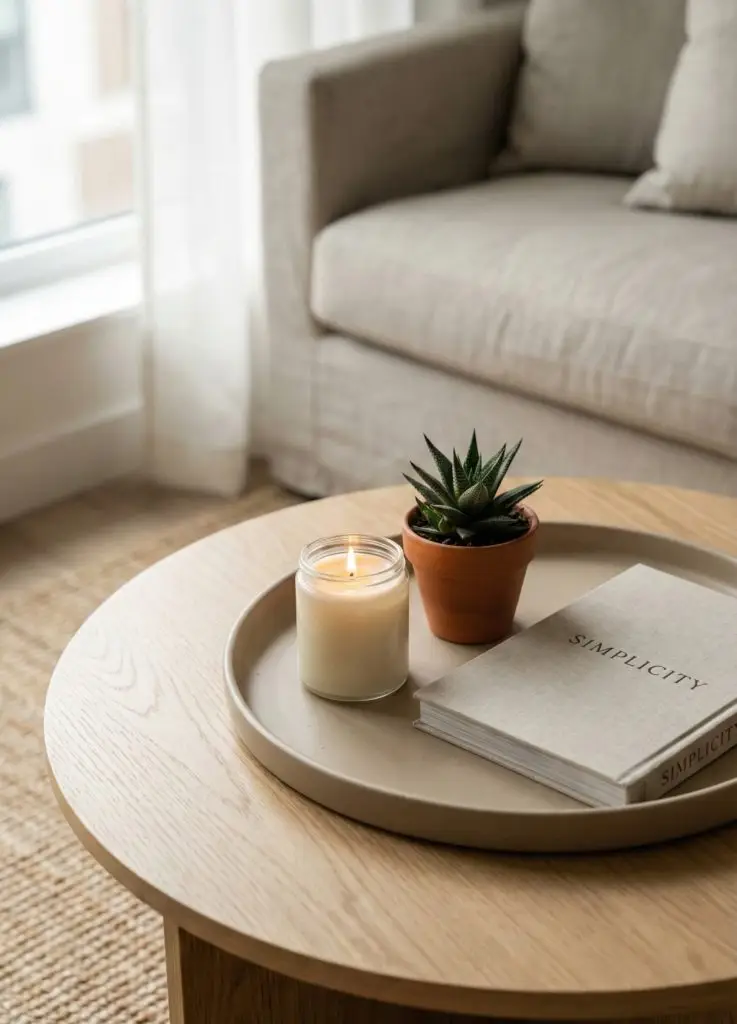
Instead of many small items scattered around, group them into a tray. A tray instantly makes a surface look tidy and intentional, even if it holds everyday stuff like remotes, candles, or keys. This one change can make small spaces feel calm and “designed” rather than chaotic.
10) Create zones—even in one-room spaces
Zones make a small room feel purposeful. Use a rug, a lamp, or a small shelf to visually separate areas (like a reading nook, workspace, or dining corner). When everything has a “home,” the room feels bigger because it feels organized.
11) Go bigger with fewer decor pieces
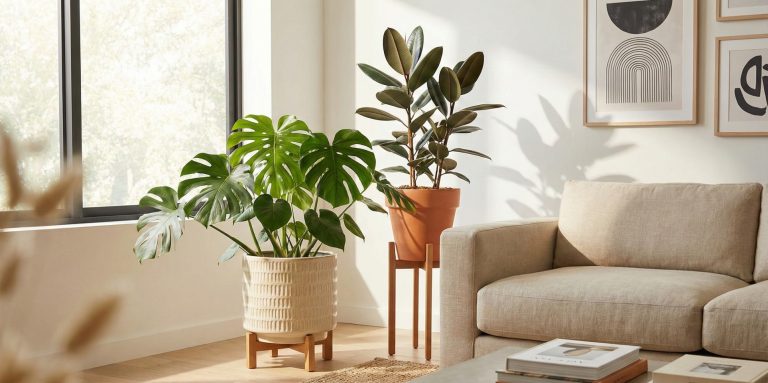
Too many small frames and tiny decor items create visual noise. Instead, choose one larger art piece, a bigger plant, or a statement lamp. Large-scale decor can actually make a room feel bigger because it looks intentional and reduces clutter.
Big Style, Small Footprint
At the end of the day, you don’t need a massive floor plan to create a home that feels open and inviting. Making a small room look bigger is really just a game of visual psychology—it’s about tricking the eye into seeing more light, more height, and more breathing room.
Start with one or two changes this weekend—maybe it’s finally hanging those curtains high or clearing off the coffee table. You’ll be surprised at how much “new” space you find when you stop working against your room and start working with it. Your home might be small, but your style doesn’t have to be.